

Small living rooms can feel frustrating. You want comfort, style, and function—but without the clutter or cramped feeling. The mistake most people make is trying to decorate a small space like a big one. That never works.
The smart way is different. It’s about choices that visually open the room, not fill it.
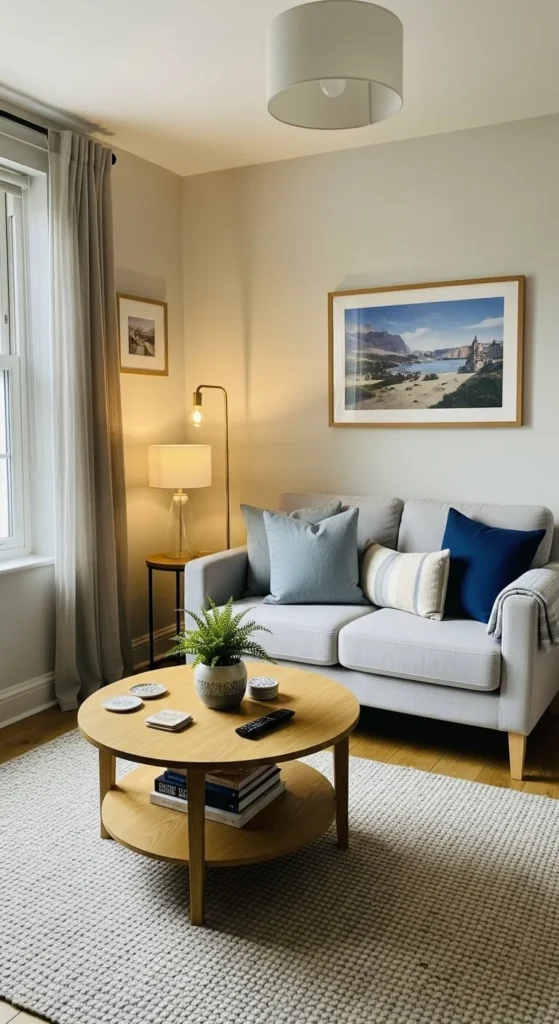
With the right approach, even the smallest living room can feel open, cozy, and thoughtfully designed. Here’s how to do it step by step.
Choose Furniture That Shows the Floor
In a small living room, visible floor space matters more than you think. The more floor you can see, the larger the room feels.
Look for:
- Sofas and chairs with exposed legs
- Slim armrests instead of bulky ones
- Compact furniture scaled to the room
Avoid:
- Low, boxy furniture that sits flat on the floor
- Oversized sectionals that dominate the space
Smart tip:
One well-sized sofa always works better than squeezing in multiple seating pieces.
Use Light Walls to Push the Room Outward
Dark walls can look great—but in small living rooms, they often close the space in.
Lighter tones help reflect light and make walls feel farther away.
Good choices:
- Warm white
- Soft beige
- Light greige
- Pale grey
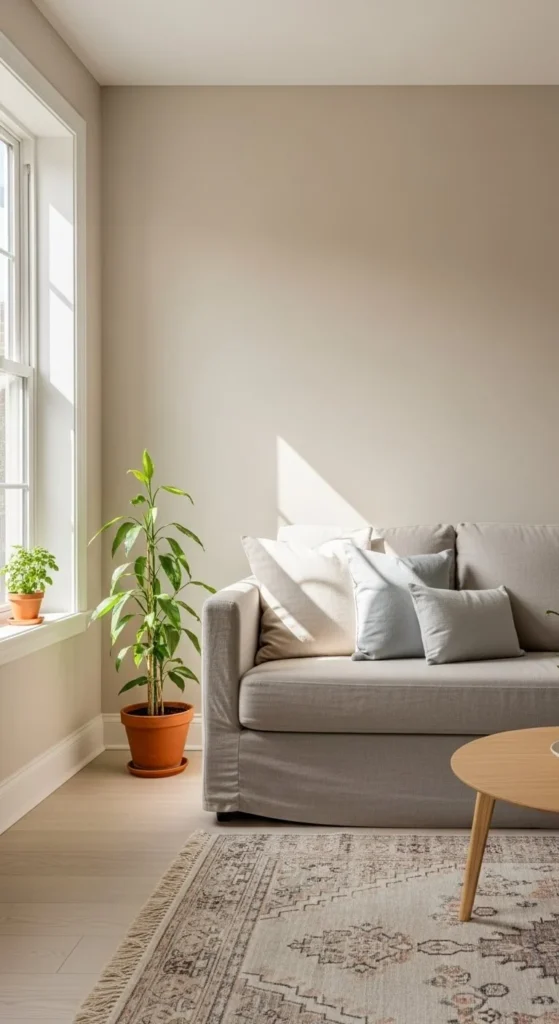
If you love colour, use it in decor instead of paint. It’s easier to change and visually lighter.
Float Furniture Away From the Walls
This sounds counterintuitive, but it works.
Pushing everything against the walls can actually make a room feel smaller. Floating furniture creates depth.
Try this:
- Pull the sofa a few inches away from the wall
- Place a rug under the front legs
- Add a slim console table behind the sofa if space allows
This creates visual layers, which make the room feel more intentional and open.
Pick One Clear Focal Point
Small rooms struggle when there’s too much competition.
Choose one focal point:
- The sofa
- A window
- A statement rug
- A media unit
Build everything else around it.
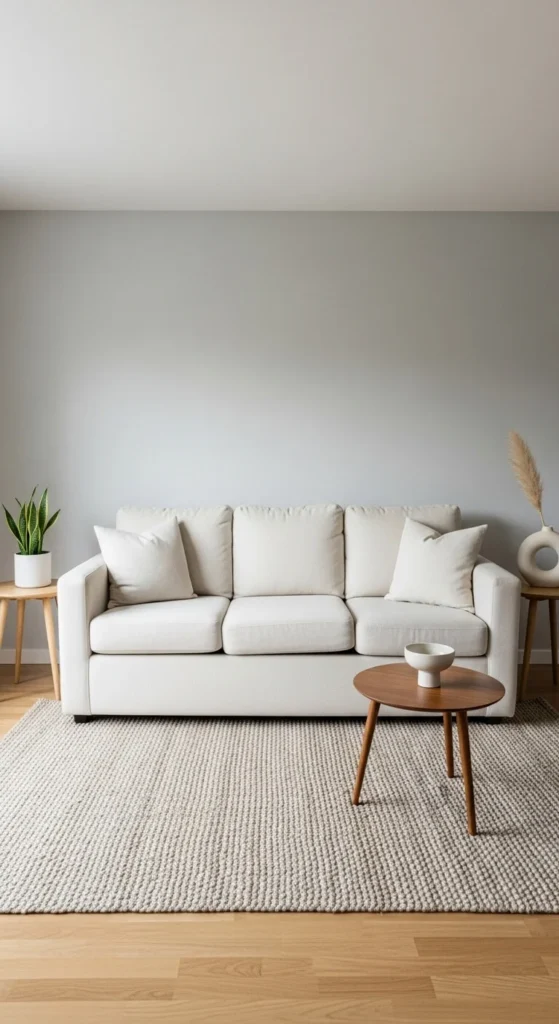
When your eye knows where to land, the room feels calmer and larger.
Choose the Right Coffee Table Shape
Coffee tables matter more in small spaces.
Best options:
- Round tables (easier to move around)
- Oval tables (softer edges)
- Glass or light wood finishes
Avoid:
- Heavy dark tables
- Sharp corners that block walkways
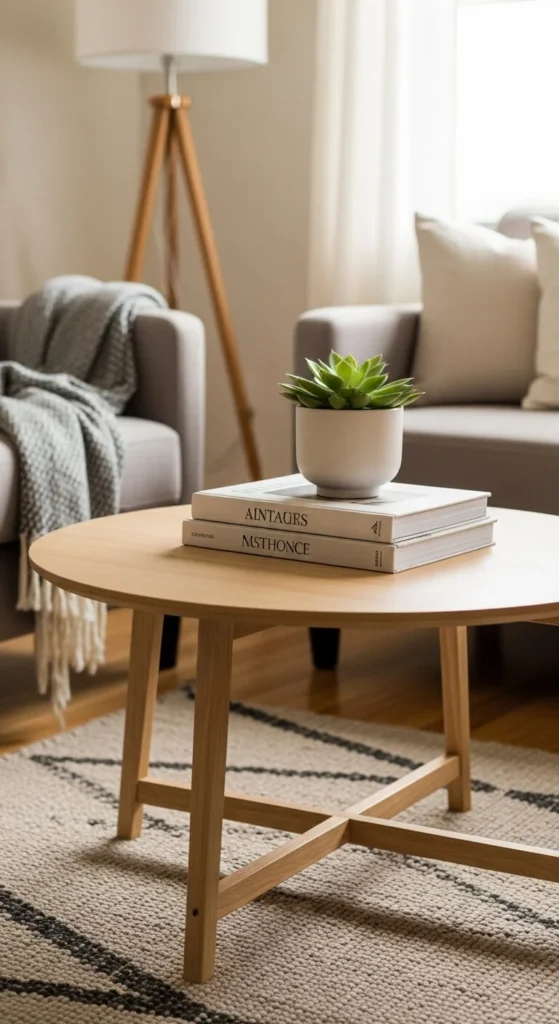
Keep styling minimal so the table doesn’t visually crowd the room.
Use Vertical Space the Smart Way
When floor space is limited, go up—but don’t overload.
Use vertical space for:
- Tall bookcases
- Floor lamps
- Long curtains hung close to the ceiling
Avoid filling walls with lots of small items. One tall element looks cleaner than many short ones.
Designer trick:
Hanging curtains higher than the window makes ceilings feel taller.
Layer Lighting Instead of Relying on One Source
One overhead light flattens a small room.
Use layers:
- A floor lamp
- A table lamp
- Soft ambient lighting
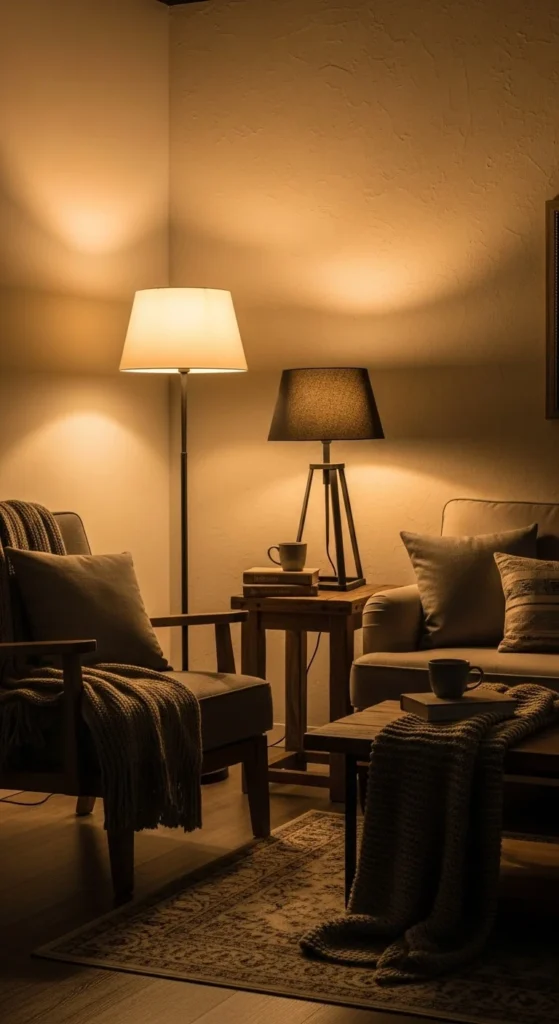
Multiple light sources create depth and warmth without taking up much space.
Keep Decor Intentional and Edited
In a small living room, every item must earn its place.
Stick to:
- A few cushions instead of many
- One throw instead of several
- Simple decor with clean shapes
Style in small groups and leave empty space between items. This gives your eyes room to rest.
Use Mirrors to Multiply Space and Light
Mirrors are one of the smartest tools for small rooms.
Place them:
- Across from a window
- Behind a light source
- On a wall that feels empty or dark
Mirrors reflect both light and space, making the room feel instantly bigger—without adding clutter.
Let Rugs Define the Space
A rug anchors a small living room and prevents it from feeling scattered.
Go bigger than you think:
- Front legs of furniture should sit on the rug
- Choose light or medium tones
- Avoid tiny rugs that float awkwardly
A properly sized rug makes the entire room feel more cohesive.
Choose Storage That Doubles as Decor
Clutter kills small spaces fast.
Use smart storage:
- Ottomans with hidden storage
- Side tables with shelves
- Baskets that look decorative
When storage looks good, you don’t feel the need to hide it.
The Takeaway
Decorating a small living room the smart way isn’t about squeezing things in. It’s about clarity, scale, and breathing room.
Focus on:
- Light colours
- Properly sized furniture
- Clear focal points
- Layered lighting
- Thoughtful editing
Small rooms don’t need more things. They need better choices.
Save this guide for later when you’re ready to refresh your living room without making it feel smaller.
Emily Parker is a home décor enthusiast and design blogger who believes every space deserves a touch of warmth and personality. With a love for cozy neutrals, modern textures, and DIY styling, she shares simple, beautiful ways to make your home feel like you. When she’s not rearranging throw pillows, you’ll find her hunting vintage finds or sipping coffee while planning her next room refresh.
Leave a Reply