

Minimalist homes are loved for their calm, uncluttered look—but they often get a bad reputation for feeling cold or empty. The truth is, minimalism doesn’t have to feel stark. When done right, it can feel peaceful, grounded, and quietly inviting.
Warm minimalism isn’t about adding more stuff. It’s about choosing the right elements and letting them breathe.
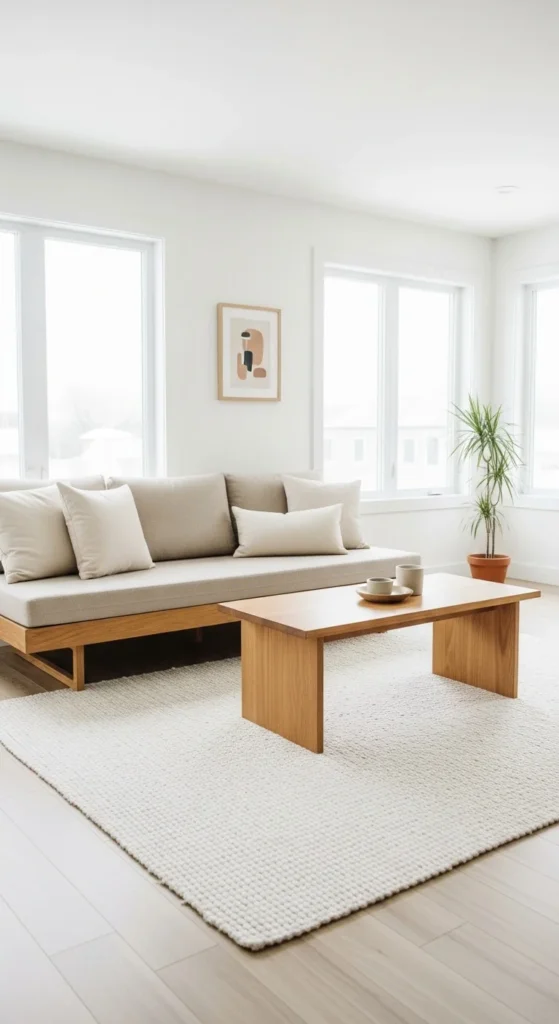
Here’s how to decorate a minimalist home that keeps the clean look—without losing warmth.
Choose Fewer Pieces, but Make Them Softer
Minimalist spaces rely on restraint, so every piece needs to earn its place.
Focus on:
- Comfortable sofas with soft edges
- Chairs with gentle curves
- Furniture that looks inviting, not rigid
Avoid sharp, ultra-glossy pieces that feel untouchable.
Warm minimalism tip:
Soft shapes and rounded corners instantly make a minimalist space feel more human.
Use a Warm Neutral Base Instead of Stark White
Pure white can feel clinical if overused. Warm minimalism starts with a softer base.
Better choices:
- Cream
- Warm beige
- Soft greige
- Light taupe
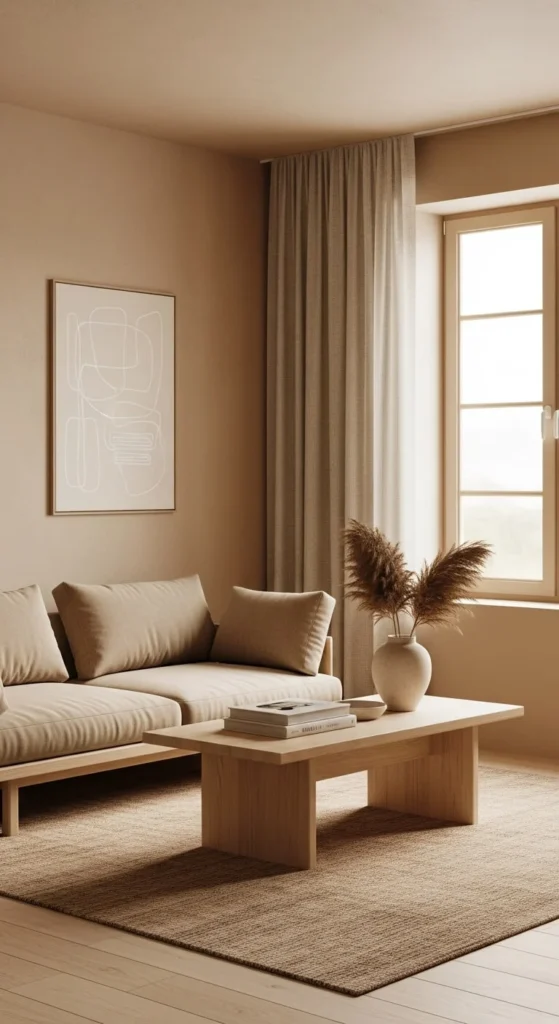
These tones reflect light gently and create warmth without visual clutter.
Layer Texture Where Color Is Minimal
When color stays quiet, texture becomes everything.
Add texture through:
- Linen curtains
- Wool or cotton throws
- Woven rugs
- Matte ceramics
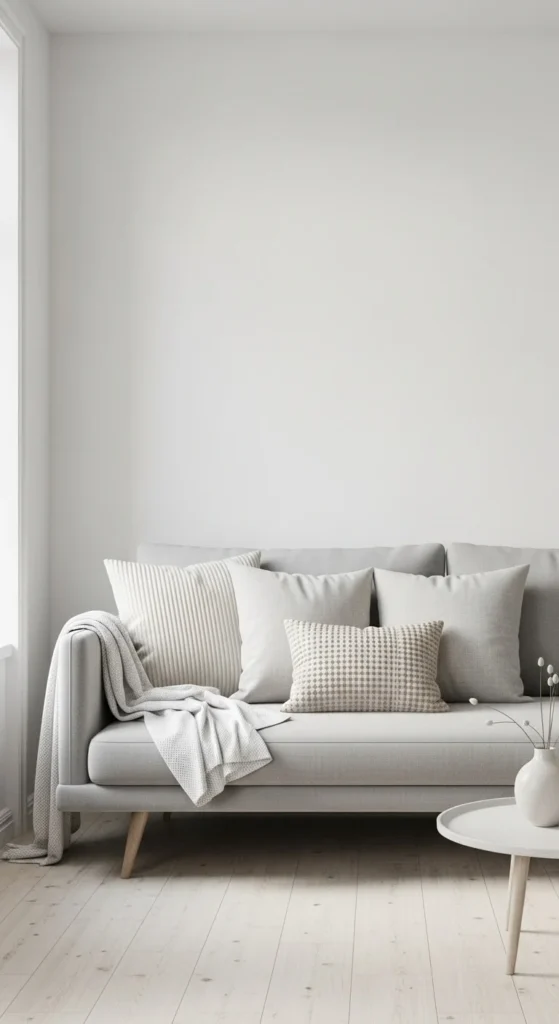
Texture adds depth without breaking the minimalist aesthetic.
Let Natural Materials Lead the Design
Warm minimalist homes feel connected to nature.
Use materials like:
- Light or medium wood
- Stone or travertine
- Clay, ceramic, or plaster finishes
- Natural fibers
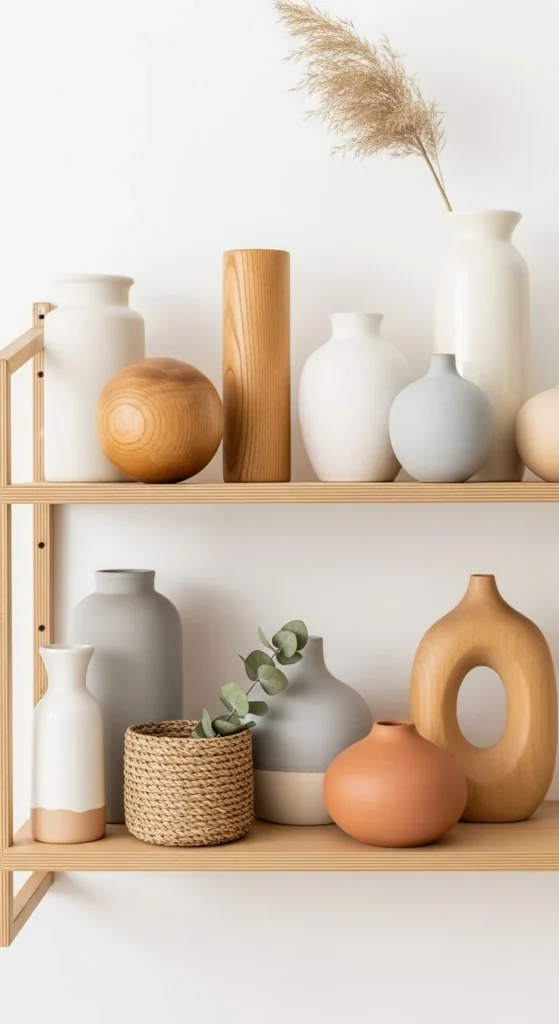
Natural materials soften clean lines and add quiet richness.
Use Lighting to Replace Visual Noise
Minimalist homes should feel calm day and night. Lighting plays a huge role.
Instead of one strong overhead light, layer:
- Table lamps
- Floor lamps
- Soft wall lighting where possible
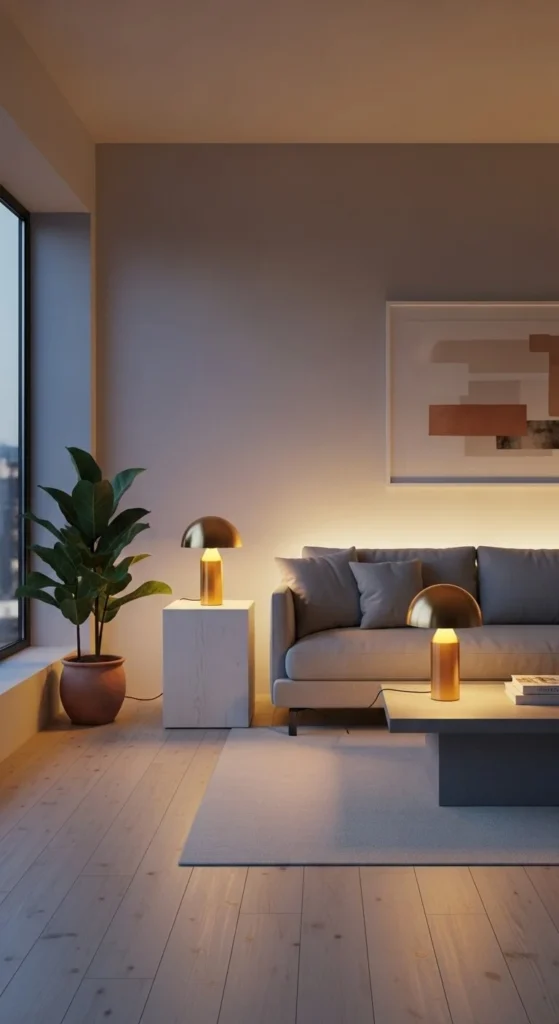
Warm bulbs are essential. Cool lighting can undo all the warmth you’ve created.
Keep the Layout Open but Intimate
Minimalist doesn’t mean pushing everything apart.
Arrange furniture to:
- Encourage conversation
- Keep pieces visually connected
- Avoid empty, echo-like spaces
Use rugs to anchor seating areas and make open rooms feel intentional.
Add One Meaningful Element Per Space
Minimalist homes feel warm when they feel personal.
Choose one meaningful item per room:
- A favourite book
- A handmade object
- A subtle framed photo
- A travel piece with a story
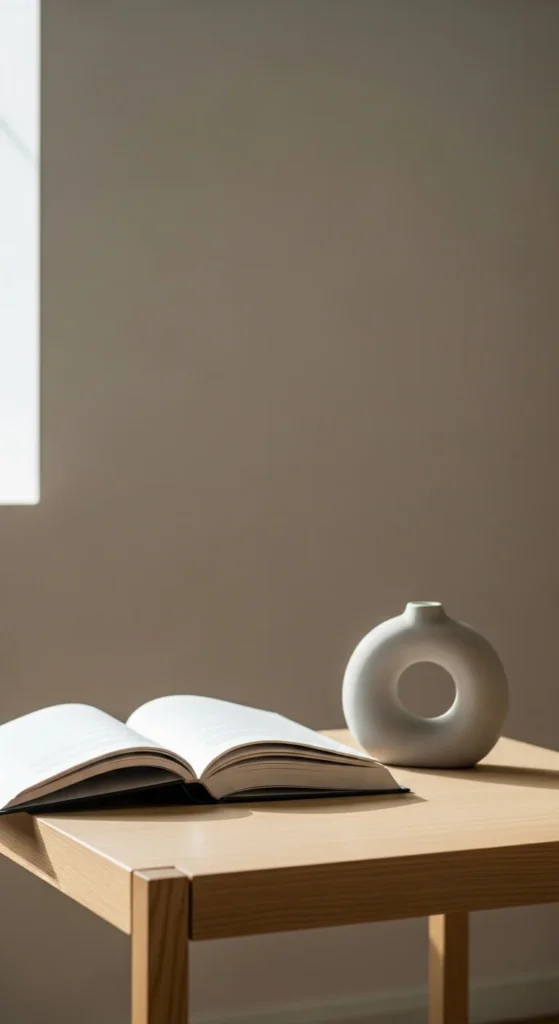
One personal detail adds soul without adding clutter.
Repeat Materials to Create Cohesion
Repetition brings calm.
Repeat:
- The same wood tone
- Similar ceramic finishes
- Matching fabric textures
This makes the home feel cohesive and thoughtful instead of sparse.
Embrace Empty Space as Part of the Design
Warm minimalism isn’t about filling gaps.
Empty space:
- Highlights texture
- Makes rooms feel calm
- Allows the eye to rest
If a corner feels peaceful, not awkward, it’s working.
Add Greenery—But Keep It Simple
Plants bring life to minimalist spaces when used intentionally.
Best approach:
- One plant per room
- Simple planters
- Natural shapes
Avoid filling every surface with greenery. One well-placed plant is enough.
Soften the Sound and Feel of the Space
Warmth isn’t just visual.
Add elements that soften the room:
- Rugs to reduce echo
- Fabric curtains instead of blinds
- Upholstered furniture
Minimalist spaces feel warmer when they feel quieter.
Edit Regularly, Not Constantly
Minimalism isn’t about perfection—it’s about balance.
Every few months:
- Remove one item
- Re-space furniture
- Refresh textiles
This keeps the home intentional without overthinking.
Final Check: Does It Feel Calm or Empty?
Stand still in the room and notice how it feels.
Ask:
- Does this feel peaceful?
- Does it feel welcoming?
- Would I want to spend time here?
If the answer is yes, your minimalist home is warm—not cold.
The Takeaway
A warm minimalist home is built on softness, texture, natural materials, and thoughtful restraint.
Remember:
- Choose warm neutrals
- Layer texture
- Use gentle lighting
- Add meaning, not clutter
Minimalism isn’t about less comfort.
It’s about less distraction.
Save this guide for later if you love clean spaces—but want them to feel like home.
Emily Parker is a home décor enthusiast and design blogger who believes every space deserves a touch of warmth and personality. With a love for cozy neutrals, modern textures, and DIY styling, she shares simple, beautiful ways to make your home feel like you. When she’s not rearranging throw pillows, you’ll find her hunting vintage finds or sipping coffee while planning her next room refresh.
Leave a Reply