

Throw pillows look simple—until you try to style them. Too many and the sofa feels crowded. Too few and it looks unfinished. The difference between “random cushions” and a designer look comes down to balance, layering, and restraint.
Good pillow styling doesn’t shout. It quietly pulls a room together.
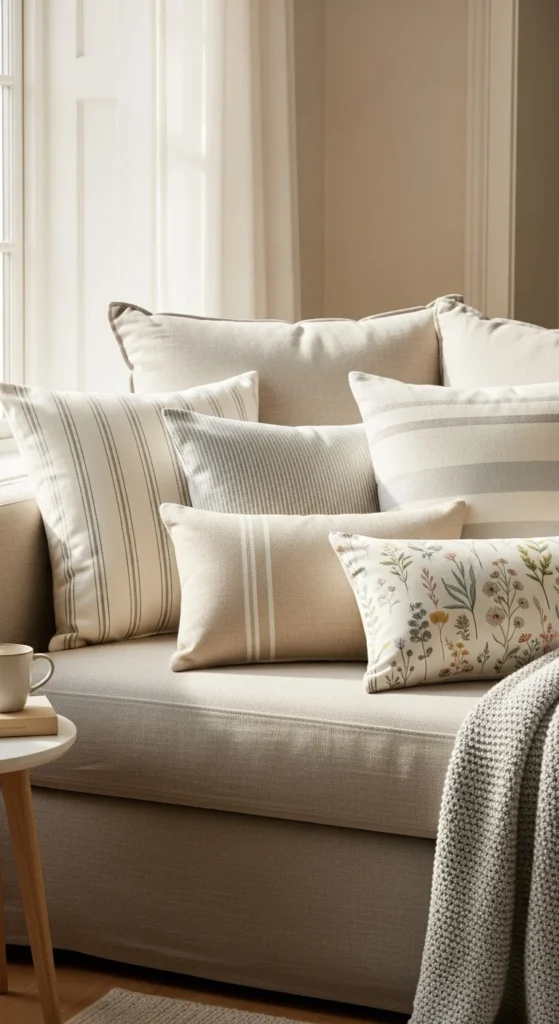
Below is a clear, designer-approved way to style throw pillows so they look intentional, comfortable, and effortless.
Start With the Right Pillow Count for the Furniture
Interior designers don’t guess the number—they match it to scale.
A simple guide:
- Standard sofa: 4–5 pillows
- Sectional: 5–7 pillows
- Loveseat: 2–3 pillows
- Bed: 2 sleeping pillows + 2–3 decorative pillows
More pillows don’t equal better styling. The goal is comfort with structure.
Quick check:
If you have to move pillows just to sit down, you have too many.
Choose a Clear Color Direction First
Pillows should support the room’s color palette, not fight it.
Pick:
- 1 main neutral (cream, beige, grey)
- 1 supporting tone (slightly darker or warmer)
- 1 accent color (subtle, not loud)
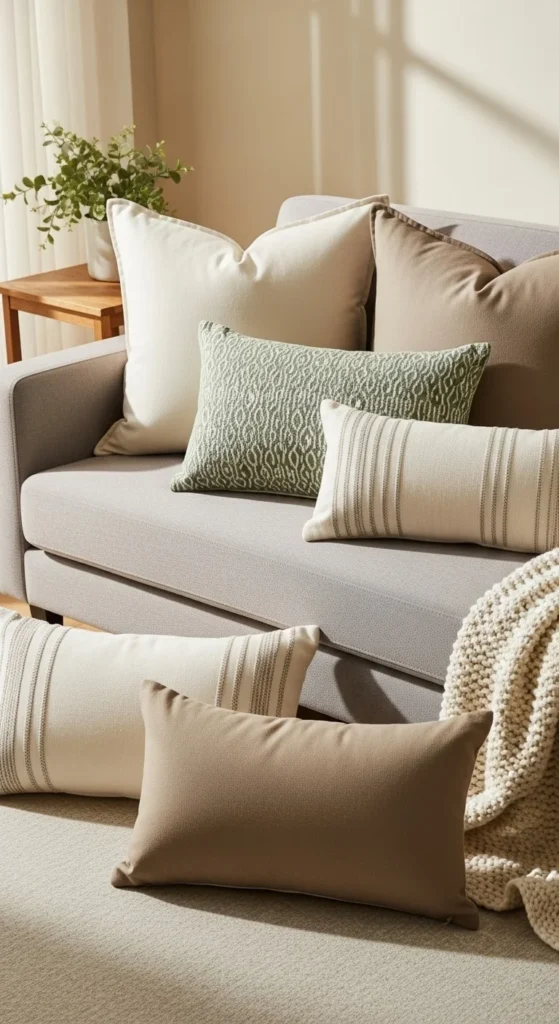
Keeping colors related makes mixing patterns and textures much easier.
Mix Textures Before You Mix Patterns
Texture adds depth without visual noise. Designers always start here.
Good texture options:
- Linen
- Velvet
- Knit
- Bouclé
- Cotton
Try combining:
- One smooth fabric
- One soft fabric
- One textured or woven fabric
This instantly makes the arrangement feel layered and high-end.
Use Pattern Sparingly and Strategically
Patterns work best when they’re controlled.
Follow this rule:
- One bold pattern
- One subtle pattern
- The rest solid or textured
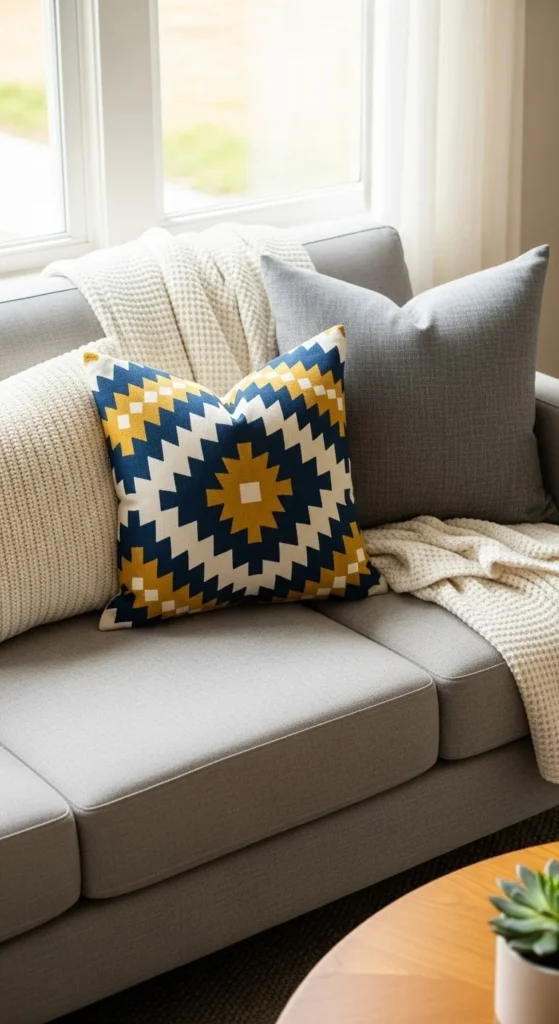
Stick to patterns that share at least one color with the solids. This keeps the look calm and coordinated.
Vary Pillow Sizes for a Designer Look
Uniform sizes make pillows feel flat.
Interior designers layer sizes to create depth:
- 22–24 inch pillows at the back
- 20 inch pillows in the middle
- Lumbar pillow at the front (optional)
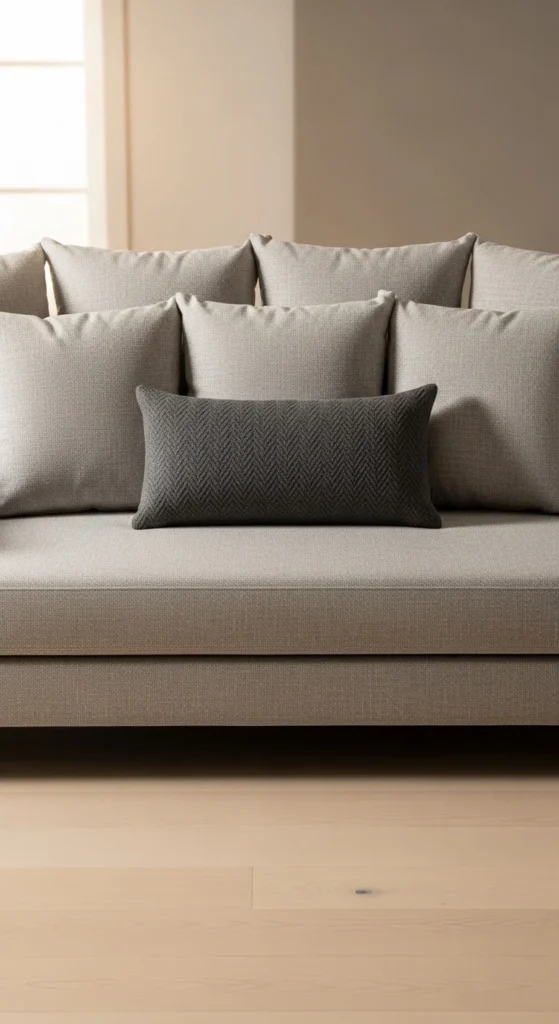
Larger pillows look more luxurious and feel better to lean into.
Arrange Pillows With Intention, Not Symmetry
Perfect symmetry can feel stiff.
Try these arrangements:
- Two larger pillows at each end, one smaller in the middle
- One large pillow on one side, two layered on the other
- A relaxed, slightly uneven look
The goal is balance, not perfection.
Designer habit:
Pillows should look casually placed, not lined up.
Use a Lumbar Pillow as the Finishing Touch
A lumbar pillow adds structure and breaks up all the squares.
Use it to:
- Anchor the center of the sofa
- Add a subtle pattern
- Introduce a slightly darker tone
You only need one. It’s a detail—not the main feature.
Match Pillow Style to Furniture Style
Not all pillows work on all sofas.
- Modern furniture: clean lines, solid colors, subtle texture
- Traditional furniture: softer fabrics, gentle patterns
- Casual spaces: relaxed fabrics, imperfect textures
Let the furniture lead the pillow style—not the other way around.
Keep the Back Pillows Slightly Taller
This is a small trick that makes a big difference.
Place:
- Taller or fuller pillows at the back
- Shorter pillows toward the front
This creates a natural slope and keeps the sofa from looking flat.
Don’t Forget the “Lean Test”
Designer pillows should look good and feel good.
Ask:
- Can I lean back comfortably?
- Do the pillows support my lower back?
- Do they feel soft, not stiff?
If pillows look great but feel awful, they’ll end up on the floor.
Edit Ruthlessly at the End
Once you’re done styling:
- Remove one pillow
- Step back
- Look again
If the sofa feels calmer and more inviting, you made the right call.
Most designer rooms feel polished because they stopped early.
Refresh Pillows Instead of Replacing Furniture
Pillows are the easiest way to update a space.
Seasonal swaps:
- Lighter fabrics in spring and summer
- Warmer textures in autumn and winter
You can change the mood of a room without changing the room itself.
The Takeaway
Styling throw pillows like an interior designer isn’t about rules—it’s about layering, balance, and restraint.
Remember:
- Start with color direction
- Layer texture first
- Limit patterns
- Vary sizes
- Edit at the end
When pillows feel intentional, the whole room looks more finished.
Save this guide for later the next time your sofa feels close—but not quite right.

Emily Parker is a home décor enthusiast and design blogger who believes every space deserves a touch of warmth and personality. With a love for cozy neutrals, modern textures, and DIY styling, she shares simple, beautiful ways to make your home feel like you. When she’s not rearranging throw pillows, you’ll find her hunting vintage finds or sipping coffee while planning her next room refresh.
Leave a Reply