

Hallways are often overlooked—until they start to feel tight, dark, or awkward. Because they’re pass-through spaces, it’s easy to overdecorate them or ignore them completely. The trick is finding that sweet spot where the hallway feels styled but open, welcoming but never cramped.
Good hallway design is about optical choices—what the eye notices, where it travels, and how light moves through the space.
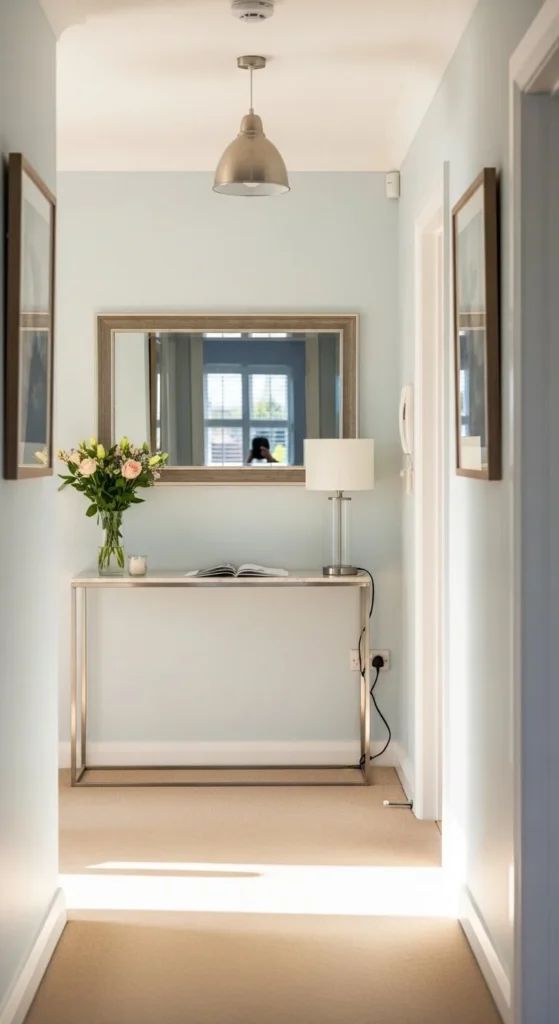
Here’s how to decorate a hallway so it feels wider, lighter, and easier to move through.
Keep the Walking Path Completely Clear
The fastest way a hallway feels narrow is when something blocks the flow.
Before adding decor, protect the walkway:
- Leave the center fully open
- Avoid bulky furniture
- Keep doors and corners unobstructed
Rule of thumb:
If you have to turn sideways or step around something, it doesn’t belong there.
Design works best when movement comes first.
Choose Slim Furniture With Visual Lightness
If your hallway allows furniture, keep it minimal and narrow.
Best choices:
- Slim console tables
- Floating shelves
- Narrow benches with legs
Avoid:
- Deep cabinets
- Closed storage units
- Anything that reaches knee height and blocks sightlines
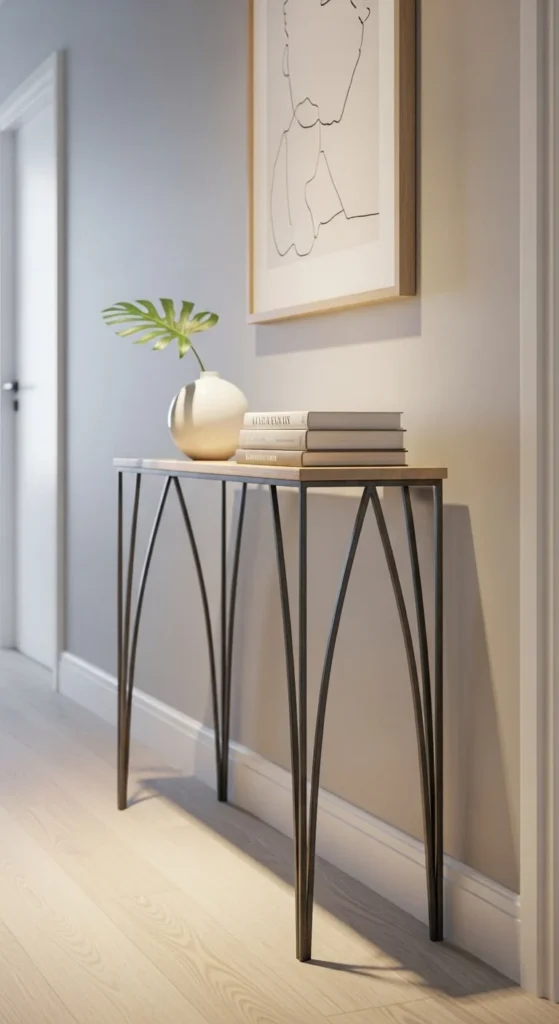
Furniture with visible legs lets the eye travel underneath, making the space feel wider.
Use Mirrors to Expand the Space Sideways
Mirrors are one of the most powerful tools for narrow hallways.
They help by:
- Reflecting light
- Doubling visual width
- Breaking up long walls
Best placements:
- On one side wall
- At the end of the hallway
- Across from a light source
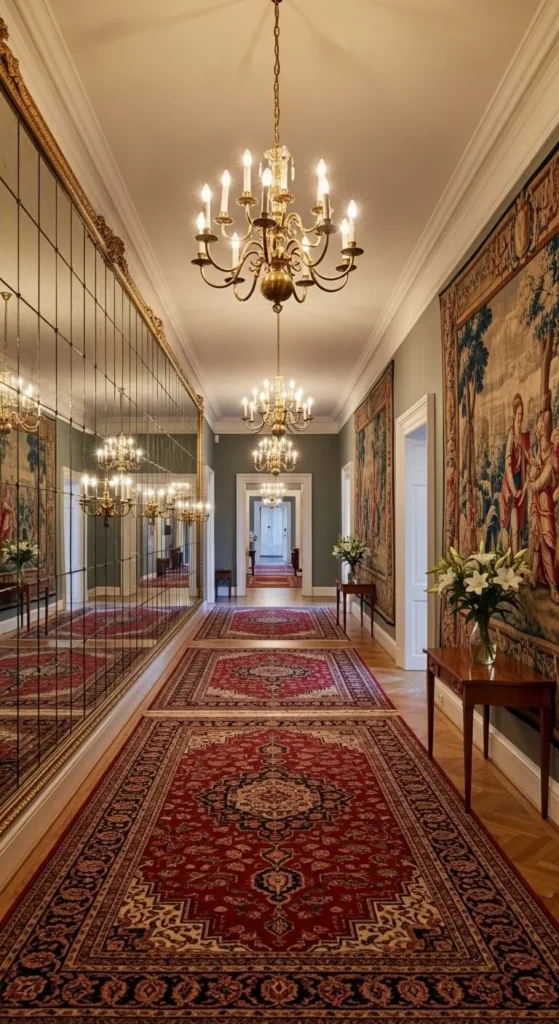
Choose mirrors with simple frames so they don’t add visual weight.
Keep Wall Decor Horizontal, Not Busy
Vertical clutter makes a hallway feel tighter.
Instead:
- Use one large piece of art
- Choose horizontal shapes
- Avoid gallery walls in narrow spaces
One calm focal point works better than many small distractions.
Design tip:
Your eye should glide down the hallway—not stop every two steps.
Use Light Colors Strategically
Dark walls can work—but only with excellent lighting. In most hallways, light tones help more.
Good hallway colors:
- Warm white
- Soft beige
- Pale grey
- Light greige
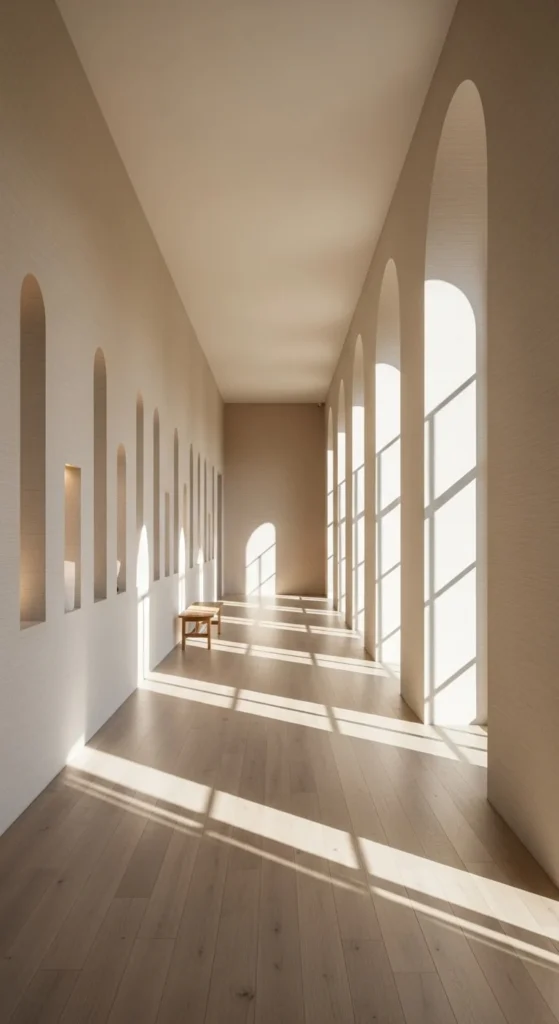
If you want contrast, add it through decor or trim—not large dark wall sections.
Add Lighting That Spreads, Not Spots
Poor lighting makes hallways feel tight and tunnel-like.
Instead of one harsh ceiling light:
- Use wall lights that cast light outward
- Add a small lamp on a console
- Choose warm bulbs for softness
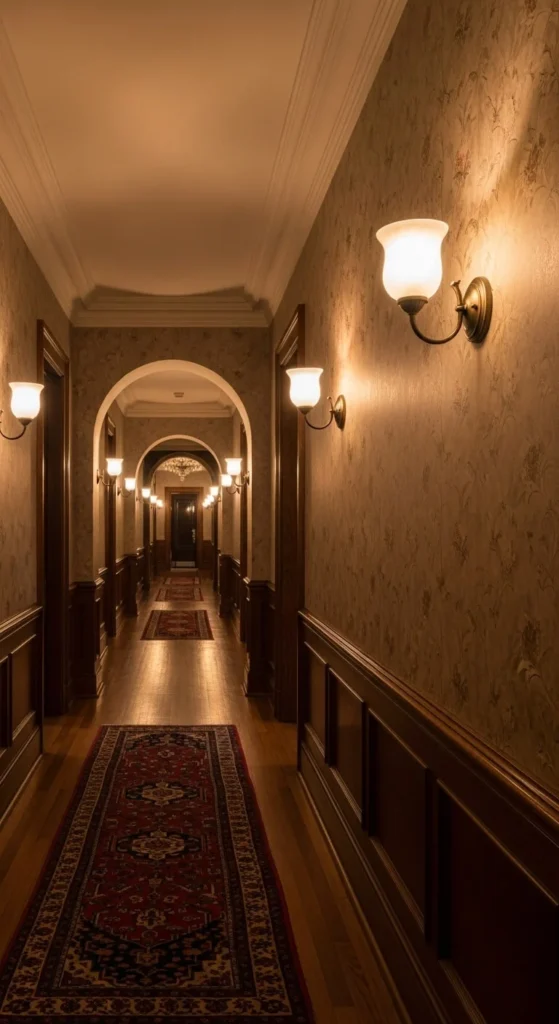
Light that spreads across walls visually pushes them outward.
Lay Rugs That Stretch the Space
Rugs can either help or hurt narrow hallways.
Choose runners that:
- Run lengthwise
- Leave floor visible on both sides
- Have subtle patterns or texture
Avoid:
- Very bold patterns
- Rugs that are too wide
- Short rugs that break the flow
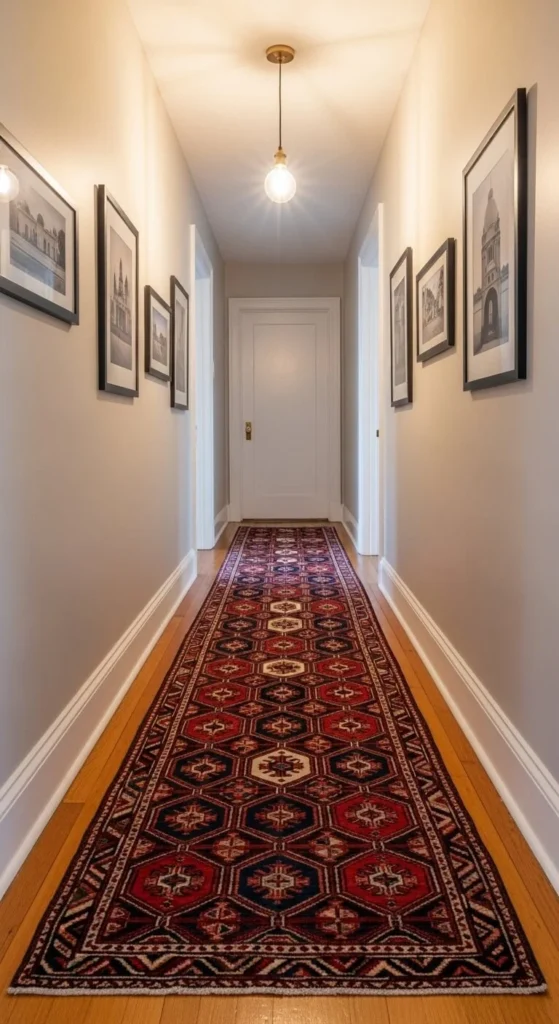
A good runner pulls the eye forward, making the hallway feel longer and more open.
Keep Decor Low and Minimal
Tall decor in narrow spaces can feel looming.
Stick to:
- Low-profile objects
- One or two items only
- Calm shapes and neutral tones
On a console:
- One lamp
- One tray or small object
- That’s enough
Negative space is part of the design here.
Use Vertical Lines Carefully
Vertical elements can help—but only when used lightly.
Good vertical accents:
- Tall mirrors
- Slim floor lamps (if space allows)
- Vertical paneling in light tones
Avoid stacking too many vertical frames or tall decor pieces side by side.
Let One End of the Hallway Be the Focus
Instead of decorating the entire length, anchor the space visually.
Create interest at:
- The far wall
- A corner near the end
- The transition into the next room
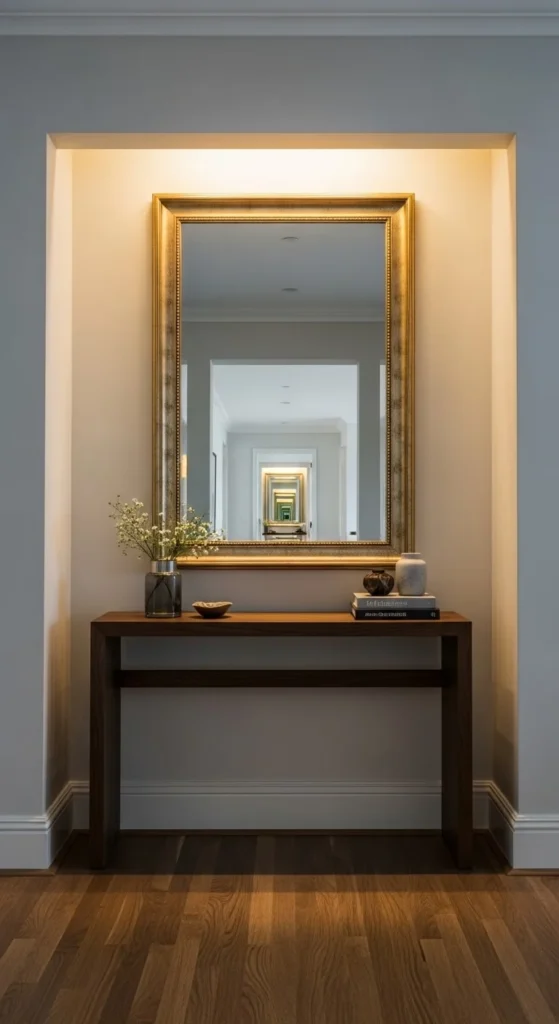
This pulls attention forward instead of inward.
Keep Storage Hidden or Integrated
Visible clutter makes hallways feel tighter than they are.
If you need storage:
- Use baskets tucked under benches
- Choose closed drawers with simple fronts
- Keep hooks minimal and aligned
If it looks busy, it will feel narrow.
Edit More Than You Add
Hallways benefit from restraint.
After decorating:
- Remove one item
- Step back
- Walk through the space again
If it feels easier to move through, you’ve improved it.
Final Walk-Through Test
Stand at one end of the hallway and look through it.
Ask:
- Does my eye move smoothly?
- Does the space feel open?
- Does anything feel in the way?
If yes, you’ve styled it right.
The Takeaway
Decorating a hallway without making it narrow is about flow, light, and visual calm.
Focus on:
- Clear pathways
- Slim furniture
- Mirrors and light
- Simple decor
- Intentional spacing
Hallways don’t need much to feel good—they just need smart choices.
Save this guide for later when your hallway feels tight and needs a thoughtful refresh.
Emily Parker is a home décor enthusiast and design blogger who believes every space deserves a touch of warmth and personality. With a love for cozy neutrals, modern textures, and DIY styling, she shares simple, beautiful ways to make your home feel like you. When she’s not rearranging throw pillows, you’ll find her hunting vintage finds or sipping coffee while planning her next room refresh.
Leave a Reply