

A dining room shouldn’t feel like it’s waiting for a holiday. If it only looks good for guests, it’s not doing its job. The best dining rooms are comfortable, practical, and quietly stylish—the kind you use every day without thinking twice.
Everyday dining decor is about balance. You want it to feel pulled together, but never precious.
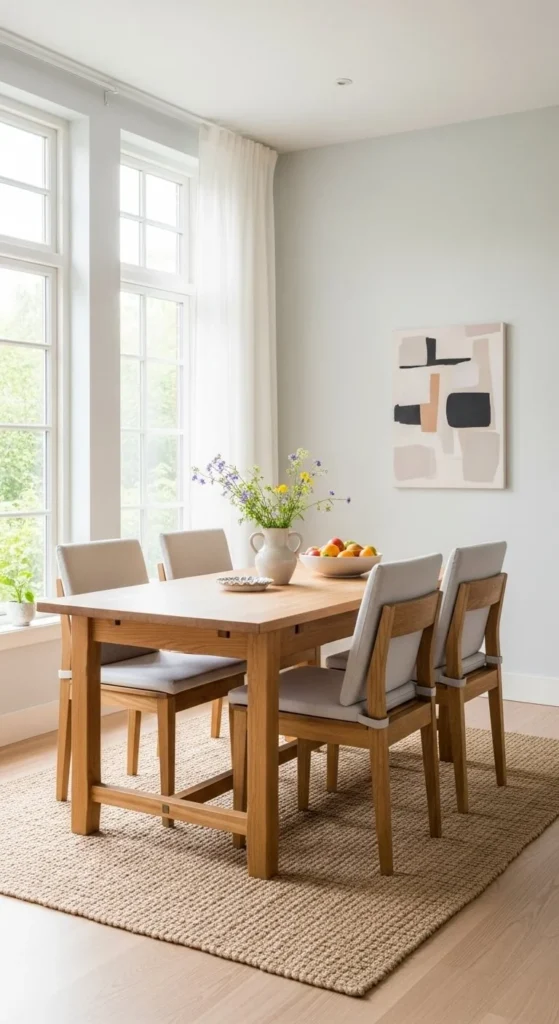
Here’s how to decorate a dining room that works for daily meals, quick coffees, and casual gatherings—without feeling bare or overstyled.
Start With Comfort, Not Just Looks
If a dining room isn’t comfortable, it won’t get used.
Focus first on:
- Chairs you actually enjoy sitting in
- Enough space to move around the table
- A layout that doesn’t feel tight or formal
Comfort checks to do:
- Can you sit for 30–45 minutes easily?
- Can chairs slide in and out without effort?
- Is there enough room to walk around the table?
If the basics aren’t right, decor won’t save the space.
Choose a Table That Can Handle Daily Life
An everyday dining table needs to be forgiving.
Best options include:
- Wood with visible grain
- Matte or sealed finishes
- Tables that don’t show every fingerprint
Avoid ultra-glossy or delicate surfaces unless you’re happy babying them.
Everyday rule:
A table that can handle spills and scratches will get used more—and loved more.
Keep Seating Light but Supportive
Dining chairs don’t need to match perfectly, but they do need to feel cohesive.
Good everyday seating features:
- Supportive backs
- Light cushioning if possible
- A style that feels relaxed, not formal
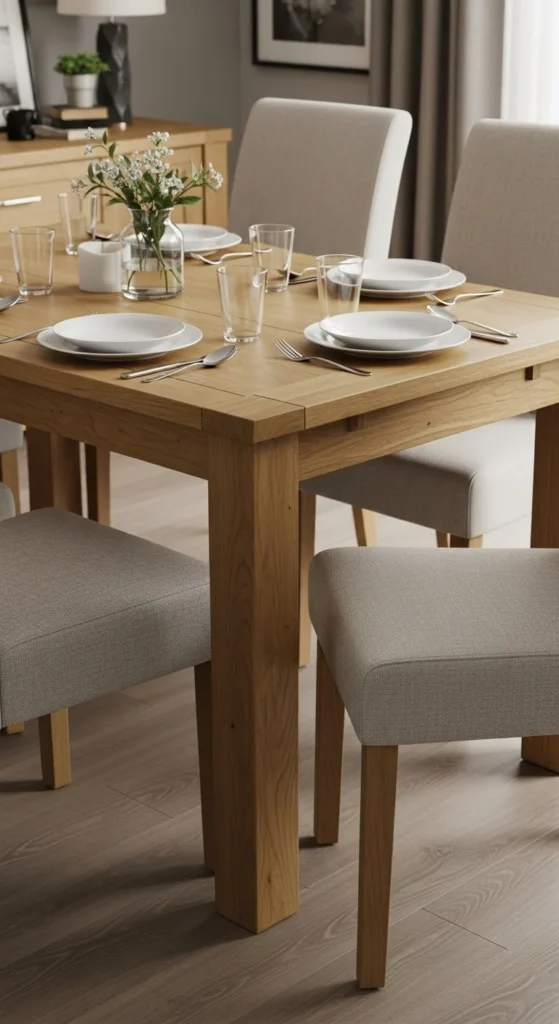
If chairs are uncomfortable, people will rush meals—or avoid the room altogether.
Use a Simple Centerpiece That’s Easy to Move
An everyday dining table doesn’t need a dramatic centerpiece.
Instead, choose something that:
- Sits low
- Is easy to move
- Doesn’t block conversation
Great everyday options:
- A bowl
- A small tray
- A simple vase
- A cluster of candles
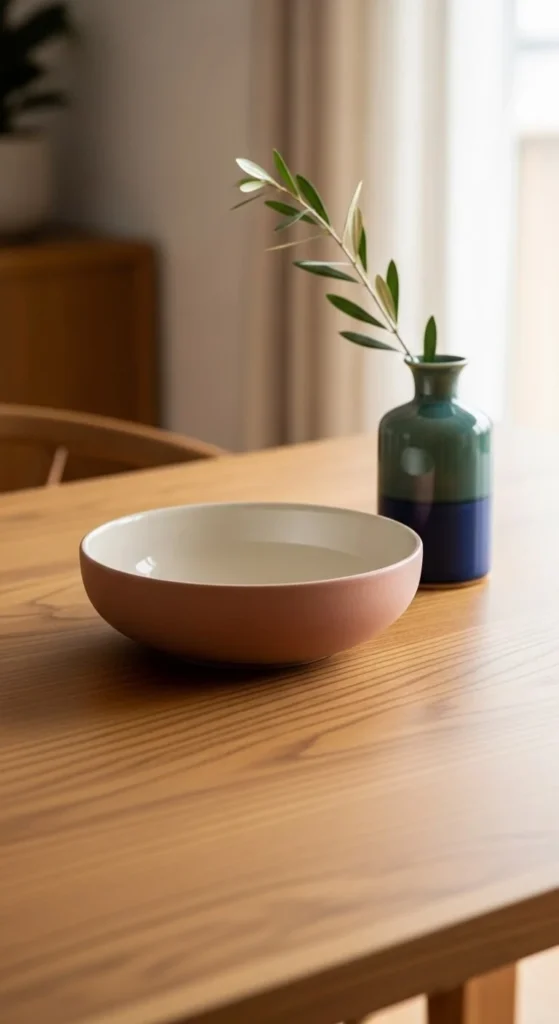
The key is flexibility. You should be able to clear the table in seconds.
Let the Table Surface Stay Visible
A dining table feels more inviting when you can actually see it.
Avoid:
- Heavy table runners
- Large decorative arrangements
- Permanent place settings
Instead:
- Keep decor minimal
- Let the table material show
- Add placemats only when needed
Visible surfaces make the room feel calmer and more functional.
Use Lighting That Works Day and Night
Lighting can make or break everyday dining.
Ideally, your dining room lighting should:
- Feel soft in the evening
- Be bright enough during the day
- Sit low enough to feel intimate
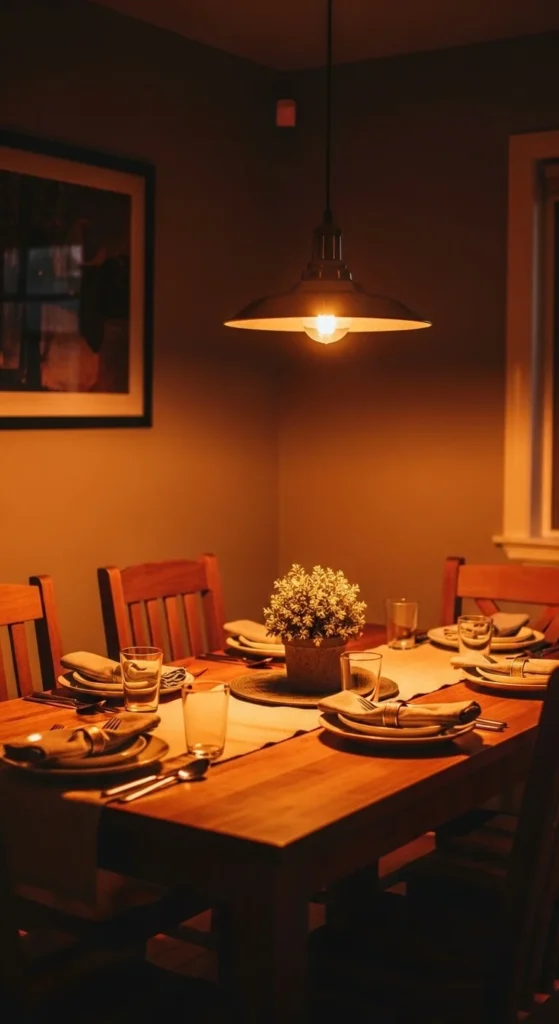
Warm bulbs are essential. Cool lighting makes meals feel rushed and uninviting.
Add Texture Through Small, Practical Details
Everyday dining rooms still benefit from layering.
Add texture with:
- Woven placemats
- Linen napkins
- A textured rug under the table
- Natural wood or ceramic accents
Texture adds warmth without making the room feel styled for special occasions only.
Choose a Rug That Can Handle Real Life
If you use a rug under the table, make sure it’s practical.
Look for:
- Low-pile or flat-weave rugs
- Patterns that hide crumbs or stains
- Enough size for chairs to slide easily
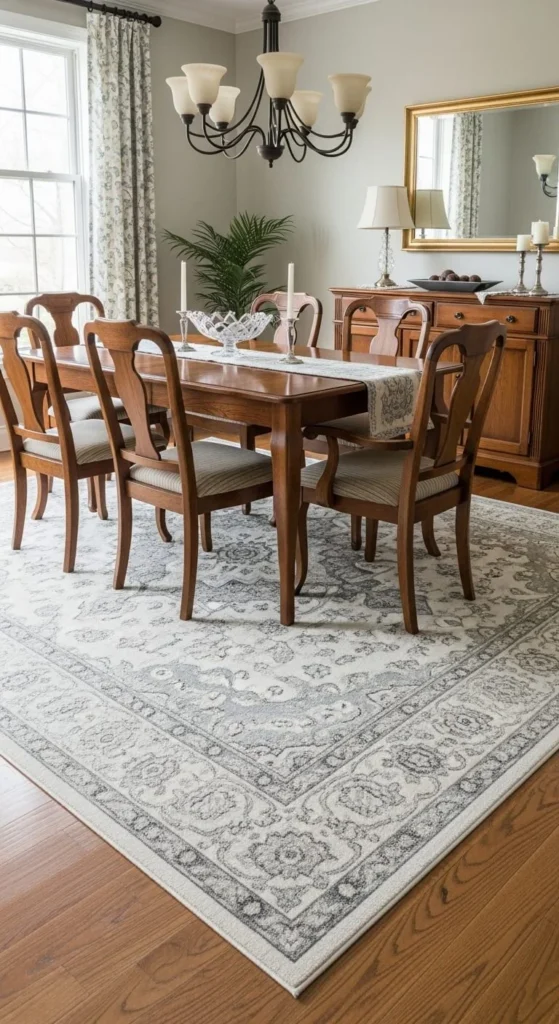
A rug that’s too small or too delicate becomes frustrating fast.
Keep Storage Close and Useful
Everyday dining works better when essentials are nearby.
Consider:
- A sideboard or buffet
- Open shelves for dishes
- A cabinet for placemats and napkins
When things are easy to grab, the room feels effortless to use.
Decorate Walls Simply and Calmly
Dining room walls don’t need much.
Good options include:
- One large piece of art
- A mirror to reflect light
- A small grouping of frames
Avoid cluttered gallery walls in dining spaces. Calm walls keep meals relaxed.
Let the Room Feel Lived-In
An everyday dining room shouldn’t feel staged.
It’s okay if:
- Chairs aren’t perfectly aligned
- A bowl stays on the table
- A book or notebook sits nearby
These signs of life make the space feel welcoming, not messy.
Make the Space Flexible for Different Moments
Your dining room should handle:
- Breakfasts
- Quick lunches
- Homework
- Casual dinners
- Weekend meals with friends
Keep decor neutral and movable so the room adapts easily.
Do the Daily Use Test
Sit at the table like you normally would.
Ask:
- Does this feel comfortable?
- Is there enough space?
- Is anything in the way?
If the room supports daily life without effort, you’ve decorated it right.
The Takeaway
Decorating a dining room for everyday use means choosing comfort, flexibility, and simplicity over formality.
Focus on:
- Comfortable seating
- Practical surfaces
- Minimal, movable decor
- Warm lighting
- Easy storage
A dining room doesn’t need to impress guests every day.
It needs to work for you every day.
Save this guide for later when your dining room looks fine—but doesn’t quite feel usable yet.

Emily Parker is a home décor enthusiast and design blogger who believes every space deserves a touch of warmth and personality. With a love for cozy neutrals, modern textures, and DIY styling, she shares simple, beautiful ways to make your home feel like you. When she’s not rearranging throw pillows, you’ll find her hunting vintage finds or sipping coffee while planning her next room refresh.
Leave a Reply