

Your living room can feel either calm or chaotic — often because of how the furniture is arranged. You might have beautiful sofas, a stylish coffee table, and cozy chairs, yet the space still feels awkward, cramped, or uncomfortable. The secret is flow. When furniture is placed with movement, balance, and purpose in mind, your living room instantly feels bigger, warmer, and more inviting.
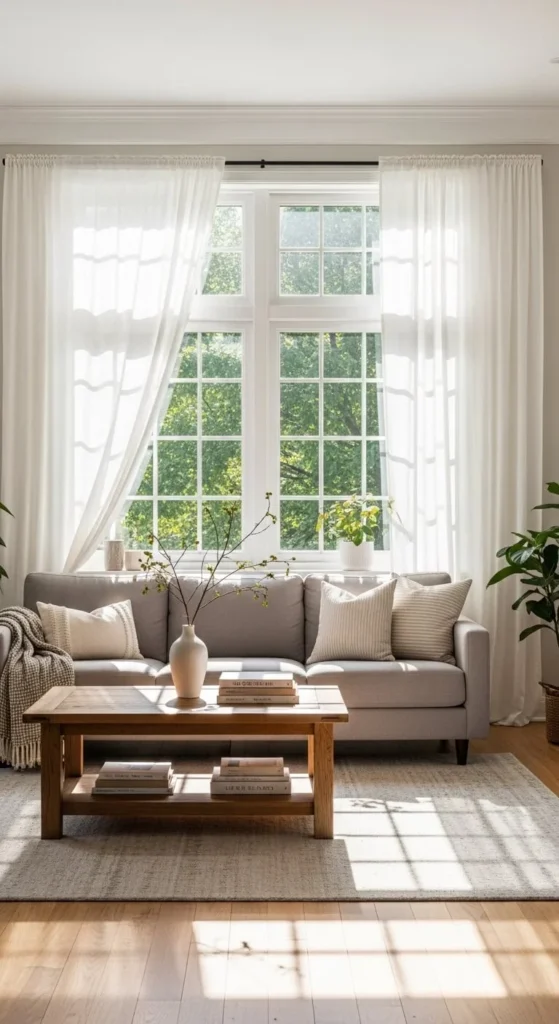
Below is a simple, practical guide to help you arrange your living room furniture like a designer — without stress or expensive makeovers.
Step 1: Start With Your Focal Point
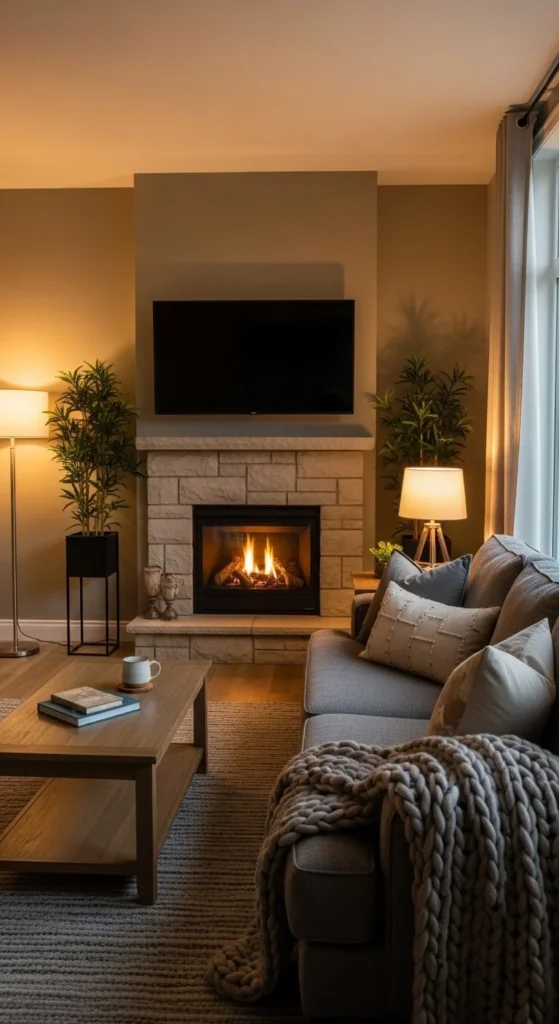
Every living room needs a focal point. This is the spot your eyes naturally go to first.
Common focal points include:
- A TV
- A fireplace
- A large window with a view
- A feature wall or artwork
Once you choose your focal point, arrange your main seating around it. Your sofa should face or angle toward this point, not away from it.
If your room has multiple focal points, pick one main focus and let the others support it.
Step 2: Create a Conversation Zone
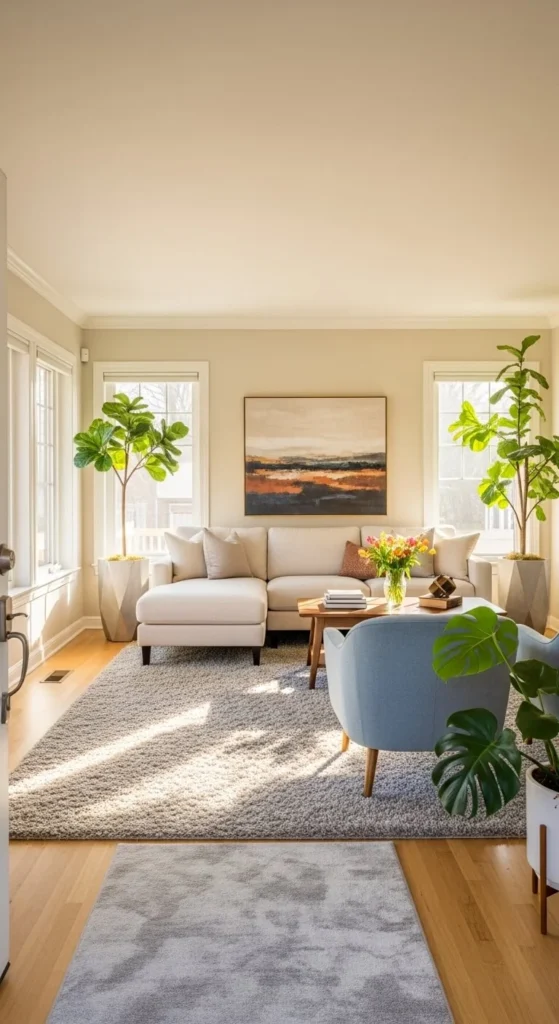
Your living room should encourage easy talking and connection. This means your seating should feel close enough for conversation — but not cramped.
Try one of these layouts:
- Sofa facing two armchairs
- L-shaped sofa with one accent chair
- Two sofas facing each other with a coffee table in between
A good rule:
People should not have to shout across the room to talk.
Keep the distance between seats about 6–10 feet apart. This feels natural and comfortable.
Step 3: Leave Clear Walkways
Even the most stylish room can feel stressful if people have to squeeze past furniture.
Make sure you have:
- At least 2–3 feet of walking space between major pieces
- A clear path from the door to the seating area
- No chairs blocking doorways or passage routes
Imagine how you naturally move through the room. Your furniture should support that movement, not block it.
Step 4: Use the Coffee Table Smartly
Your coffee table is more important than you think.
Place it:
- Centered in front of the sofa
- About 12–18 inches away from seating
This gives enough space to:
- Stretch your legs
- Place drinks
- Move around comfortably
If your room is small, consider:
- A round coffee table
- A glass table
- Or two small side tables instead of one big table
These options create visual space and make the room feel lighter.
Step 5: Balance the Room With Side Furniture
A room feels complete when weight is balanced on both sides.
If your sofa is large and heavy, add:
- A side table on one end
- A floor lamp or plant on the other
Avoid stacking all your furniture on one side of the room. Spread pieces evenly so the space feels steady and calm.
Think of it like a scale — each side should visually balance the other.
Step 6: Float Furniture Away From Walls
Many people push all furniture against the walls. This actually makes rooms feel empty and disconnected.
Instead:
- Pull the sofa slightly away from the wall
- Let chairs sit more toward the center
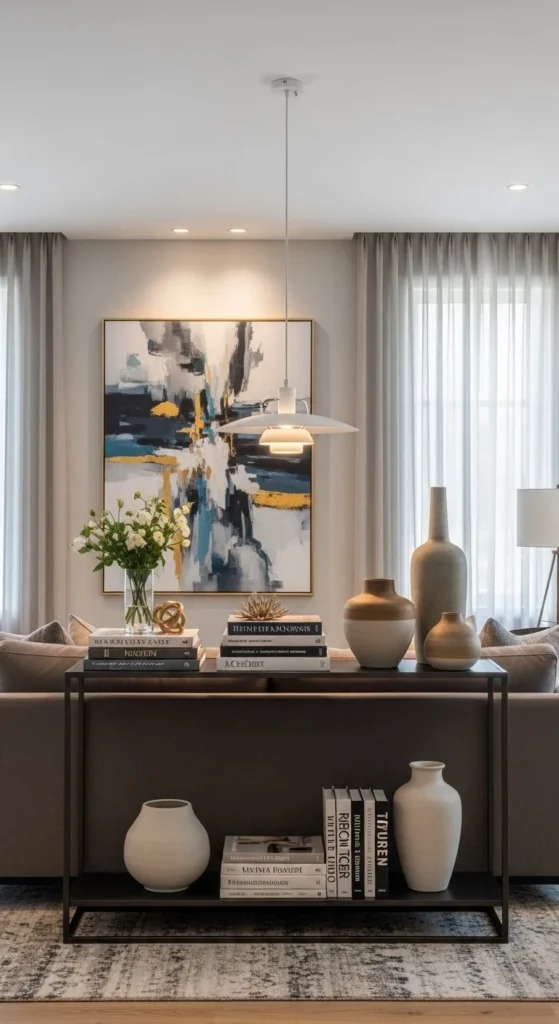
- Place a console table behind the sofa if space allows
Even moving your sofa 6–12 inches forward can make a big difference. It creates depth and warmth.
Step 7: Layer With Rugs and Lighting
Furniture flow isn’t just about placement — it’s also about softness and mood.
Rugs
A rug helps “anchor” your seating area.
Make sure:
- The front legs of your sofa and chairs sit on the rug
- Or all furniture sits fully on it
This makes the layout feel intentional instead of random.
Lighting
Use a mix of:
- Overhead light
- Floor lamps
- Table lamps
Good lighting makes your layout feel cozy, not harsh or flat.
Step 8: Style Without Clutter
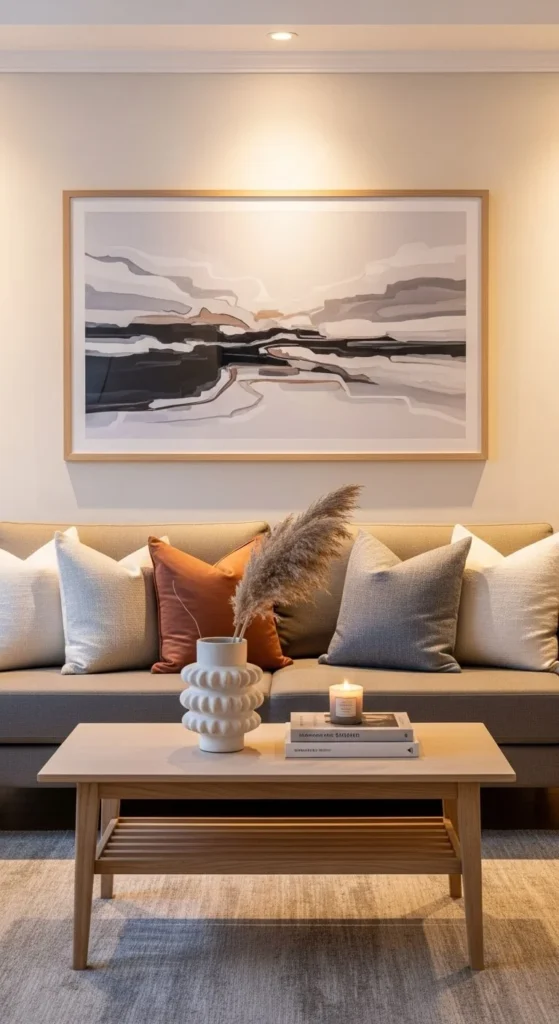
Once furniture is arranged, add decor carefully.
Stick to:
- 2–3 throw pillows per seat
- One statement artwork or mirror
- A few plants or books
Too many small items make the room feel messy, even if your layout is perfect.
Less is usually more.
Common Mistakes to Avoid
Here are a few things that ruin flow:
- Blocking windows with bulky furniture
- Putting all seating against walls
- Using a coffee table that is too big
- Leaving awkward empty corners
- Forgetting to leave space for walking
If your room feels “off,” check for one of these first.
Final Takeaway
Arranging living room furniture isn’t about following strict rules — it’s about creating a space that feels easy, welcoming, and natural to move through.
Start with a focal point.
Build a conversation zone.
Keep clear walkways.
Balance the room.
And layer with rugs and light.
Do this, and your living room will feel bigger, warmer, and more functional instantly.
Save this guide for later when you’re ready to rearrange — your future self will thank you!
Emily Parker is a home décor enthusiast and design blogger who believes every space deserves a touch of warmth and personality. With a love for cozy neutrals, modern textures, and DIY styling, she shares simple, beautiful ways to make your home feel like you. When she’s not rearranging throw pillows, you’ll find her hunting vintage finds or sipping coffee while planning her next room refresh.
Leave a Reply