


Sleep feels easier when your bedroom works with you, not against you. Small decor choices can shape how calm your body feels at night. Light, texture, color, and layout all play a role. The ideas below focus on simple changes that feel cozy without costing much. Many can be done in an afternoon using items you already own or can find secondhand. Each idea aims to make your bedroom feel quieter, softer, and more welcoming so rest comes naturally.
1. Layered Bedding With Soft Textures

Layered bedding adds comfort without extra heat. Start with breathable cotton sheets. Add a lightweight duvet or quilt. Finish with a soft throw at the foot of the bed. This setup lets you adjust easily during the night. If you wake up warm, push one layer aside. If you feel cool, pull it back on.
Texture matters more than price. Washed cotton, linen, or jersey feels gentle on skin. Thrift stores often carry quality blankets for less. Wash everything with a mild, scent-free detergent for a clean feel.
Stick to calm colors. Cream, soft gray, or muted earth tones feel steady at night. Busy patterns can pull attention when your eyes should relax.
Fold layers neatly each morning. A tidy bed signals rest at night. This small habit also makes the room feel cared for, which supports a calmer mood when it’s time to sleep.
2. Warm Bedside Lighting Instead of Overhead Lights
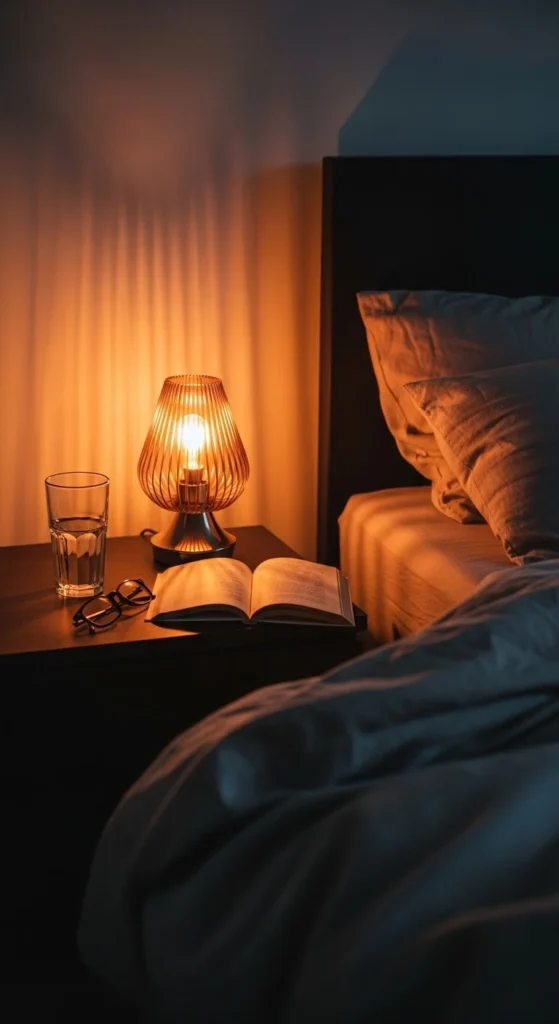
Overhead lights feel harsh at night. A small lamp by the bed creates a gentler glow. Warm bulbs help your eyes relax as bedtime gets closer. Look for bulbs labeled “soft white” or “warm.”
Table lamps show up often at thrift shops. Even mismatched bases can work if the light feels right. Use a simple fabric shade to soften brightness.
Place the lamp low, near mattress height. This keeps light from flooding the room. If you read at night, angle the shade slightly downward.
Turn off ceiling lights an hour before bed. Rely on lamps only. This routine signals your body that the day is slowing. Over time, that gentle cue can make falling asleep feel easier and more natural.
3. Neutral Wall Colors That Calm the Eyes
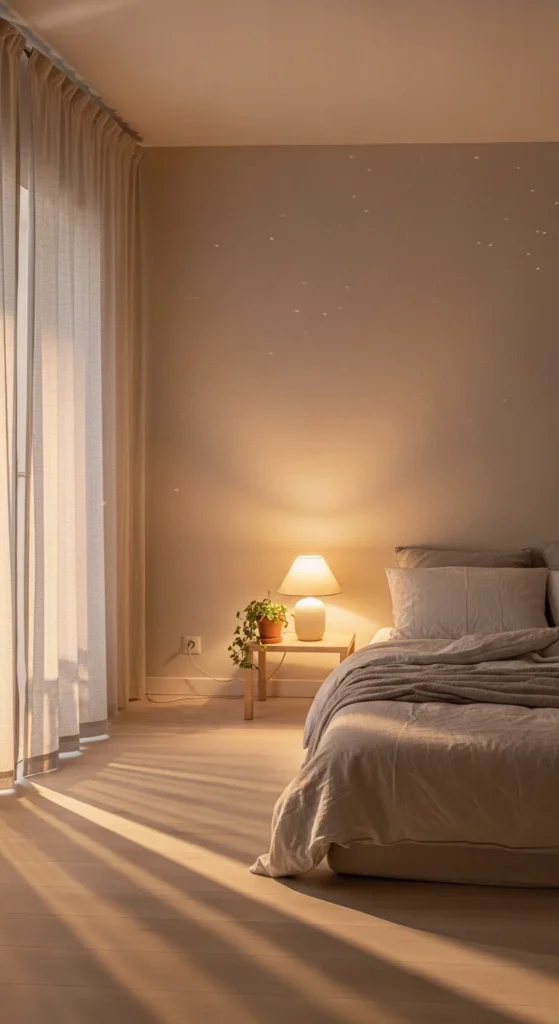
Wall color shapes how a room feels long before you lie down. Soft neutrals help your eyes rest. Think beige, warm gray, or muted clay tones. These shades feel steady and quiet.
You don’t need to repaint the whole room. Start with one wall behind the bed. Even a small change can shift the mood. Sample jars cost little and go far.
If painting isn’t an option, hang large neutral fabric pieces or light-colored art. A simple canvas or textile can cover visual noise.
Avoid bright whites or bold colors near the bed. They reflect light and keep the space feeling active. A calmer palette supports a slower, evening pace that fits sleep better.
4. Blackout Curtains for Deeper Rest
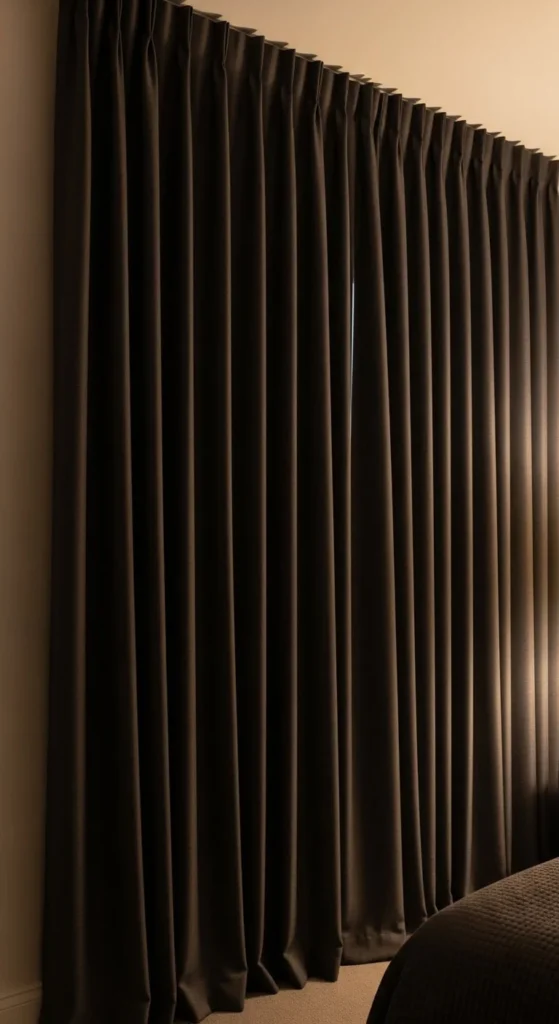
Light sneaking in from outside can interrupt rest. Blackout curtains block streetlights and early morning sun. This helps your body stay in sleep mode longer.
You don’t need custom drapes. Many budget options exist online or at discount stores. Look for lined panels. Dark colors work well but even light shades can block light if lined.
Hang curtains wider and higher than the window. This reduces light leaks around the edges. A tension rod works if you can’t drill.
If full blackout panels feel heavy, layer sheer curtains with a thicker set. Open them during the day. Close both at night. The room will feel darker, quieter, and more protected.
5. A Decluttered Nightstand
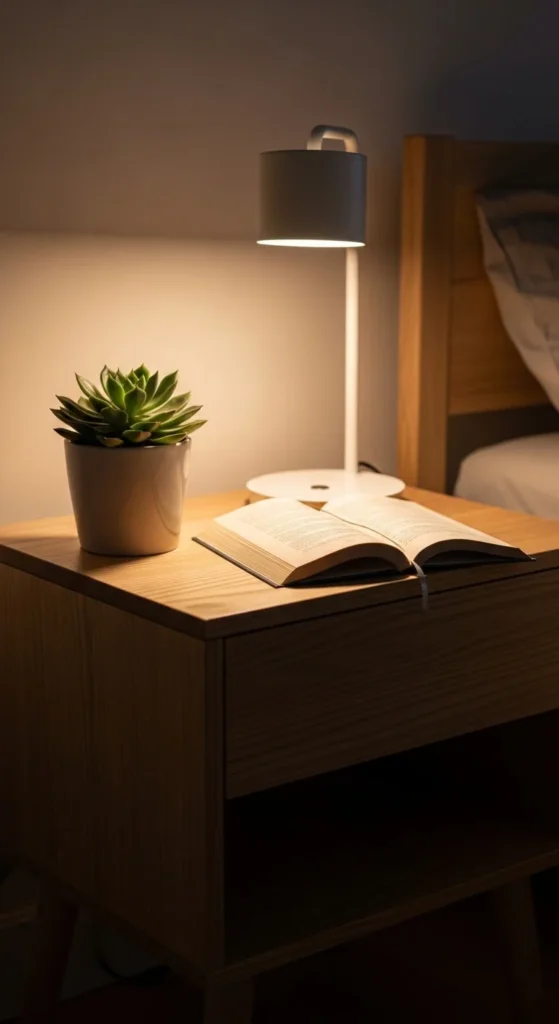
Too many items by the bed can pull your attention. Keep your nightstand simple. Limit it to what you use at night. A lamp. A book. Maybe a glass of water.
Use a small tray to group items. This keeps things from spreading. Drawers help hide extras. If your nightstand lacks storage, add a small basket underneath.
Remove anything linked to stress. Work papers, chargers, or cluttered cables don’t belong there. Charge devices across the room if possible.
A clear surface feels lighter when you lie down. Your eyes land on calm shapes instead of reminders. This small change can help your mind slow down before sleep.
6. Soft Area Rugs for a Gentle Morning Start

A soft rug beside the bed adds comfort the moment you wake. Stepping onto something warm feels kinder than cold floors. That sense of comfort starts and ends your day well.
Look for low-pile or flat-weave rugs. They’re easier to clean and often cost less. Cotton or wool blends work well. Secondhand rugs can be a great find.
Place the rug where your feet land first. It doesn’t have to cover the whole room. Even a small runner helps.
Choose simple patterns or solid colors. Busy designs can feel noisy. A calm rug adds warmth without asking for attention, supporting a relaxed bedroom mood.
7. Natural Fabrics That Breathe

Fabric choice affects comfort more than many people realize. Natural fibers like cotton and linen allow air to move. This helps regulate body temperature at night.
Synthetic fabrics can trap heat and feel sticky. Swap them out slowly. Start with pillowcases. Even one change can make sleep feel smoother.
Linen feels crisp at first but softens with each wash. Cotton percale stays cool and light. Jersey feels like a worn t-shirt and suits cooler sleepers.
Watch labels when shopping secondhand. Older linens often use higher-quality fibers. These materials feel gentle on skin and support steady sleep through the night.
8. Calming Artwork With Simple Forms
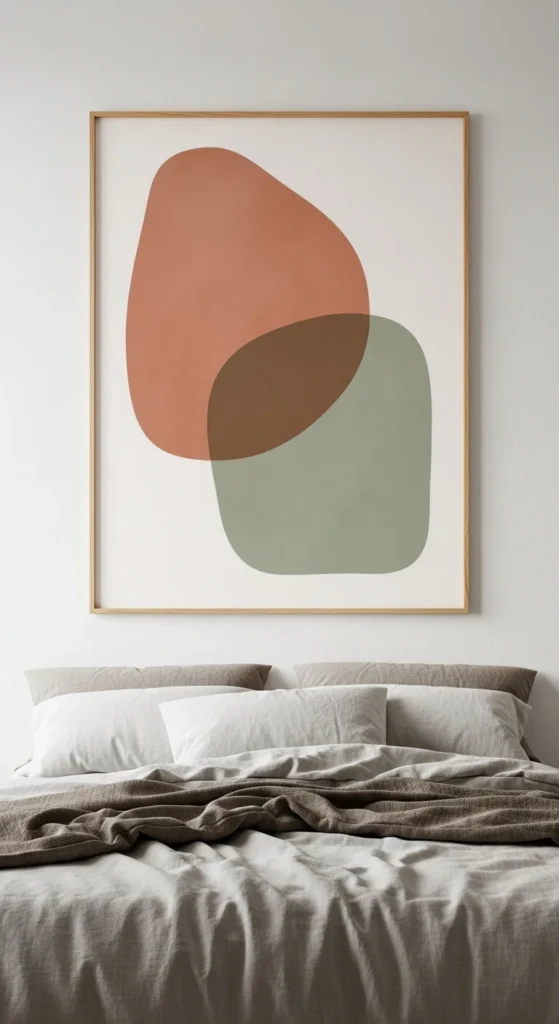
Artwork sets the tone of a room. Choose pieces with simple shapes and calm colors. Abstract forms or nature-inspired prints work well.
Avoid art that feels busy or emotional. Faces and sharp contrasts can pull focus when you’re trying to rest. Soft landscapes or gentle line work feel easier on the eyes.
You don’t need expensive prints. Print free art on quality paper. Frame it simply. Thrifted frames can look great with a quick coat of paint.
Hang art at eye level when sitting on the bed. This keeps the view steady and comfortable. Calm visuals help your mind settle before sleep.
9. Cozy Throw Blankets Within Reach

A throw blanket adds comfort without bulk. Keep one within reach for cooler nights. This avoids turning on lights or searching through closets.
Choose a soft, medium-weight fabric. Fleece, cotton, or knit throws work well. Look for neutral shades that blend with bedding.
Drape the throw over a chair or the bed corner during the day. This adds texture and warmth to the room’s look.
At night, having extra warmth nearby feels reassuring. That sense of ease can help your body relax faster when you lie down.
10. Minimal Bed Frame With Clean Lines

A simple bed frame keeps the room feeling open. Heavy or ornate frames can feel visually loud. Clean lines create a steadier backdrop for rest.
Wood frames add warmth without fuss. Metal frames with thin profiles also work well. Both options show up often in resale shops.
If replacing a frame isn’t possible, simplify what’s around it. Remove extra decor attached to the bed. Let the bedding be the focus.
A quieter frame style supports a calmer room overall. When the bed feels solid and simple, it becomes a place your body associates with rest.
11. Plants That Add Life Without Clutter
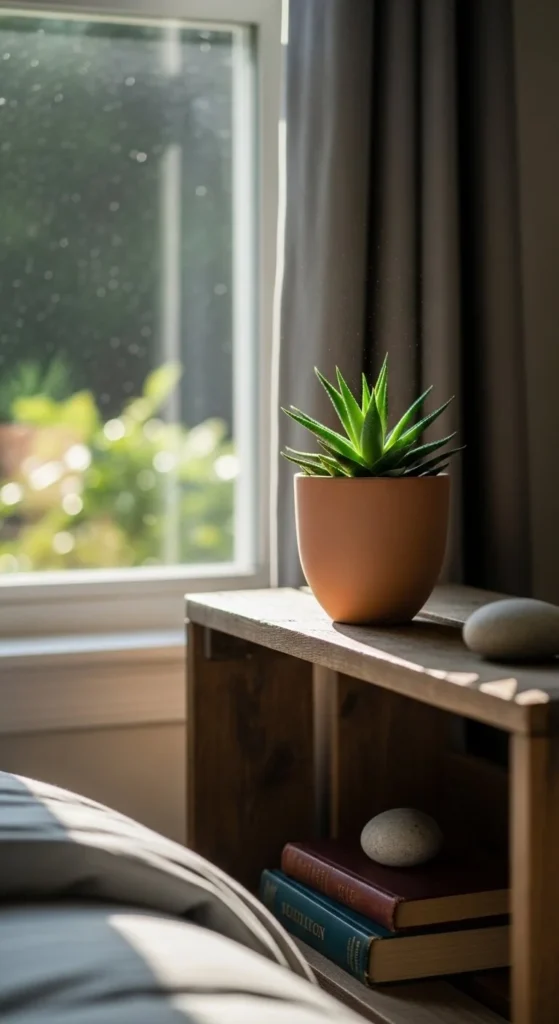
A touch of green can soften a bedroom. Plants add life without adding noise. Choose low-maintenance options that don’t need much attention.
Small plants work best. One or two is enough. Place them where they catch light but don’t crowd surfaces.
If live plants feel like work, try dried stems or high-quality faux options. The visual effect still feels calm.
Green shapes break up hard lines and add a gentle, natural feel. That quiet presence can make the room feel more balanced and welcoming at night.
12. Scent-Free or Lightly Scented Space
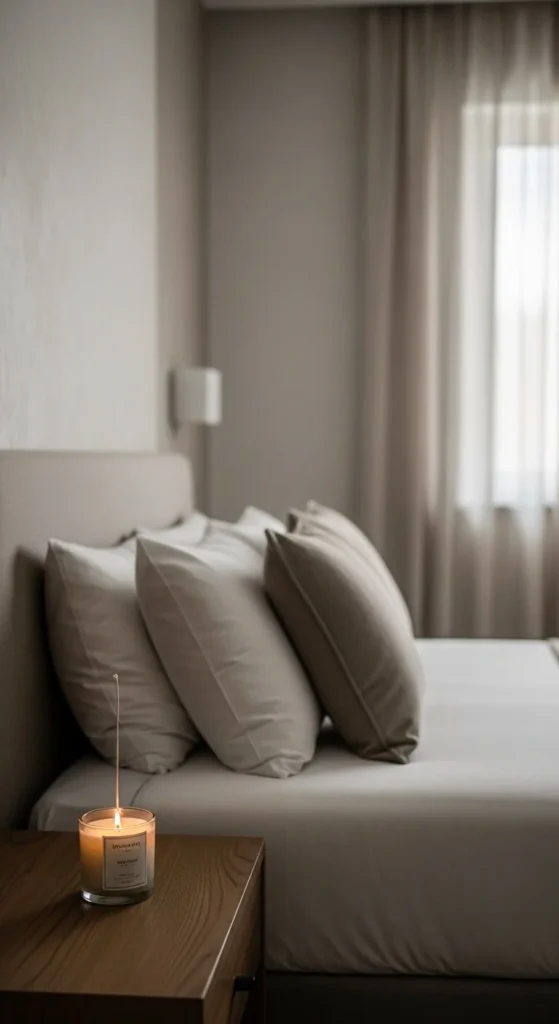
Strong scents can distract at night. Keep the bedroom mostly scent-free. If you enjoy fragrance, choose very light options.
Skip plug-ins and heavy sprays. Fresh air does more than artificial scents. Open windows during the day when possible.
If you use candles, keep them unlit at bedtime. The scent should be subtle and familiar, not sharp.
A clean-smelling room feels calmer. This helps your senses rest instead of staying alert when you’re trying to sleep.
13. Soft Headboard for Comfort

A soft headboard adds comfort and warmth. Upholstered styles feel gentle when you sit up to read or relax.
You don’t need a new bed. Attach a padded panel or hang a fabric-covered board behind the bed. DIY versions cost little and work well.
Choose neutral fabric like linen or cotton. Dark colors can feel heavy. Light tones keep the room open.
A cushioned headboard makes the bed feel more inviting. That comfort supports winding down before sleep.
14. Balanced Furniture Layout
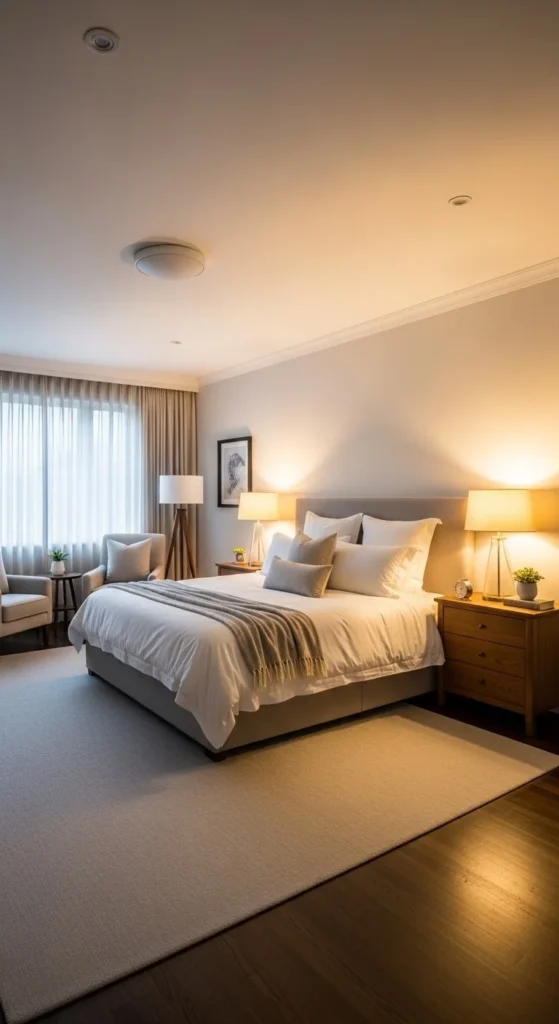
Crowded layouts make rooms feel tense. Leave space around the bed so movement feels easy. Balance matters more than symmetry.
If the bed is pushed against a wall, shift it slightly if possible. Even a few inches helps. Clear pathways reduce visual stress.
Use fewer furniture pieces. Remove anything rarely used. A chair or bench is fine if it serves a purpose.
A balanced layout helps the room feel calm and open. That sense of order supports a relaxed bedtime routine.
15. Muted Color Palette Throughout

Too many colors can feel busy. Stick to a small palette. Choose two or three main shades and repeat them.
Muted tones work best. Soft browns, warm grays, and gentle greens blend well. This creates a steady look.
You can adjust without buying new items. Swap pillow covers. Remove bright decor. Rearrange what you already own.
A limited palette helps the room feel unified. That visual calm supports better rest at night.
16. Hidden Storage to Reduce Visual Noise
Visible clutter keeps the mind alert. Hidden storage helps the room feel lighter. Use under-bed bins or storage benches.
Choose containers that slide easily. Fabric bins are quiet and simple. Label them if needed, but keep labels out of sight.
Clear surfaces make a big difference. Store extra items away instead of stacking them.
Less visual noise helps your eyes rest. A calmer view makes it easier to relax when lying down.
17. Simple Window Treatments That Soften Light

Sheer curtains soften daylight and evening light. They add privacy without blocking everything.
Layer them with thicker curtains if needed. During the day, sheers keep the room bright but gentle.
Budget options work well here. Lightweight fabric panels cost little and hang easily.
Softened light helps the room feel calm at all hours. That gentle glow supports a steady sleep rhythm.
18. Personal Items Kept Minimal
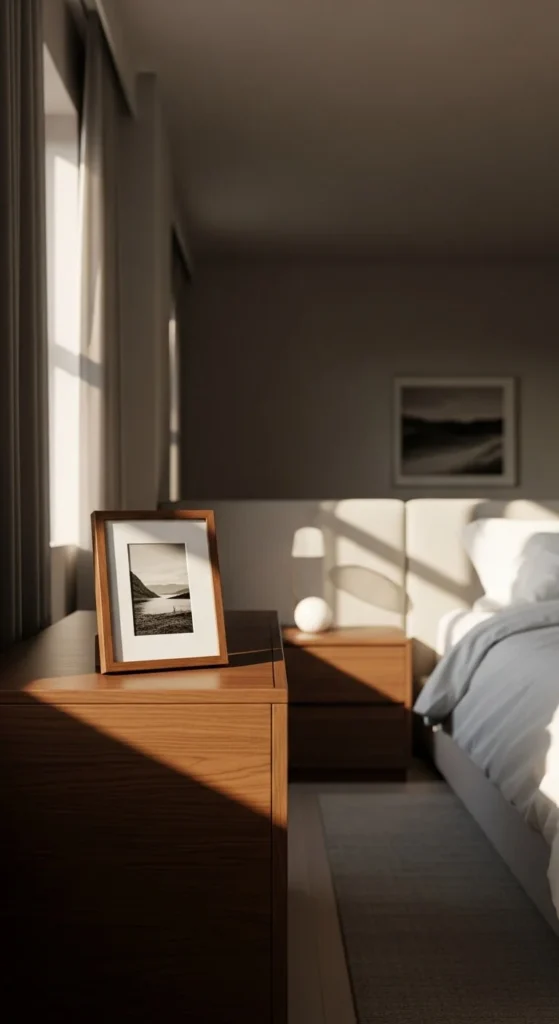
Personal touches matter, but less is more. Choose one or two meaningful items. A framed photo or small object works well.
Too many personal items can stir thoughts at night. Keep the focus on rest, not memories or plans.
Rotate items if you like variety. Store others away and switch them out seasonally.
A few thoughtful pieces keep the room feeling personal without feeling busy.
19. Comfortable Pillows Suited to Your Sleep Style

Pillows affect sleep quality more than decor. Choose ones that match how you sleep. Side sleepers often like firmer pillows. Back sleepers may prefer medium support.
You don’t need many. Two good pillows work better than a pile. Extra pillows can be stored away at night.
Replace old pillows that feel flat or lumpy. Budget options exist that still offer support.
Comfortable pillows help your neck relax. That physical ease supports better sleep overall.
20. Quiet Corners Free From Screens
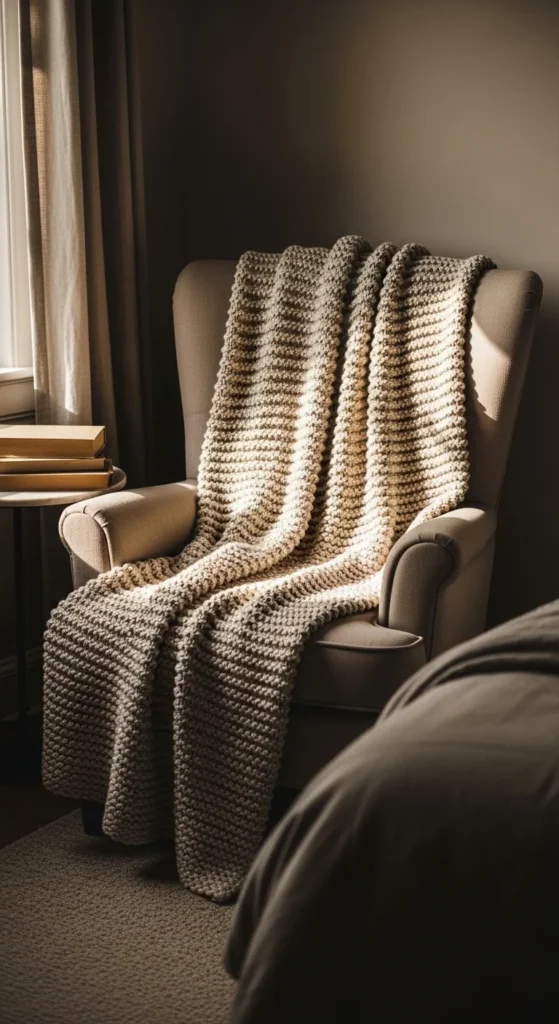
Screens keep the mind active. Create a corner without them. This could be a chair, a small shelf, or just empty space.
Keep phones and tablets away from the bed. Charge them across the room if possible.
Use this quiet area for reading or stretching before bed. Low-tech habits help your body slow down.
A screen-free zone supports a calmer routine. Over time, your bedroom becomes linked with rest instead of stimulation.
21. Consistent Bedside Setup Every Night

Consistency matters. Set up your bedside the same way each night. Lamp on. Book ready. Water nearby.
This routine signals that sleep is coming. Your body responds well to repeated cues.
It takes only a minute. Straighten the area before bed. Remove anything out of place.
A steady setup builds comfort through habit. That quiet rhythm helps sleep come easier night after night.
Conclusion
A cozy bedroom doesn’t come from big changes. It grows from small, thoughtful choices that support rest. Soft light, calm colors, and simple layouts shape how your body feels at night. Try one idea at a time. Adjust what doesn’t feel right. Over time, your bedroom can become a place where sleep feels natural and welcoming.

Emily Parker is a home décor enthusiast and design blogger who believes every space deserves a touch of warmth and personality. With a love for cozy neutrals, modern textures, and DIY styling, she shares simple, beautiful ways to make your home feel like you. When she’s not rearranging throw pillows, you’ll find her hunting vintage finds or sipping coffee while planning her next room refresh.
Leave a Reply