

Open concept homes feel airy, modern, and inviting. Without walls dividing every function, your living room, dining area, and kitchen flow together into one continuous space. But that openness can also create confusion. Without clear structure, rooms can feel messy, disconnected, or unfinished. The secret isn’t adding walls — it’s using thoughtful styling to create invisible boundaries while keeping the flow intact.
Imagine walking into an open space where every area feels connected yet purposeful. The living room feels cozy, the dining area feels defined, and the kitchen blends beautifully without overwhelming the rest of the home. Everything feels calm, balanced, and seamless.
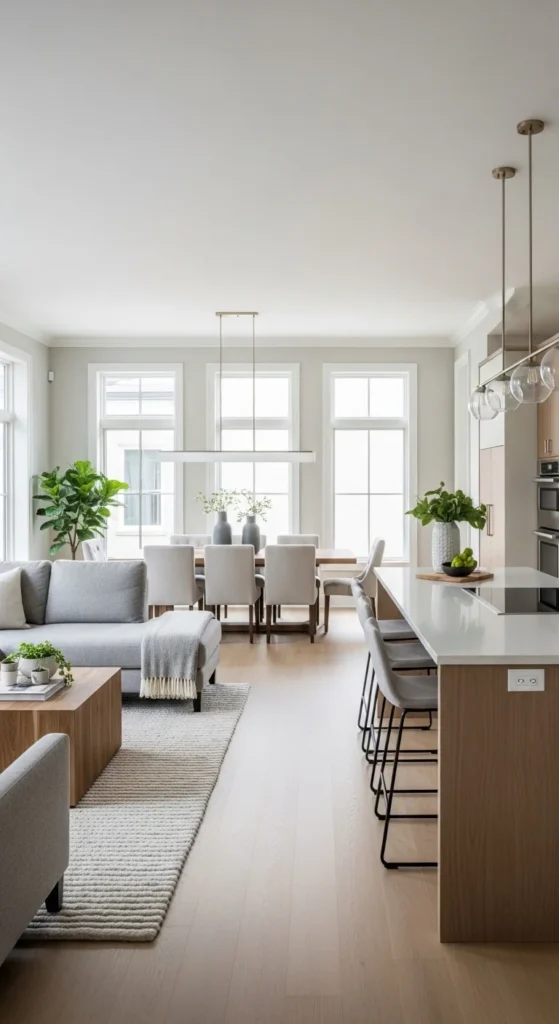
If you want your open concept home to feel cohesive and beautifully styled, these simple techniques will help you create harmony without sacrificing openness.
Start With a Unified Color Palette
Color is the foundation of seamless open concept styling. Without consistent colors, each area can feel disconnected.
Choose a base palette of 2–4 colors and repeat them throughout the space.
For example:
- Neutral base: white, beige, or light gray
- Accent colors: soft brown, muted green, or warm black
Use these colors in:
- Furniture
- Pillows
- Rugs
- Artwork
- Decor
This repetition creates visual harmony and makes the entire space feel intentional.
Define Zones With Rugs
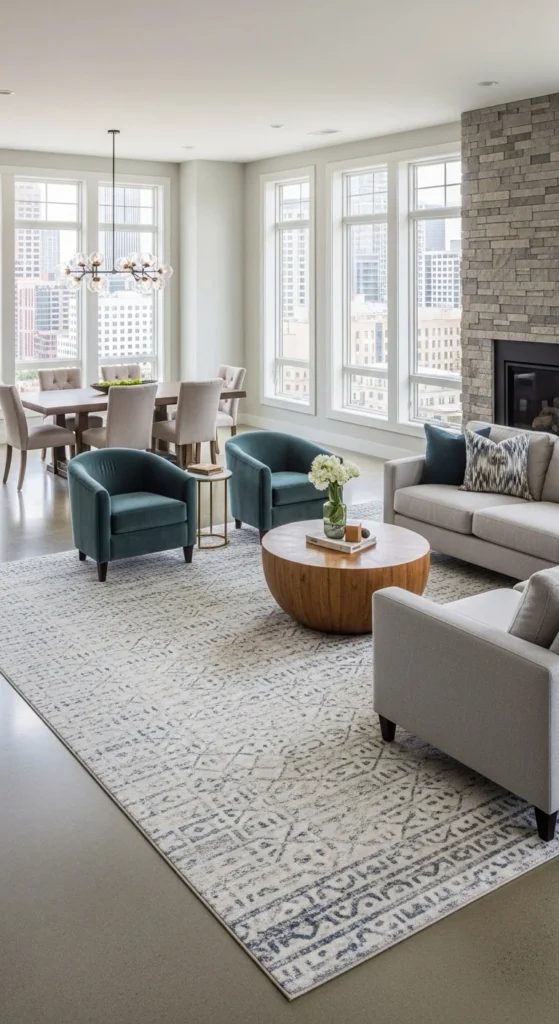
Rugs help create invisible rooms without using walls. They tell your eyes where one space ends and another begins.
Use rugs to define:
- Living room seating area
- Dining area under the table
- Reading or relaxation corners
Make sure rugs are large enough to anchor furniture properly. Small rugs can make spaces feel disconnected.
Use Furniture Placement to Create Structure
Furniture acts as natural dividers. Instead of pushing everything against walls, use furniture to define zones.
For example:
- Place a sofa facing away from the dining area to separate the living space
- Use a console table behind a sofa to mark boundaries
- Position chairs to create conversation areas
This creates structure while maintaining openness.
Avoid leaving furniture floating randomly. Intentional placement makes everything feel organized.
Repeat Materials for Visual Connection
Using the same materials across spaces helps tie everything together.
Repeat materials like:
- Wood tones
- Metal finishes
- Fabric textures
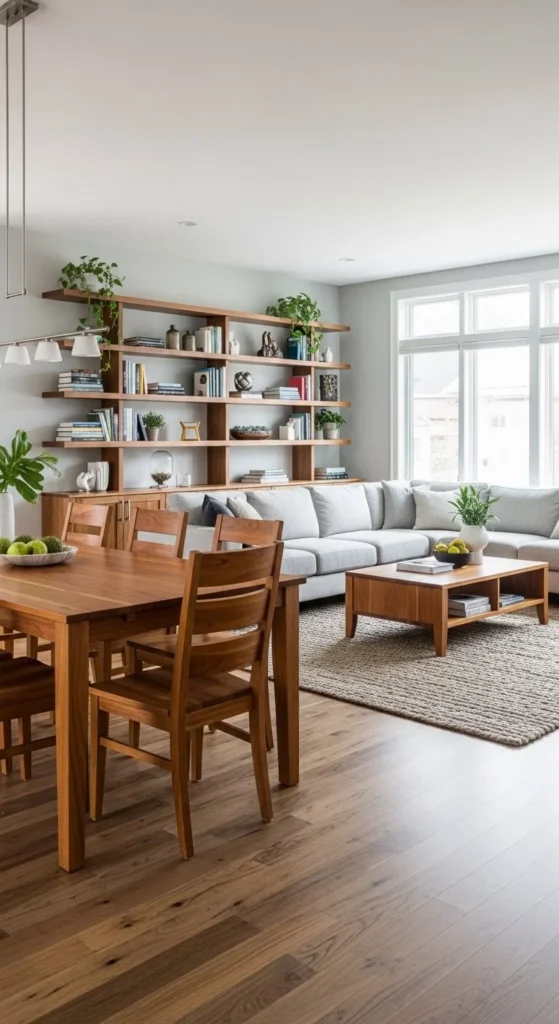
For example, if your dining table has wooden legs, include wood accents in the living room through shelves or tables.
Consistency creates cohesion.
Balance Lighting Across Zones
Lighting helps define areas and create atmosphere. Each zone should have its own light source while maintaining harmony.
Use:
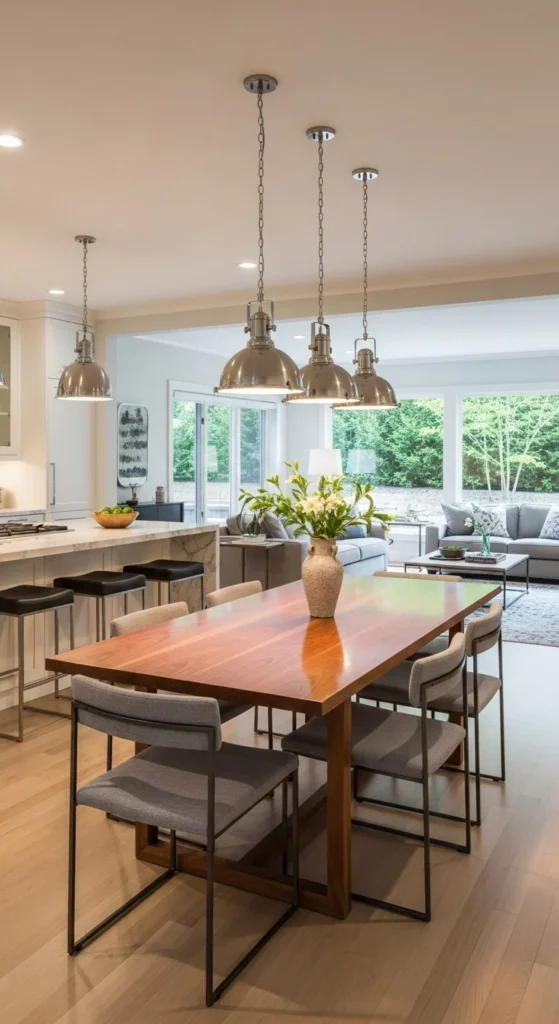
- Pendant lights over dining tables
- Floor lamps in living areas
- Under-cabinet lights in kitchens
Choose fixtures with similar finishes or shapes to maintain visual consistency.
Lighting should feel connected but purposeful.
Keep Furniture Proportions Balanced
Open spaces can feel awkward if furniture sizes don’t match the scale of the room.
Avoid:
- Tiny furniture in large spaces
- Oversized furniture that overwhelms the room
Choose pieces that feel proportional to the overall area. Balanced furniture creates flow and comfort.
Create Focal Points in Each Zone
Each area should have its own visual anchor.
Examples include:
Living room:
- Sofa, fireplace, or artwork
Dining area:
- Dining table or pendant light
Kitchen:
- Island or backsplash
Focal points give each zone purpose while still connecting to the overall space.
Use Decor Sparingly but Intentionally
Too much decor can make open spaces feel cluttered. Instead, focus on meaningful pieces.
Choose decor like:
- Plants
- Artwork
- Sculptural objects
Repeat decor styles across zones to maintain consistency.
Leave some empty space. Negative space makes the home feel calm and breathable.
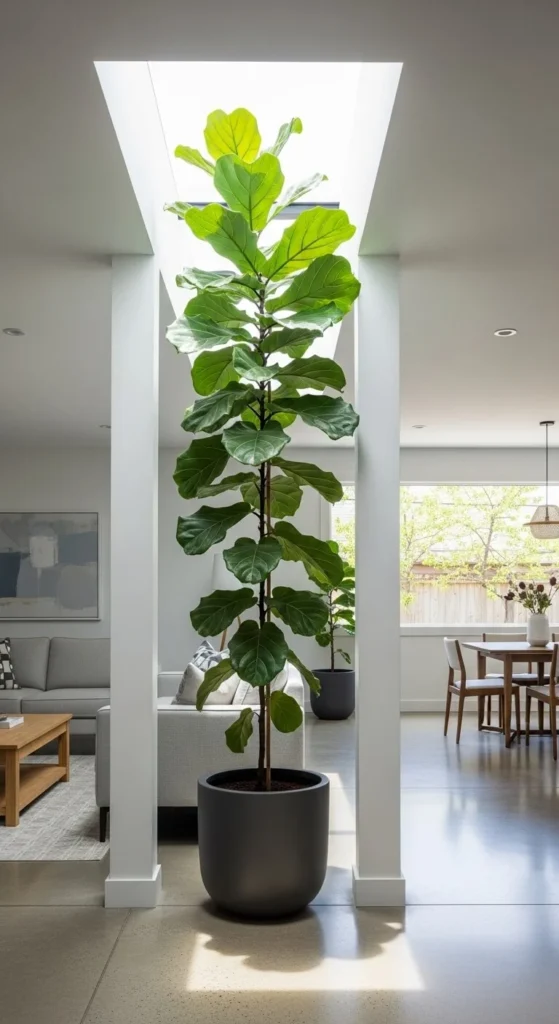
Add Vertical Elements for Balance
Tall elements help anchor open spaces visually.
Use:
- Floor lamps
- Tall plants
- Bookshelves
These draw the eye upward and balance the horizontal openness of the layout.
This adds dimension without adding clutter.
Maintain Clear Pathways
Open concept homes should feel easy to move through.
Avoid blocking natural walkways with furniture.
Make sure there is clear space between zones so movement feels smooth and natural.
This improves both functionality and visual flow.
Keep Everything Connected, Not Identical
Your spaces should feel connected but not repetitive.
For example:
- Use similar colors but different textures
- Repeat materials but vary shapes
- Keep consistency without copying everything exactly
This keeps the space interesting while maintaining harmony.
Avoid Common Open Concept Mistakes
Avoid these errors:
- Too many competing colors
- Random furniture placement
- Overdecorating
- Lack of clear zones
These mistakes break the seamless effect.
Intentional styling fixes these problems easily.
Why Seamless Styling Matters
When styled properly, open concept homes feel:
- More relaxing
- More organized
- More spacious
- More visually appealing
Seamless styling creates calm and balance.
Final Takeaway
Styling an open concept home is about creating harmony without walls. Use consistent colors, define zones with rugs and furniture, repeat materials, and maintain balance across the space. These simple techniques transform openness into a beautifully connected and functional home.
Save this guide for later and create an open concept space that feels seamless, calm, and effortlessly stylish.
Emily Parker is a home décor enthusiast and design blogger who believes every space deserves a touch of warmth and personality. With a love for cozy neutrals, modern textures, and DIY styling, she shares simple, beautiful ways to make your home feel like you. When she’s not rearranging throw pillows, you’ll find her hunting vintage finds or sipping coffee while planning her next room refresh.
Leave a Reply