

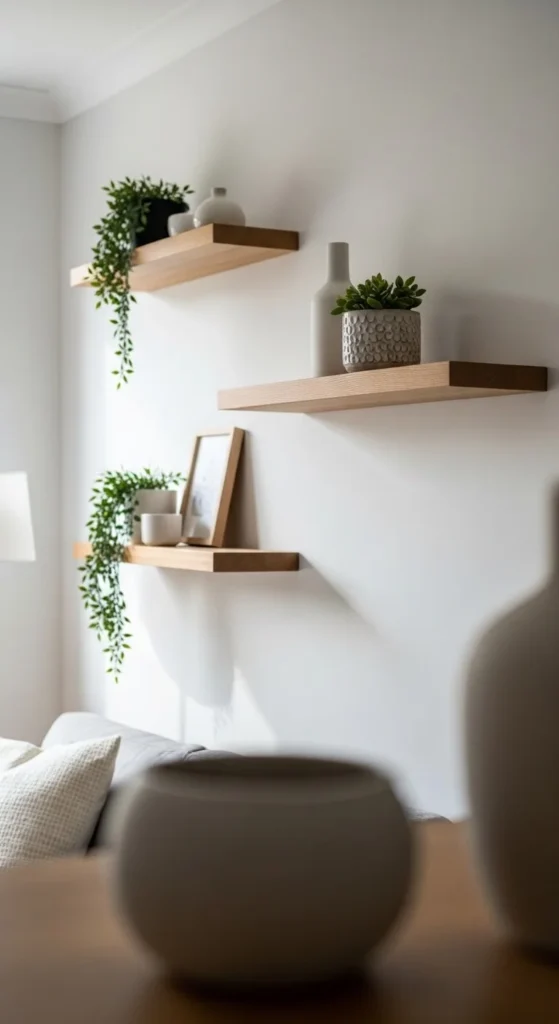
A clean wall can completely change the feel of a room. When storage stays light and simple, the space looks calm and organized instead of crowded. Minimal floating shelves are a great way to display items while keeping walls neat and open. They hold everyday objects, decor pieces, and small plants without bulky cabinets or heavy brackets.
The beauty of floating shelves is their simplicity. A small plank on the wall can hold books, photos, or kitchen items while leaving plenty of empty space around it. That empty space is what keeps the room feeling relaxed.
The ideas below show practical ways to use floating shelves in different rooms. Each option focuses on simple materials, affordable setups, and easy DIY approaches so anyone can try them at home.
1. Single Slim Wood Shelf
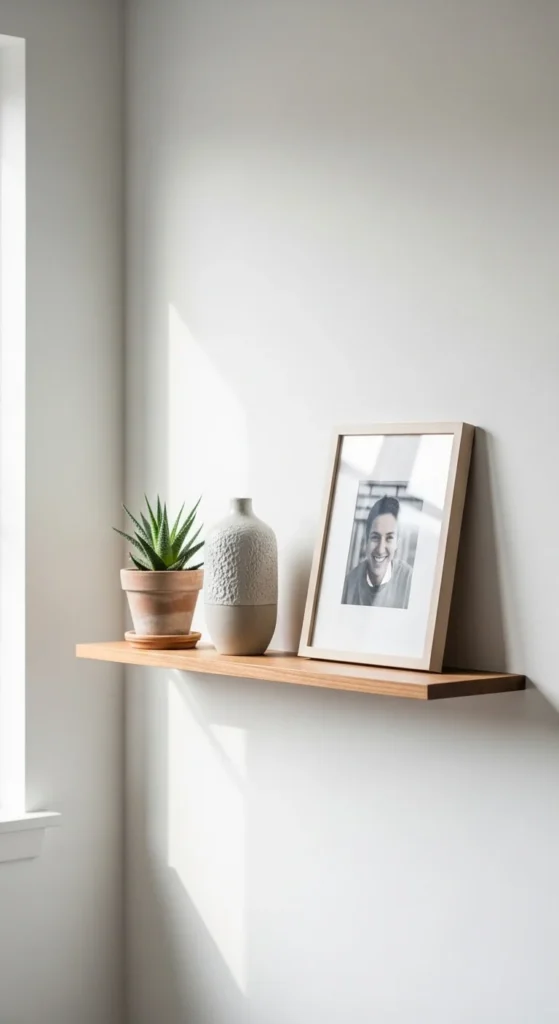
A single slim shelf is one of the easiest ways to keep a wall tidy while still displaying a few favorite pieces. One narrow plank mounted at eye level can hold a plant, a small photo frame, and maybe a candle.
This style works well in small rooms. It adds storage without filling the wall.
Use a light wood board. Pine or plywood works well and stays affordable. Paint it white for a seamless look, or keep the natural grain for warmth.
Spacing is key. Leave empty wall space around the shelf. That empty area keeps the design calm.
A simple DIY method works well here. Buy a straight wood plank, sand it, and attach hidden floating brackets. Most hardware stores sell these for a low price.
Keep the decor minimal. Two or three items are enough.
Try this in hallways, bedrooms, or small apartments where wall space is limited. The result feels light and uncluttered.
2. Two Floating Shelves Stacked Vertically
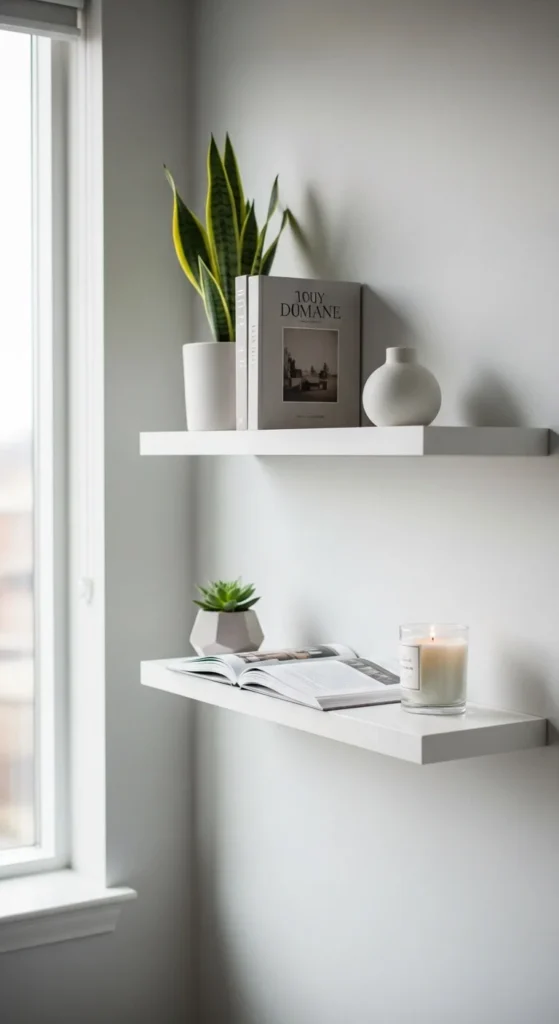
Stacking two shelves vertically creates balance while still keeping the wall open.
Place the shelves about 12 to 16 inches apart. That spacing allows room for decor without making the wall look crowded.
Use the top shelf for lighter items like small plants or framed photos. The lower shelf can hold a few books or decorative bowls.
A great budget option is using simple wooden boards painted the same color as the wall. When shelf and wall match, the design looks extra clean.
This setup works well beside a sofa or near a reading chair.
Keep colors neutral. White, light oak, or soft gray maintain the minimal feel.
Limit items to three or four per shelf. When too many pieces appear, the clean look disappears quickly.
3. Corner Floating Shelf
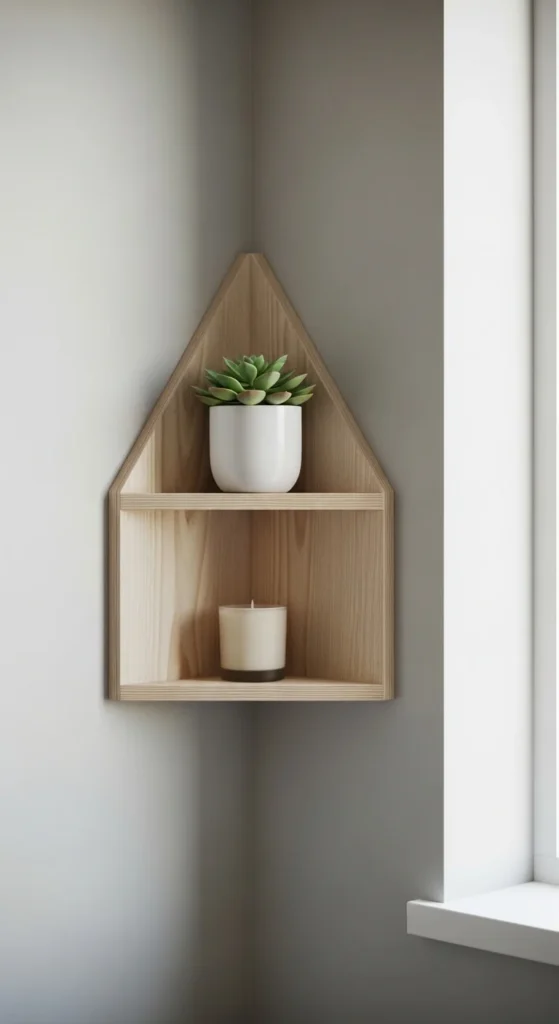
Corners often sit empty, but a corner floating shelf can turn that unused space into a functional spot.
A triangular or curved shelf fits neatly where two walls meet.
This works well in small apartments where every inch matters.
Add a small plant, diffuser, or decorative bowl. The corner shelf becomes a subtle accent instead of a heavy storage piece.
DIY is simple. Cut a triangular wood board and attach two hidden brackets inside the corner walls.
Paint the shelf the same color as the wall for a seamless appearance.
Try this idea in bathrooms, bedrooms, or entryways where space is limited.
Even one small corner shelf can make a room feel more organized.
4. Thin Shelf Above the Desk
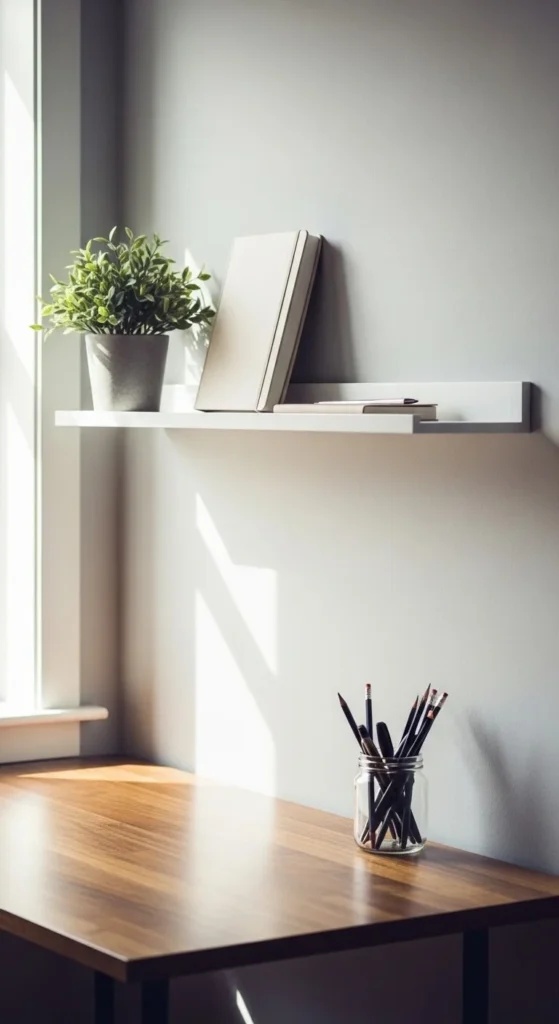
A desk area can quickly become cluttered with supplies. A thin floating shelf above the desk keeps items off the work surface.
Install the shelf about 18 inches above the desk.
Use it for notebooks, a small plant, or a desk lamp.
This layout frees up workspace while keeping useful items within reach.
A simple plywood board painted white works well here. It blends nicely with most desk setups.
For renters, lightweight floating shelves with wall anchors are a good option.
Keep the shelf organized. One plant, one stack of notebooks, and one small container for pens can be enough.
The desk immediately looks cleaner.
5. Long Floating Shelf Across the Wall
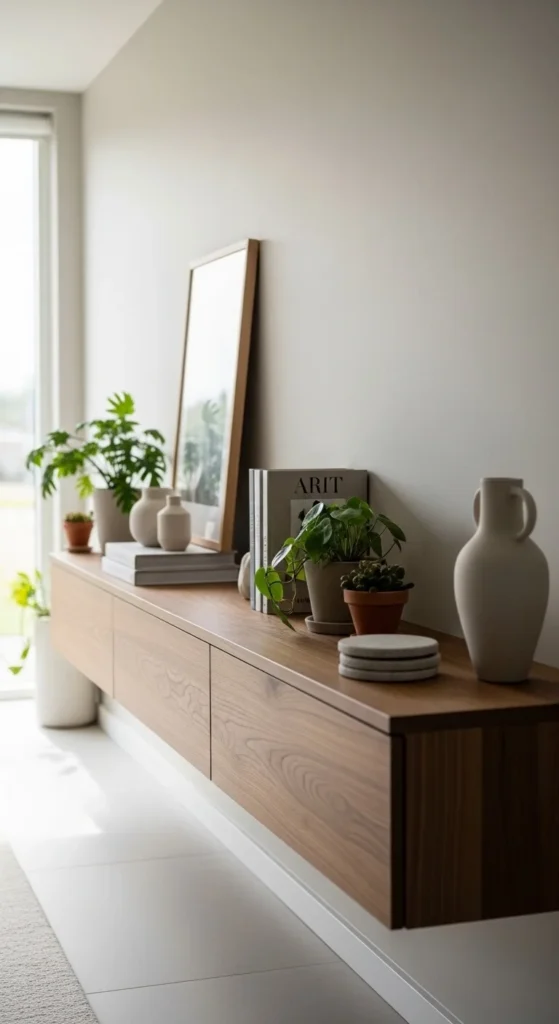
A long shelf running across a wall creates a calm visual line.
This works especially well behind sofas or beds.
Instead of several small shelves, one long shelf keeps the wall simple.
Use it to display framed photos, books, or plants spaced evenly.
A budget DIY version uses a long pine board with hidden brackets.
Keep decorations spaced apart. Empty gaps between objects help maintain the clean look.
If the wall is large, a long shelf can make the room feel more balanced without heavy cabinets.
6. Narrow Shelf for Small Plants
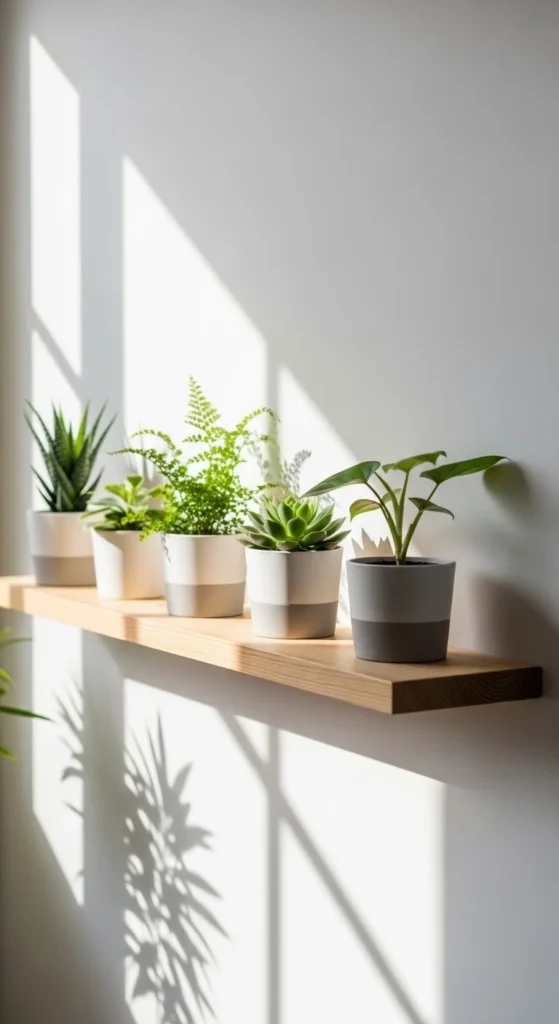
Plant lovers can dedicate a shelf to greenery.
Choose a narrow shelf just wide enough for small pots.
Place two or three plants with different leaf shapes. That variety adds visual interest.
Avoid placing too many plants. Three small pots often look better than ten crowded ones.
Use terracotta or white ceramic pots for a calm color palette.
A shelf like this works beautifully near windows where plants receive natural light.
7. Floating Shelf With Hidden LED Lighting
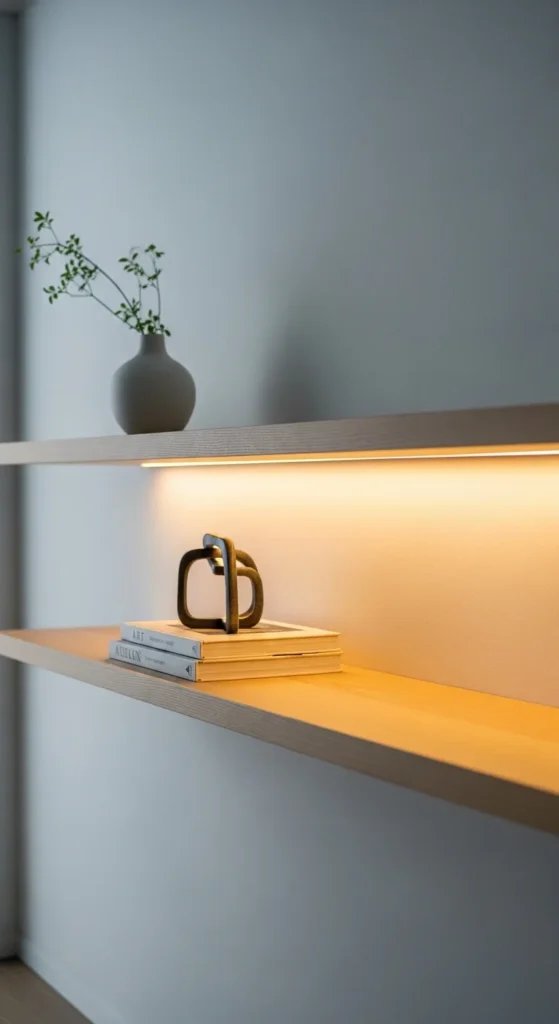
A soft glow can make floating shelves feel more stylish while still minimal.
Install a small LED strip underneath the shelf.
The light softly highlights objects placed on the shelf.
This works nicely in living rooms or bedrooms.
LED strips are affordable and easy to install. Many come with adhesive backing.
Use warm light instead of bright white light. Warm tones feel calm and cozy.
Keep decor simple so the lighting remains the main feature.
8. Floating Shelf in the Entryway
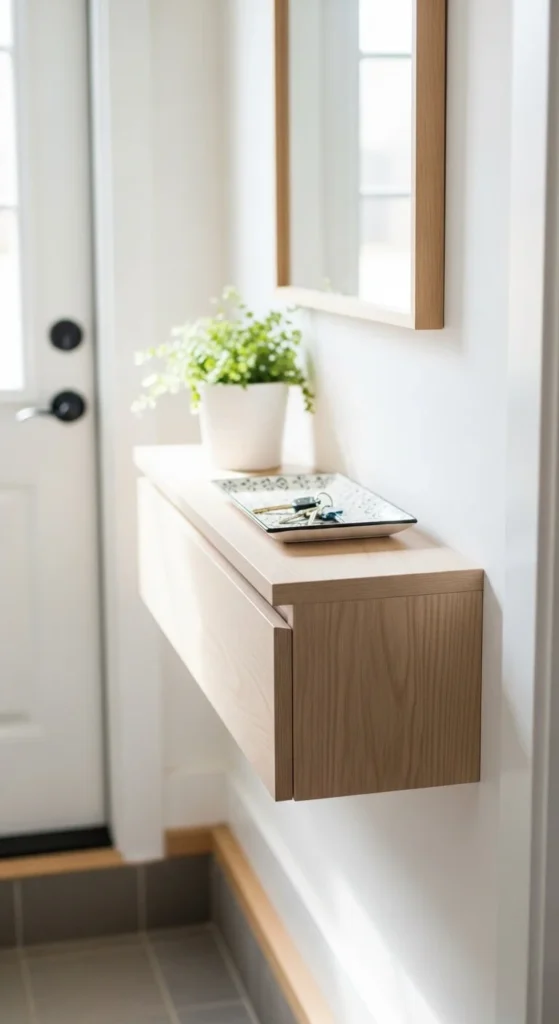
Entryways often collect clutter. A floating shelf can organize everyday items.
Install a shelf near the door and add a small tray for keys.
A tiny plant or candle adds a welcoming touch.
Use a sturdy wood board since keys and wallets can add weight.
Below the shelf, a few wall hooks can hold bags or jackets.
This small change keeps the entry area tidy.
9. Mini Floating Shelf for Bathroom Essentials
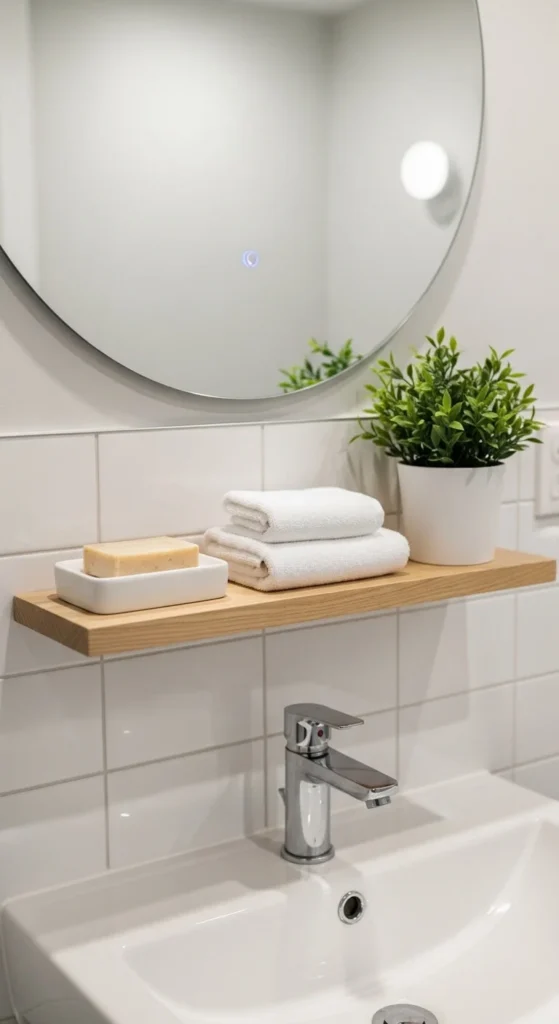
Bathrooms benefit from extra storage without bulky cabinets.
A mini floating shelf above the sink works perfectly.
Place soap dispensers, folded towels, or skincare items.
Choose moisture-resistant wood or sealed plywood.
White shelves blend nicely with bathroom tiles.
Keep items organized in small trays so the shelf stays neat.
10. Floating Shelves Around the TV
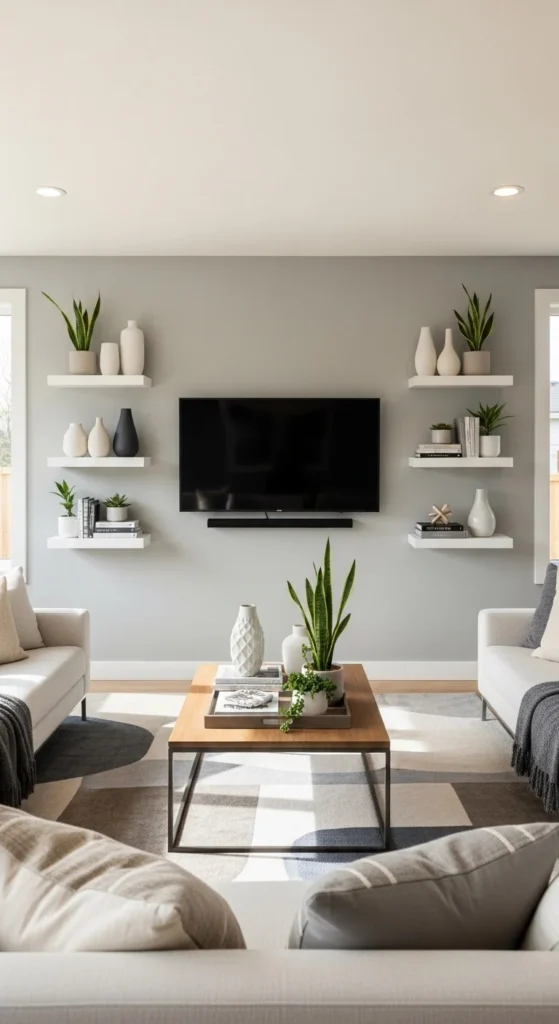
Floating shelves around a TV create balance on the wall.
Place one shelf on each side or above the screen.
Decorate lightly with plants, small sculptures, or books.
Avoid heavy or large decor pieces.
The TV wall looks styled while still minimal.
11. Tiny Shelf for Candles
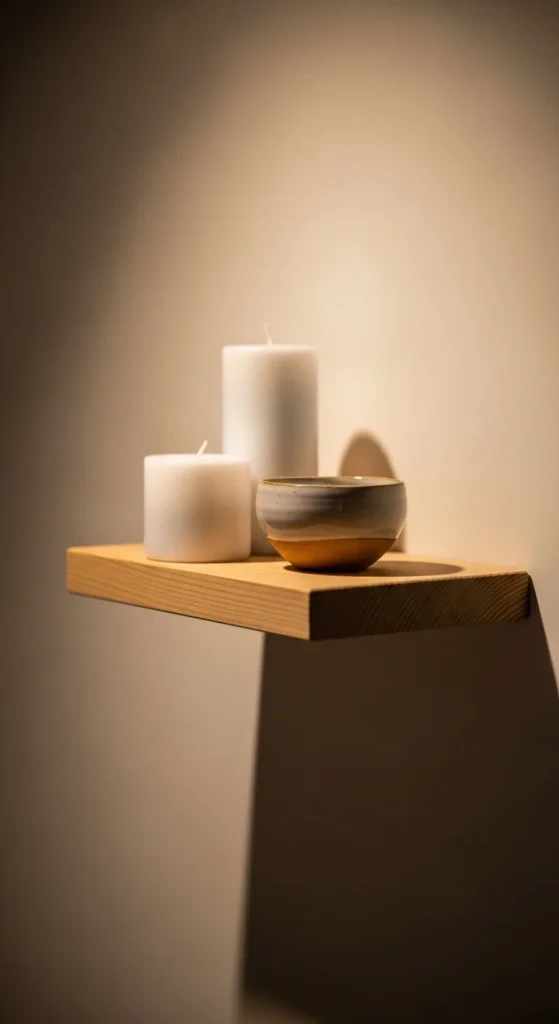
A tiny shelf can hold candles and create a calm corner.
Use neutral candles like white or beige.
Add one small decorative bowl.
Place the shelf near seating areas to create a cozy atmosphere.
This design stays simple yet stylish.
12. Floating Shelf Above the Bed
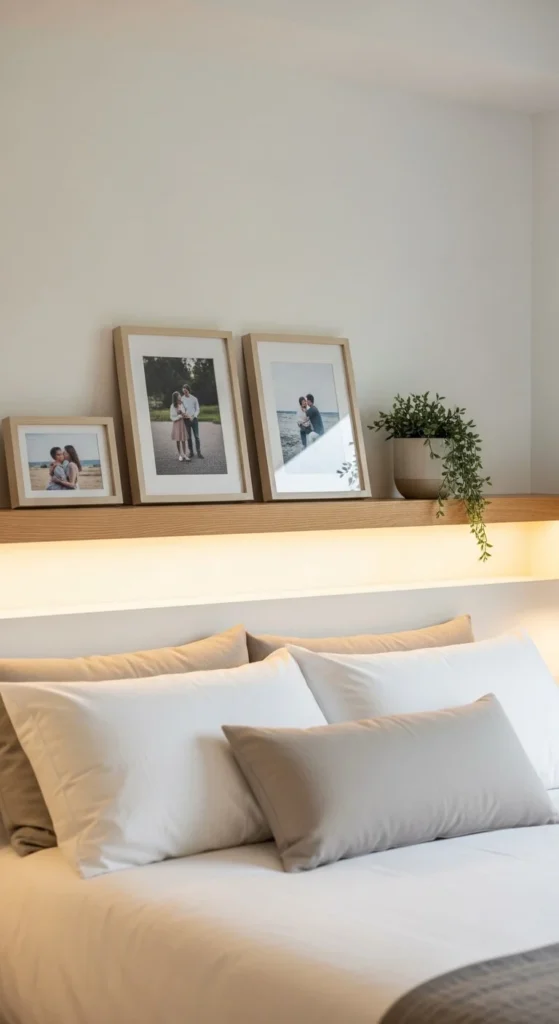
A shelf above the bed can replace bulky headboards.
Choose a simple wooden plank.
Display two frames and a small plant.
Keep it minimal so the bedroom feels peaceful.
Secure installation is important since the shelf sits above the bed.
13. Floating Shelf for Cookbooks
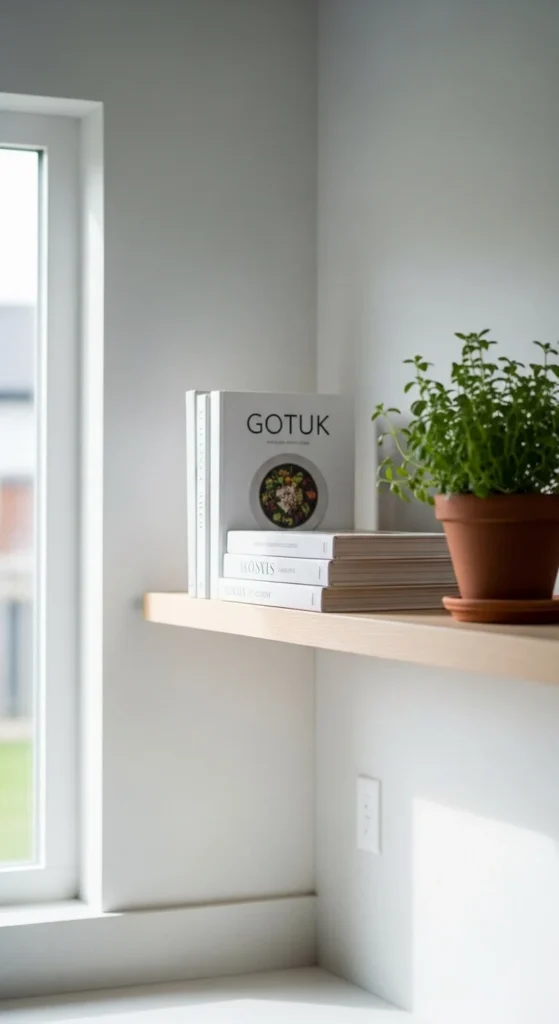
In the kitchen, floating shelves keep cookbooks within reach.
Choose a sturdy board.
Place books standing upright with a small herb plant beside them.
Limit the number of books so the shelf stays clean and organized.
14. Floating Shelf for Art Display
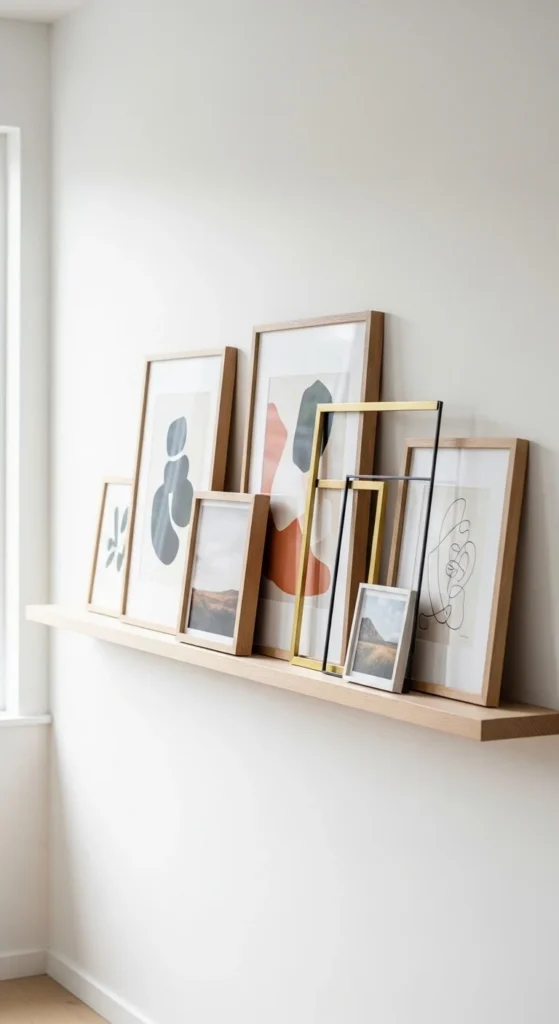
A picture ledge shelf works well for rotating artwork.
Lean frames instead of hanging them.
This allows easy swapping of prints.
Keep frames simple and neutral.
15. Glass Floating Shelf
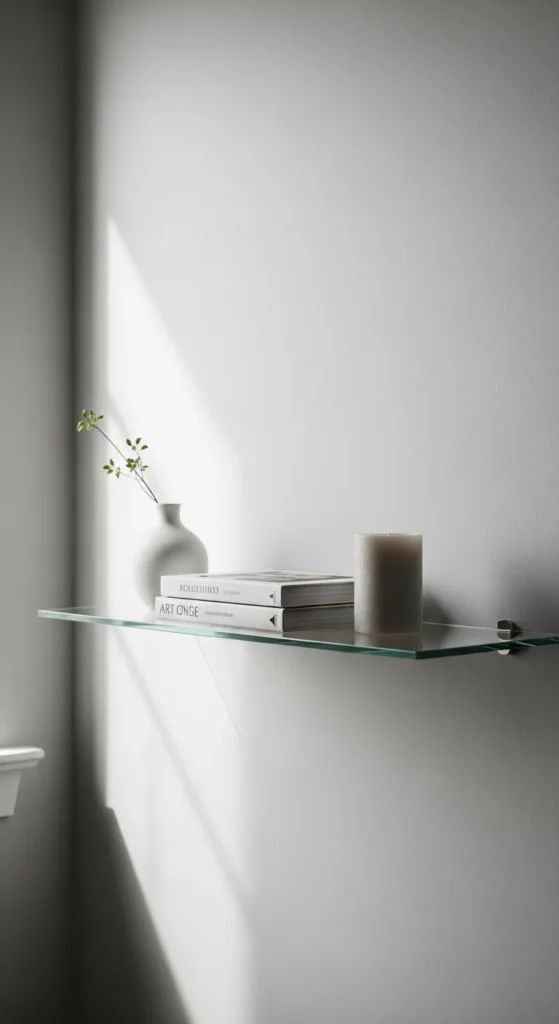
Glass shelves feel extremely light visually.
They work well in small rooms where wood might feel heavier.
Use them for small decor or perfumes.
The transparent design keeps walls looking open.
16. Floating Shelf With Decorative Brackets Hidden
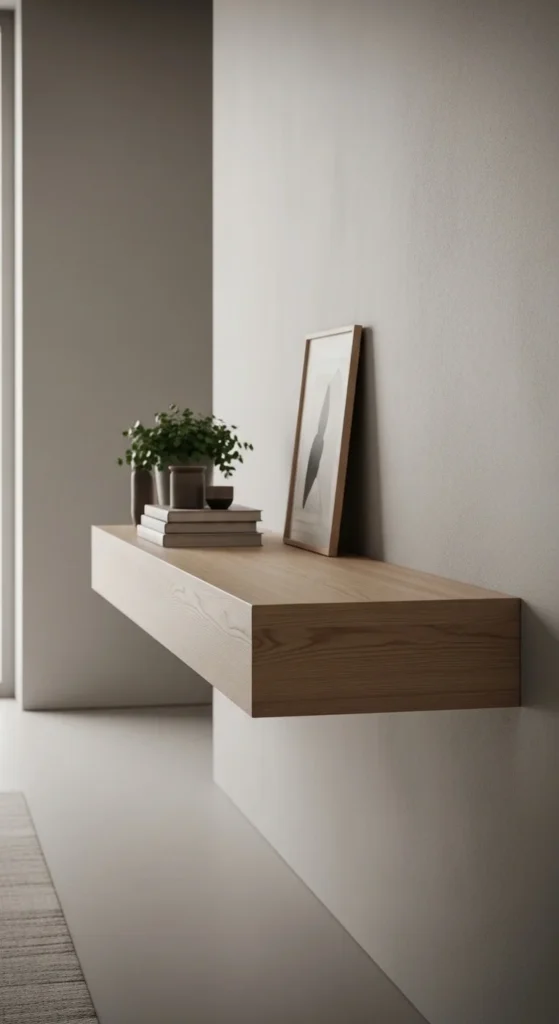
Hidden brackets create the classic floating effect.
The shelf appears to come directly out of the wall.
This simple design fits almost any room.
DIY kits make installation straightforward.
17. Ladder Style Floating Shelves
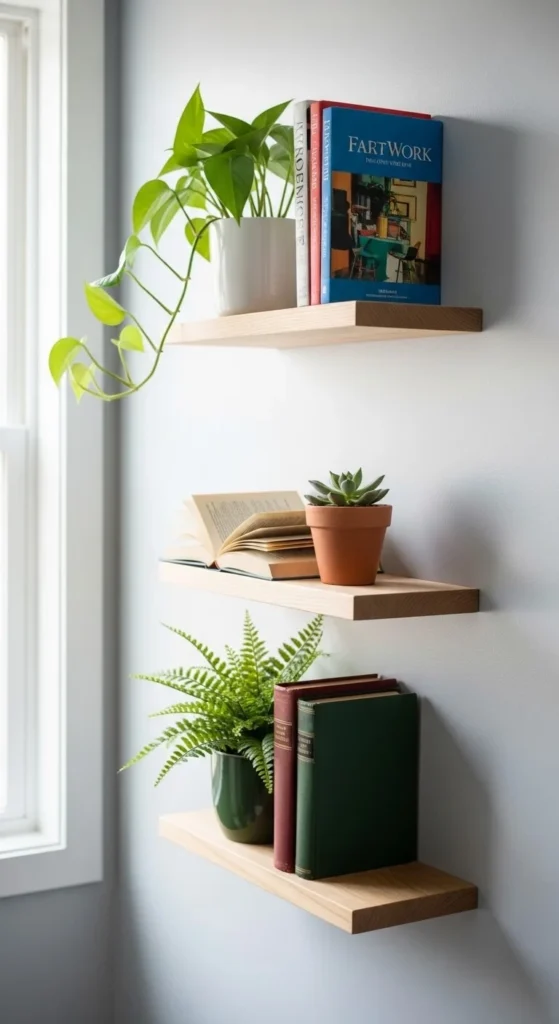
Arrange shelves in a descending pattern like a ladder.
The pattern adds visual interest while staying simple.
Use identical wood boards for consistency.
Decorate lightly so the layout stays balanced.
18. Floating Shelf With Storage Box
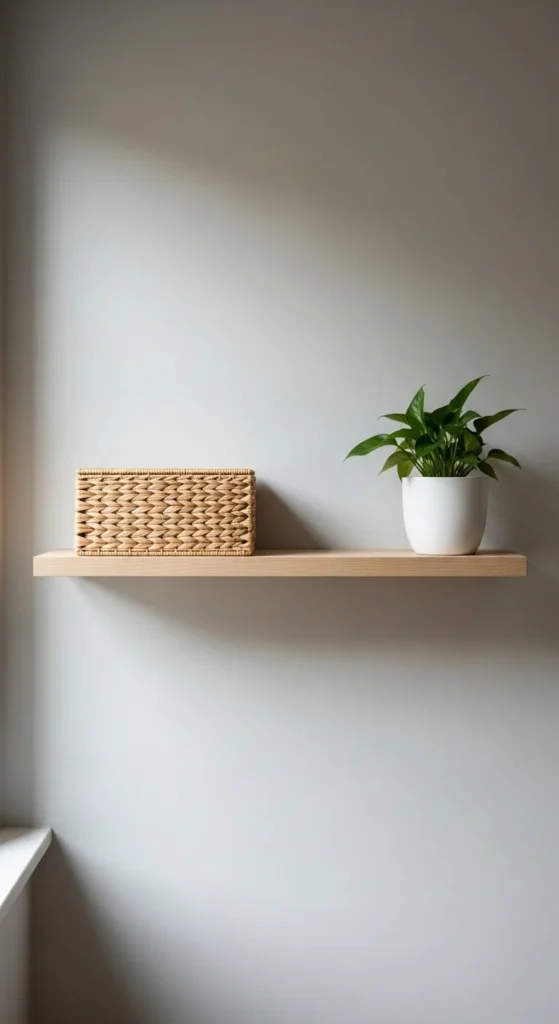
Add a small storage box on a shelf.
This hides clutter like remotes or chargers.
Choose woven or fabric boxes for a soft look.
The shelf still looks clean while providing hidden storage.
19. Floating Shelf Near a Window
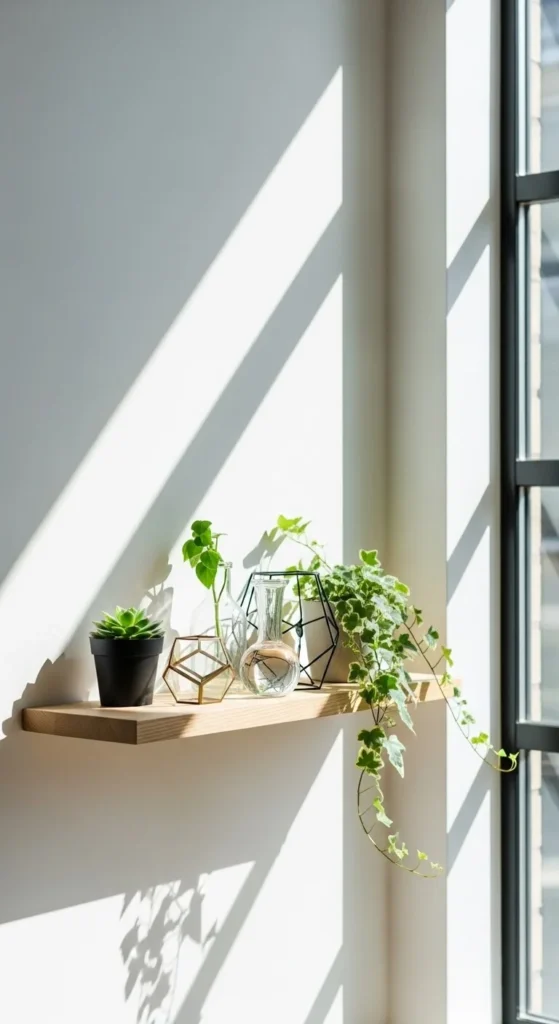
A shelf near a window works beautifully for plants or glass decor.
Sunlight highlights the objects and adds natural charm.
Keep items minimal so light can pass through.
20. Floating Shelf in a Reading Corner
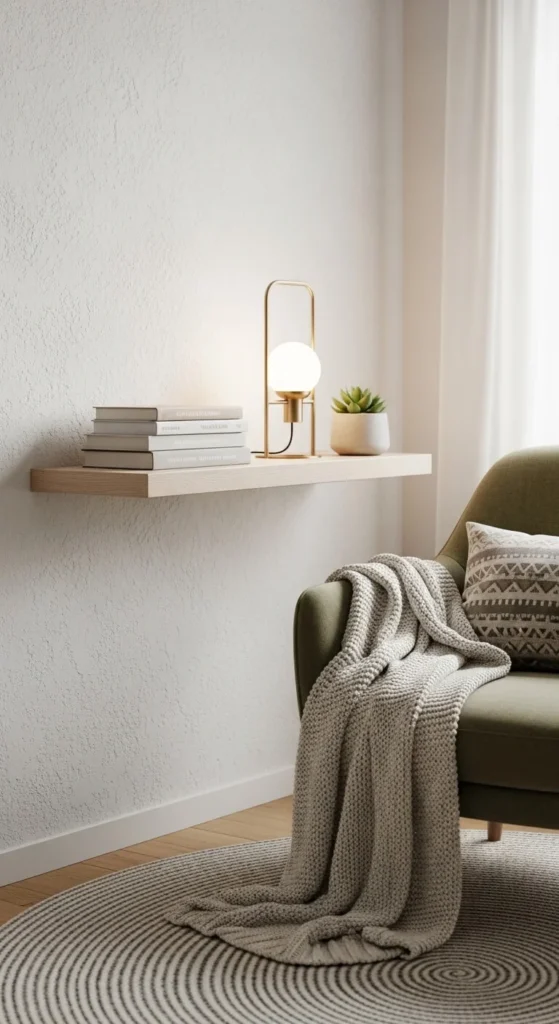
A reading corner benefits from one simple shelf.
Place a few favorite books and a small lamp.
The shelf keeps books nearby without needing a full bookshelf.
21. Ultra-Thin Metal Floating Shelf
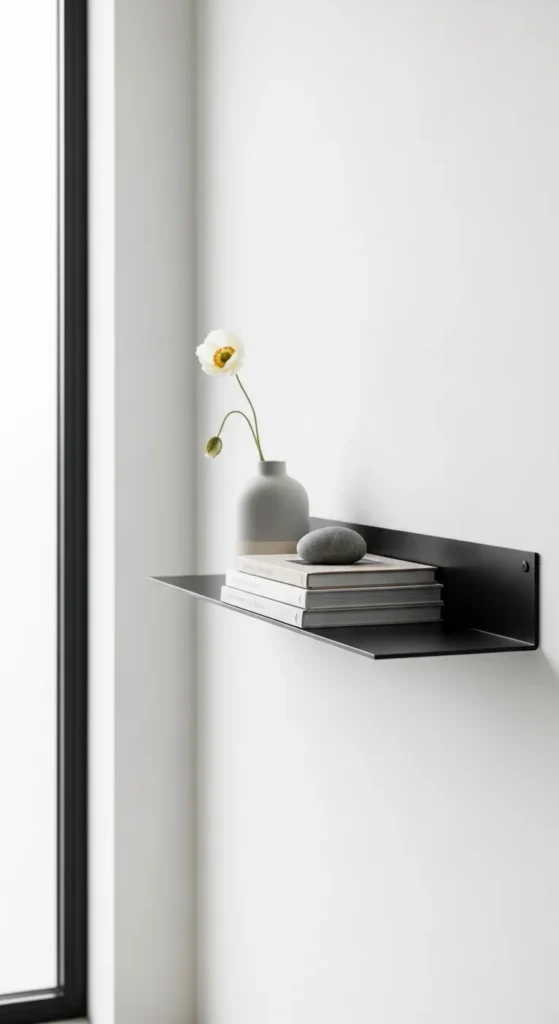
Metal shelves bring a modern touch.
Choose ultra-thin designs to keep the wall light.
Matte black works well with neutral interiors.
Use it for small decor or books.
22. Floating Shelf With Neutral Decor Theme
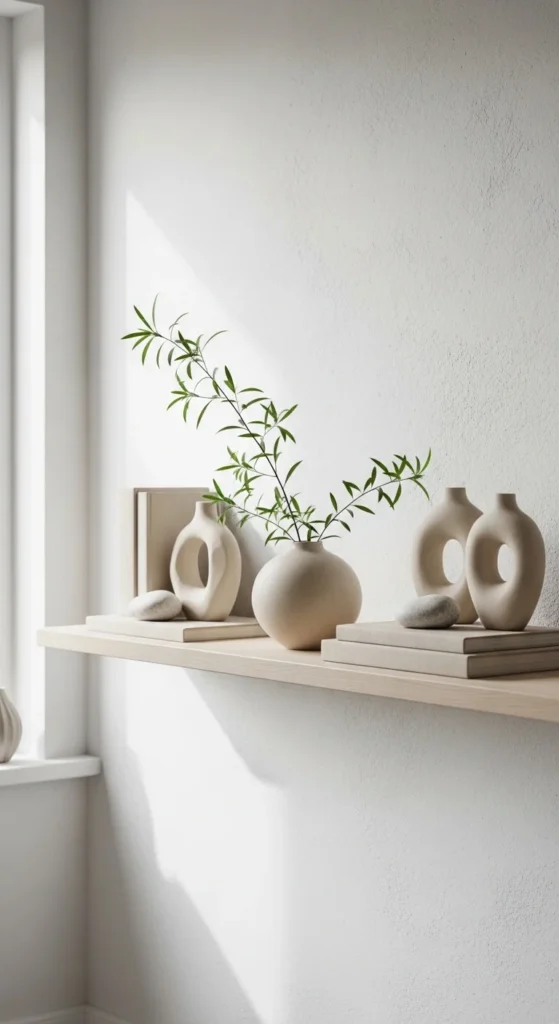
Keeping decor in similar colors makes shelves look organized.
Choose neutral tones like beige, white, and light wood.
Use three items per shelf for balance.
This keeps the wall calm and tidy.
Conclusion
Minimal floating shelves offer a simple way to organize and decorate walls without heavy furniture. A single plank of wood can hold plants, books, photos, or everyday items while still leaving plenty of open space around it. That open space helps rooms feel calm and uncluttered.
Many of these ideas use affordable materials and easy DIY methods. A basic board, hidden brackets, and simple decor pieces can transform an empty wall in just an afternoon.
Start with one shelf in a small area. Once you see how clean and organized the space feels, adding another shelf or two becomes an easy upgrade for almost any room in the home.
Emily Parker is a home décor enthusiast and design blogger who believes every space deserves a touch of warmth and personality. With a love for cozy neutrals, modern textures, and DIY styling, she shares simple, beautiful ways to make your home feel like you. When she’s not rearranging throw pillows, you’ll find her hunting vintage finds or sipping coffee while planning her next room refresh.
Leave a Reply