

Gallery walls are one of those design features that look effortless when done right—and chaotic when they’re not. Too many frames, uneven spacing, or random sizing can quickly turn a wall into visual noise. A balanced gallery wall, on the other hand, feels intentional, calm, and beautifully curated.
The good news? Balance isn’t about perfection. It’s about planning, rhythm, and restraint.
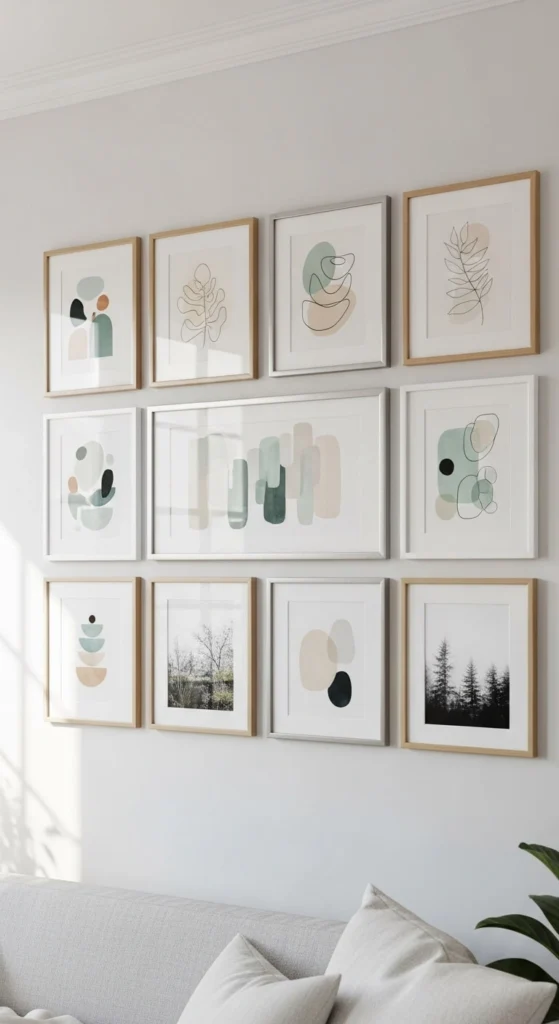
Here’s a clear, stress-free way to create a gallery wall that feels cohesive and polished instead of cluttered.
Start With a Clear Anchor Point
Every balanced gallery wall needs a starting point.
Choose one:
- The center of the wall
- The middle frame
- The largest piece
- The furniture below (sofa, console, bed)
Your anchor sets the visual weight for the entire arrangement.
Rule to remember:
Gallery walls feel balanced when everything relates back to one central reference—not when frames drift randomly.
Decide on a Layout Style Before Hanging Anything
Balance depends heavily on layout.
Pick one style and stick to it:
- Grid: clean, structured, symmetrical
- Organic: relaxed, varied, but still controlled
- Linear: frames aligned along a single horizontal or vertical line
Avoid mixing layout styles. That’s where imbalance starts.
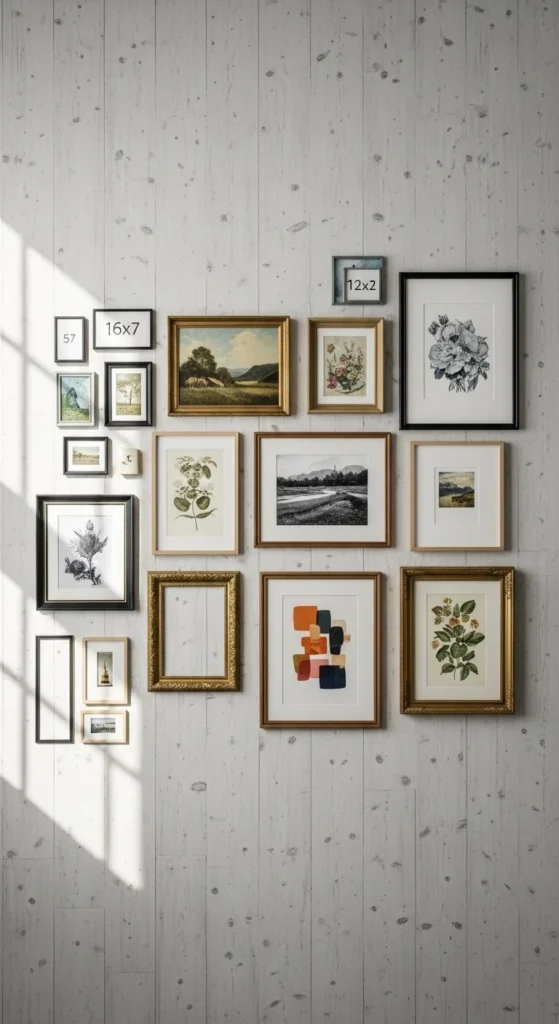
Once you commit to a layout, decisions get easier.
Limit Your Frame Color Palette
Too many frame styles compete for attention.
For a balanced look:
- Choose 1–2 frame colors max
- Keep finishes consistent (all matte, all wood, etc.)
- Avoid mixing ornate and ultra-modern frames
Neutral frames let the artwork shine and prevent visual overload.
Easy combo ideas:
- Black + white
- Natural wood + white
- All-black for a modern look
Vary Size, But Control the Scale
Balance doesn’t mean all frames are the same size—but it does mean they relate.
Aim for:
- A mix of large, medium, and small frames
- No extreme size jumps next to each other
- Similar visual weight across the wall
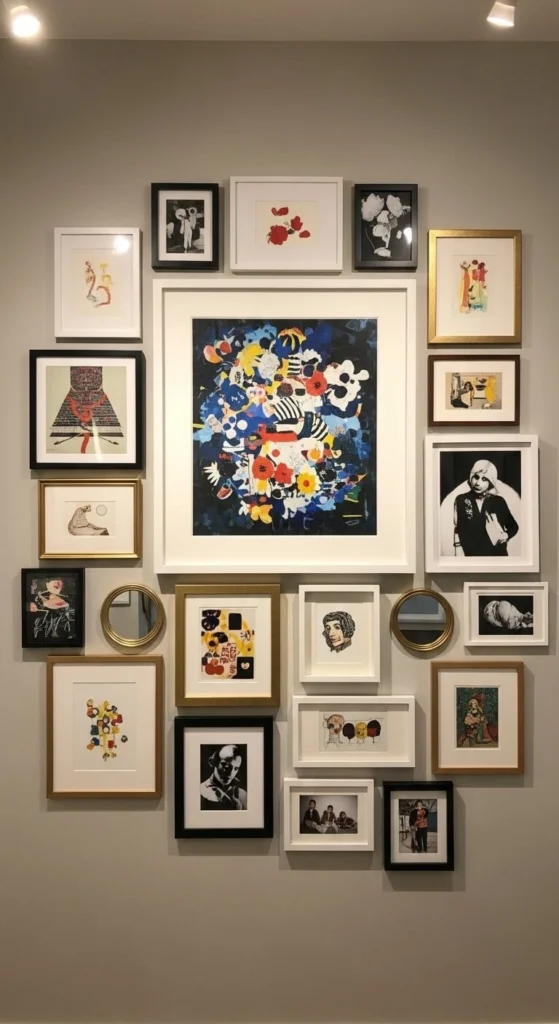
If one frame feels too dominant, counterbalance it with multiple smaller pieces nearby.
Keep Spacing Consistent
Uneven spacing is one of the fastest ways to make a gallery wall feel messy.
Use:
- 2–3 inches between frames
- The same spacing throughout the entire wall
This consistency creates calm—even in an organic layout.
Tip:
Cut cardboard templates the size of your frames and tape them to the wall first to test spacing.
Treat the Gallery as One Big Shape
Instead of thinking about individual frames, look at the overall outline.
A balanced gallery wall usually forms:
- A rectangle
- A square
- A soft oval shape
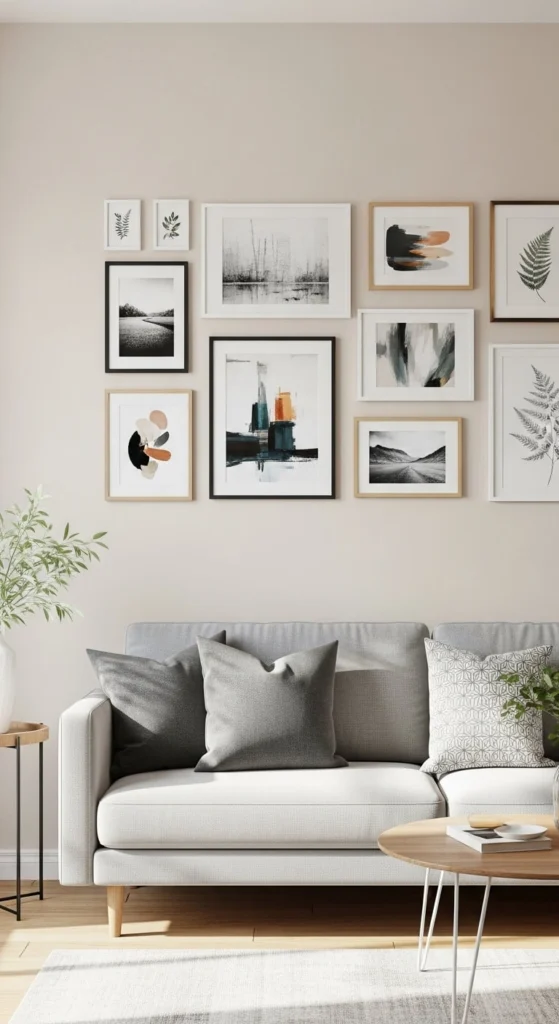
If the outer edges feel uneven or lopsided, adjust before hanging.
Mix Artwork Styles—But Keep a Theme
Variety adds interest. Randomness adds chaos.
You can mix:
- Photography
- Line art
- Abstracts
- Illustrations
But keep one unifying thread:
- Similar color tones
- Similar subject matter
- Similar mood
This keeps the wall interesting and cohesive.
Hang at the Right Height (This Matters More Than You Think)
A perfectly styled gallery wall can still look off if it’s hung too high or low.
General guidelines:
- Center of the gallery at eye level
- Above furniture: start 6–8 inches above it
- Hallways: keep consistent height down the wall
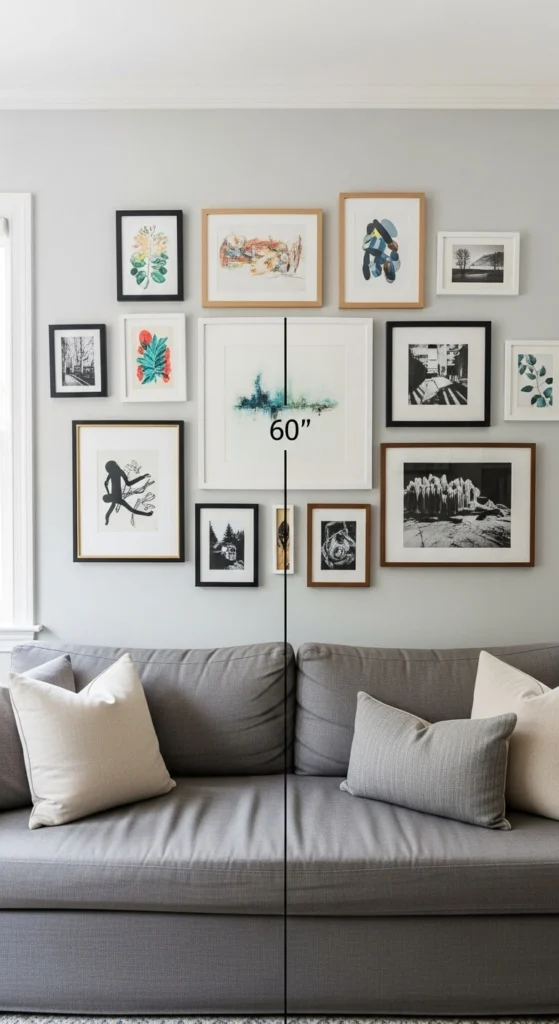
Height consistency is key to balance.
Use Negative Space on Purpose
Balance isn’t about filling every inch.
Leave:
- Small gaps around the edges
- Breathing room between clusters
- Space for the wall to show through
Empty space gives the artwork room to stand out and keeps the wall from feeling heavy.
Add One Visual Pause
Too many detailed pieces in one area can feel busy.
Create a pause by:
- Including one very simple print
- Using a frame with lots of white space
- Leaving a small area less dense
This gives the eye a place to rest—and improves overall balance.
Step Back and Adjust Before Final Hanging
Before committing:
- Tape all templates to the wall
- Step back several feet
- Look at it from different angles
Ask:
- Does one side feel heavier?
- Does the shape feel even?
- Does your eye move smoothly?
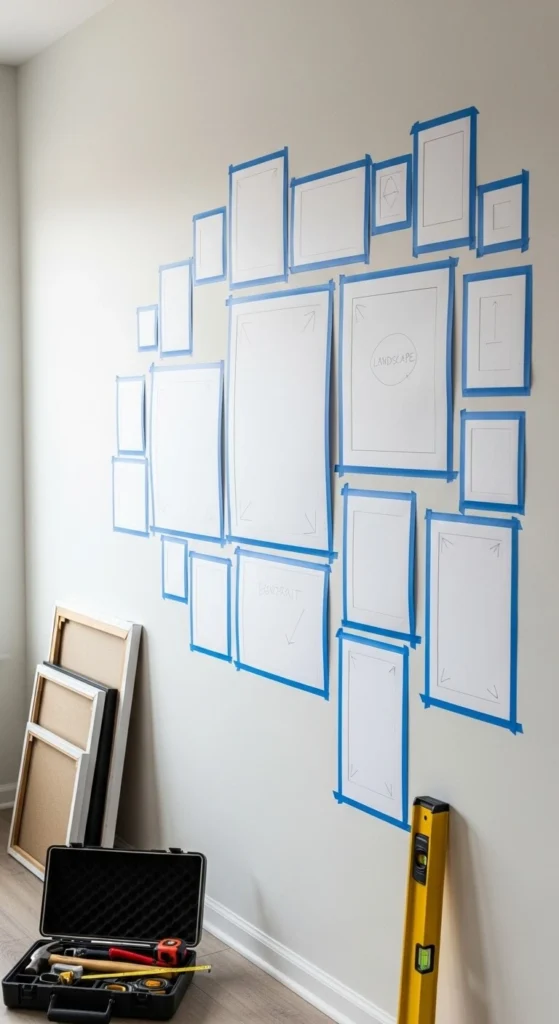
Adjust now—it’s much easier than fixing nail holes later.
Don’t Add Everything at Once
Gallery walls don’t need to be finished in one day.
Start with:
- The core frames
- Then live with it
- Add one or two pieces later if needed
Overfilling is the most common mistake.
Final Balance Check
When you’re done, ask:
- Does the wall feel calm?
- Does it feel intentional?
- Does anything feel unnecessary?
If the answer is yes, you’ve succeeded.
The Takeaway
A balanced gallery wall isn’t about symmetry or strict rules. It’s about planning, consistency, and visual flow.
Remember:
- Start with an anchor
- Choose one layout style
- Keep spacing consistent
- Balance sizes and weight
- Edit before adding more
When a gallery wall feels balanced, it elevates the entire room.
Save this guide for later before you start hanging frames—you’ll be glad you planned first.

Emily Parker is a home décor enthusiast and design blogger who believes every space deserves a touch of warmth and personality. With a love for cozy neutrals, modern textures, and DIY styling, she shares simple, beautiful ways to make your home feel like you. When she’s not rearranging throw pillows, you’ll find her hunting vintage finds or sipping coffee while planning her next room refresh.
Leave a Reply