

Small bedrooms can feel tricky. You want comfort, storage, and style—but too much of anything makes the room feel tight. The secret isn’t owning less. It’s choosing smarter pieces and letting the room breathe.
A well-decorated small bedroom feels calm the moment you step in. Nothing blocks your movement. Nothing fights for attention. Everything has a reason to be there.
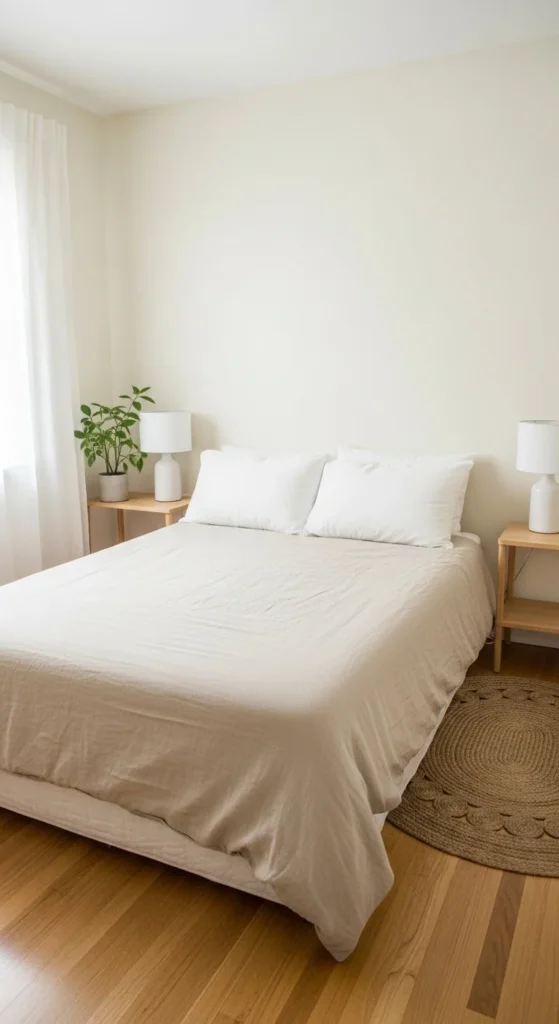
Here’s how to decorate a small bedroom so it feels spacious, cozy, and never overcrowded.
Start by Measuring What Actually Fits
Overcrowding often starts with furniture that’s simply too big.
Before buying or rearranging:
- Measure the room
- Measure the bed
- Measure walking paths
Aim to keep:
- At least 24–30 inches of clear space on one side of the bed
- Clear access to doors and wardrobes
Smart rule:
If a piece blocks movement, it’s the wrong size—even if you love it.
Let the Bed Stay Visually Light
The bed dominates a small bedroom, so how it looks matters.
Choose:
- Simple bed frames
- Slim headboards
- Beds with legs instead of solid bases
Avoid:
- Heavy footboards
- Bulky storage beds (unless truly needed)
- Overly tall headboards
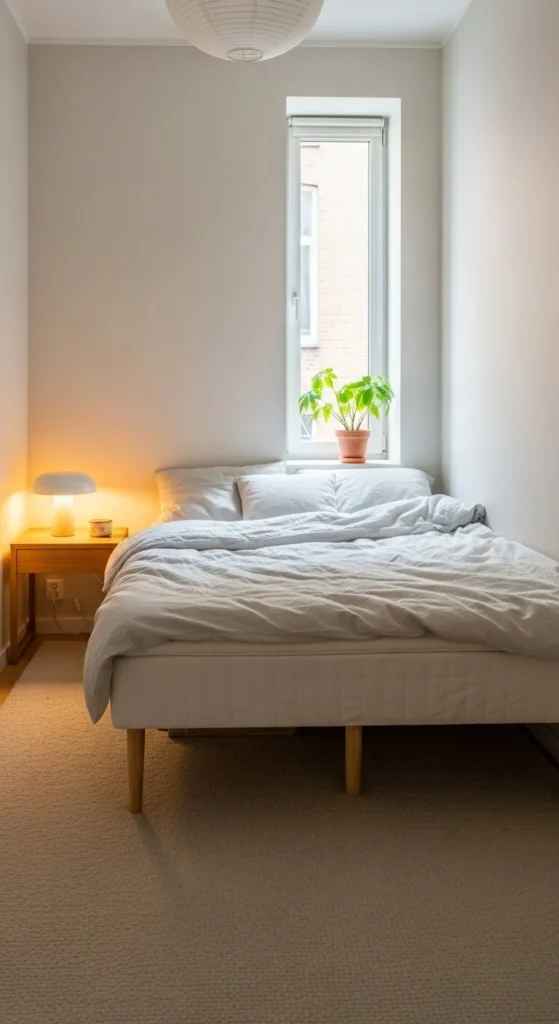
Visible floor under the bed instantly makes the room feel larger.
Keep Bedding Clean and Minimal
Too many layers can overwhelm a small space.
Go for:
- One neutral duvet or comforter
- Two sleeping pillows
- One or two decorative pillows max
Skip excessive throws or busy patterns.
Tip:
Crisp, simple bedding makes the entire room feel more open.
Use Wall Space Instead of Floor Space
In small bedrooms, the floor is precious.
Shift storage upward:
- Wall-mounted shelves
- Floating bedside tables
- Wall hooks for bags or accessories
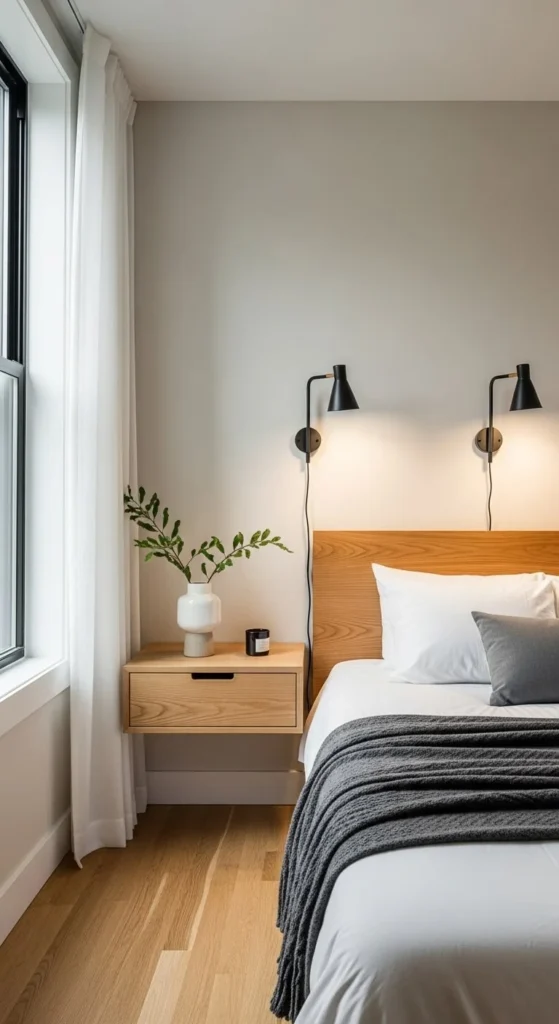
This keeps the room functional without crowding it.
Choose Bedside Tables With a Slim Profile
Chunky nightstands can overwhelm a small bedroom fast.
Look for:
- Narrow tables
- Floating shelves
- Small stools or wall-mounted ledges
Limit bedside styling to:
- One lamp or wall light
- One small item (book or tray)
Less surface clutter = more visual space.
Use Light Colors to Open the Room
Dark tones can work—but only in carefully styled spaces.
For most small bedrooms, lighter colors help:
- Warm white
- Soft beige
- Pale grey
- Muted pastels
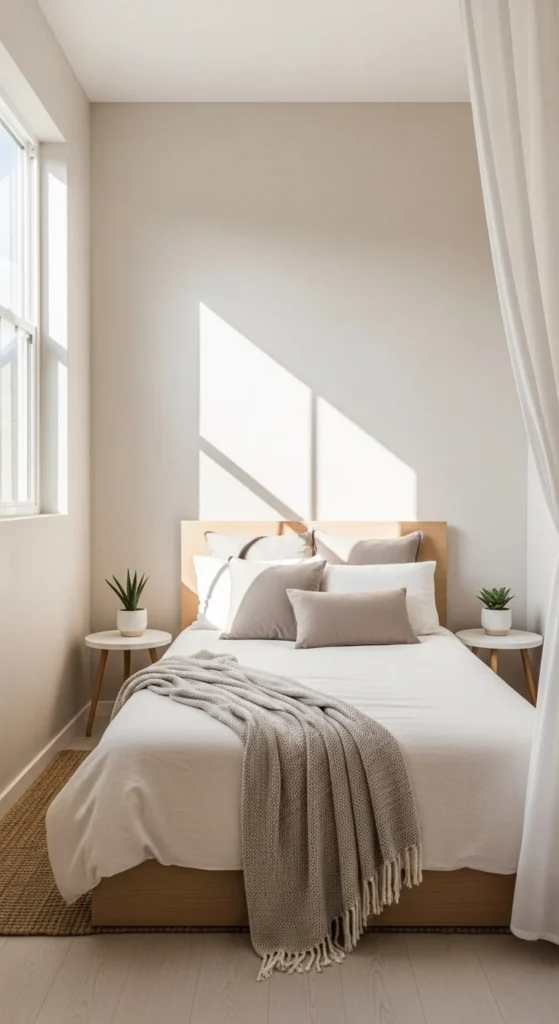
Light walls reflect light and visually push the boundaries outward.
Rely on Vertical Lines to Add Height
If a room can’t grow wider, let it feel taller.
Try:
- Floor-length curtains hung high
- Tall mirrors
- Vertical wall art kept minimal
Avoid filling the walls with lots of small items. One tall element works better than many short ones.
Use Mirrors to Multiply Space
Mirrors are powerful in small bedrooms.
Best placements:
- Opposite a window
- Beside the bed
- Leaning against a wall
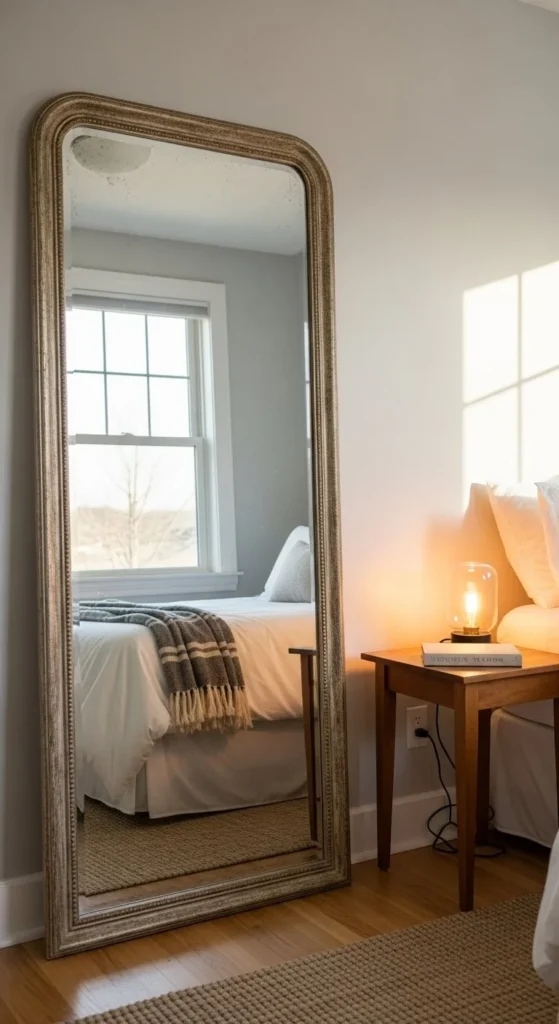
Mirrors reflect both light and space, without adding clutter.
Pick Storage That Disappears Visually
Storage is necessary—but it doesn’t need to stand out.
Choose:
- Under-bed storage with clean lines
- Closed drawers instead of open shelves
- Neutral-colored storage pieces
Avoid too many open storage items. They make the room feel busy, even when organised.
Limit Decor to One or Two Focus Points
Decor should enhance the room—not fill it.
Good options:
- One piece of wall art
- One plant
- One textured element (like a rug or throw)
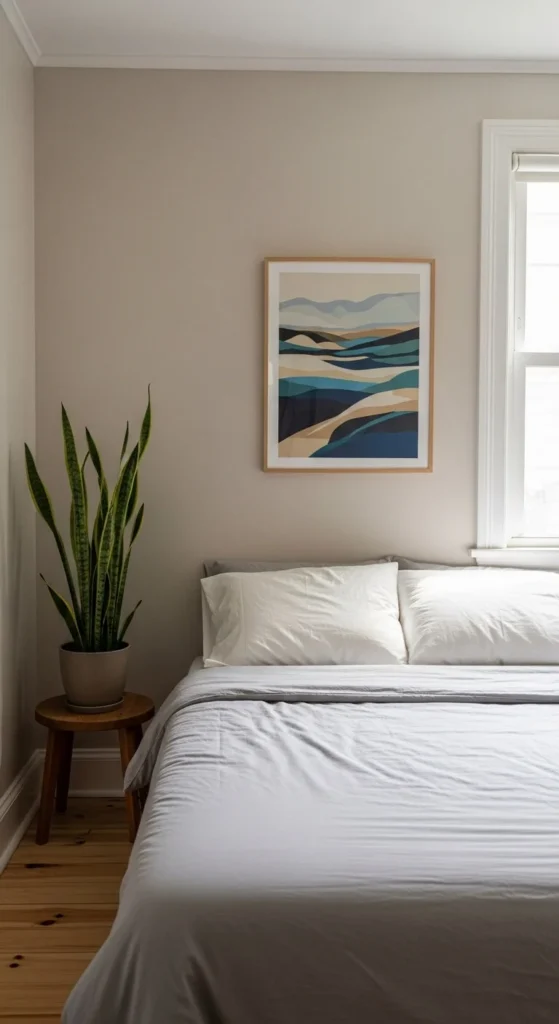
If every corner has decor, the room will feel crowded.
Use Rugs Carefully (Bigger Is Better)
A rug can anchor the room—or make it feel chopped up.
Choose a rug that:
- Extends under the bed
- Reaches beyond the sides
- Isn’t too small
Small rugs floating in the middle make rooms feel tighter.
Keep the Floor as Clear as Possible
The more floor you see, the bigger the room feels.
Try to:
- Keep furniture legs visible
- Avoid stacking items on the floor
- Use baskets or storage boxes tucked away
Clear floors equal calmer spaces.
Edit at the End—Then Edit Again
Once you’re done:
- Remove one item
- Step back
- See how the room feels
If it feels lighter, you made the right choice.
Small bedrooms benefit more from removal than addition.
Final Check: Can You Breathe in the Room?
Stand in the doorway and pause.
Ask:
- Does this feel calm?
- Is movement easy?
- Does anything feel unnecessary?
If the room feels restful, you’ve avoided overcrowding.
The Takeaway
Decorating a small bedroom without overcrowding is about scale, simplicity, and smart placement.
Focus on:
- Right-sized furniture
- Light colors
- Vertical space
- Hidden storage
- Minimal decor
Small bedrooms don’t need less comfort.
They need better decisions.
Save this guide for later when your bedroom starts to feel tight and needs a fresh reset.
Emily Parker is a home décor enthusiast and design blogger who believes every space deserves a touch of warmth and personality. With a love for cozy neutrals, modern textures, and DIY styling, she shares simple, beautiful ways to make your home feel like you. When she’s not rearranging throw pillows, you’ll find her hunting vintage finds or sipping coffee while planning her next room refresh.
Leave a Reply