

Open shelves look amazing in photos—but in real life, they can turn messy fast. Too many items feel chaotic. Too few feel unfinished. The goal is to make shelves feel styled, breathable, and intentional, not like storage on display.
The secret isn’t owning perfect decor. It’s knowing what to leave out.
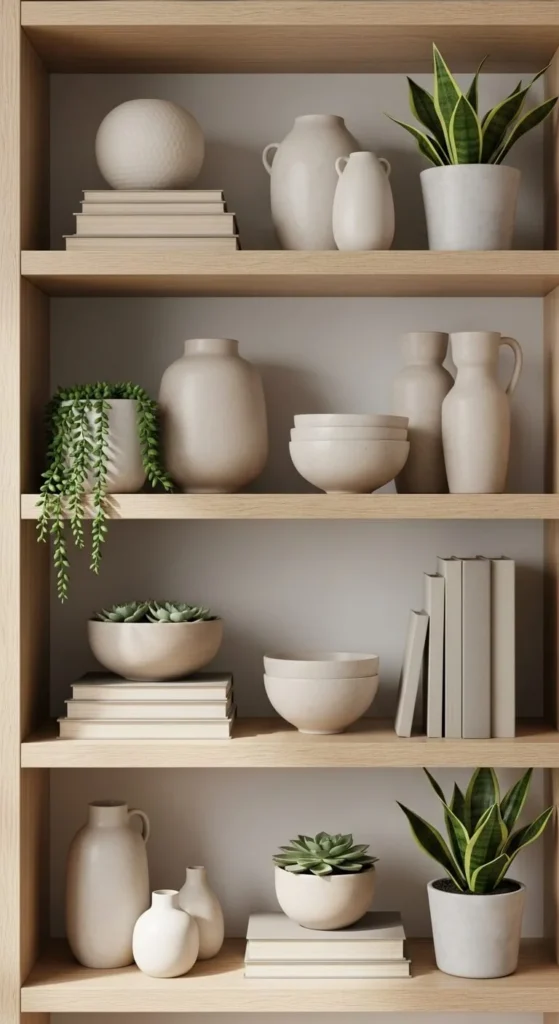
Here’s a clear, practical way to decorate open shelves so they stay beautiful—and clutter-free.
Start by Removing More Than You Think
Before styling, clear the shelves completely. This reset matters.
Why?
- You stop forcing items to fit
- You see the shelf layout clearly
- You rebuild with intention
Once empty, choose only a portion of what you plan to put back. Designers rarely use everything they own.
Rule to remember:
If you’re unsure about an item, don’t start with it.
Decide the Job of the Shelves First
Open shelves work best when they have a clear purpose.
Ask yourself:
- Are these mostly decorative?
- Are they partially functional?
- Are they in a kitchen, living room, or office?
Your answer decides how much you display.
Examples:
- Kitchen shelves → fewer items, more repetition
- Living room shelves → more decorative freedom
- Office shelves → clean lines, minimal objects
Clutter often comes from shelves trying to do too many jobs at once.
Build Each Shelf Around One Anchor Item
Every shelf needs a starting point.
Choose one anchor per shelf:
- A stack of books
- A medium-sized bowl
- A framed object
- A plant
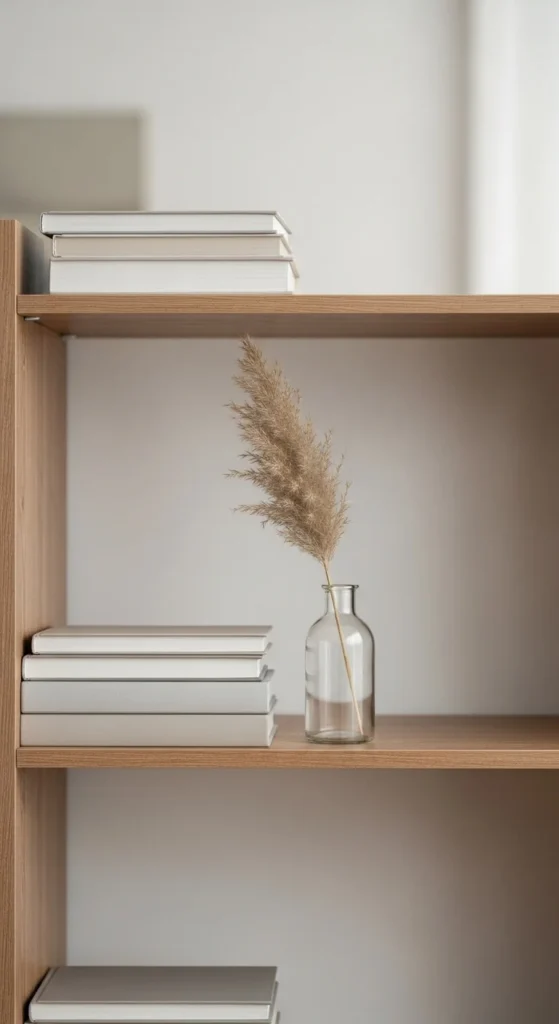
The anchor gives structure so smaller items don’t float randomly.
Group Items Instead of Spreading Them Out
Scattered objects look messy—even when they’re nice.
Instead, style in tight groups:
- 2 or 3 items per group
- Vary heights within the group
- Keep colours or materials related
Good group example:
- Books + small object + plant
- Bowl + candle + decorative box
Avoid:
One item per corner. That’s visual noise.
Limit the Color Palette Aggressively
Color overload is one of the fastest ways shelves feel cluttered.
Choose:
- 1 main neutral
- 1 supporting tone
- 1 soft accent
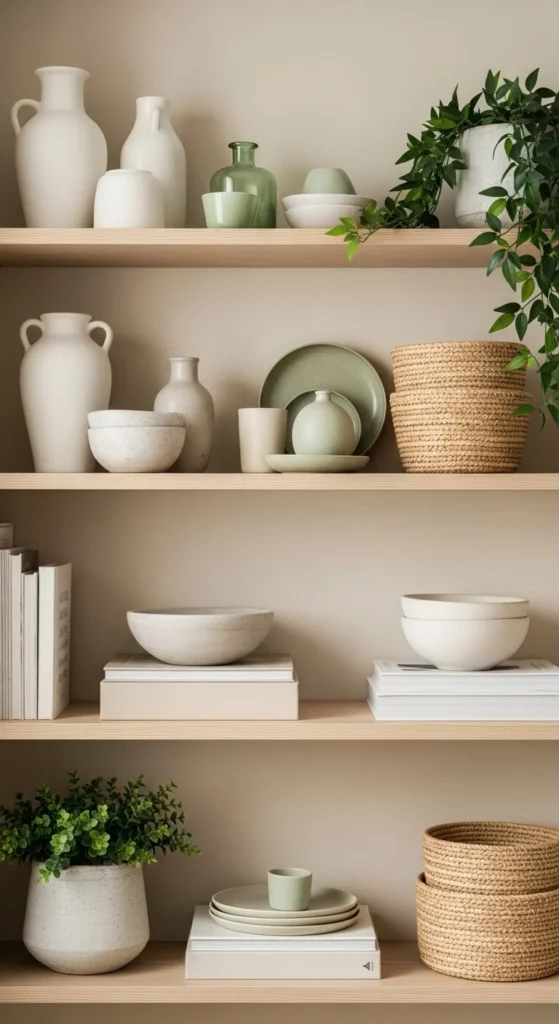
When colours repeat quietly, shelves feel calm—even with multiple items.
Use Books as Visual Spacers
Books aren’t just decor. They create pauses.
Use them to:
- Separate decor groups
- Add height variation
- Calm busy shelves
Style books:
- Horizontally for grounding
- Vertically for structure
- With some spines turned inward for softness
Books give your eyes a place to rest.
Add Texture, Not More Objects
When shelves feel flat, don’t add more items—add texture.
Use:
- Ceramics
- Woven baskets
- Wood accents
- Stone or matte finishes
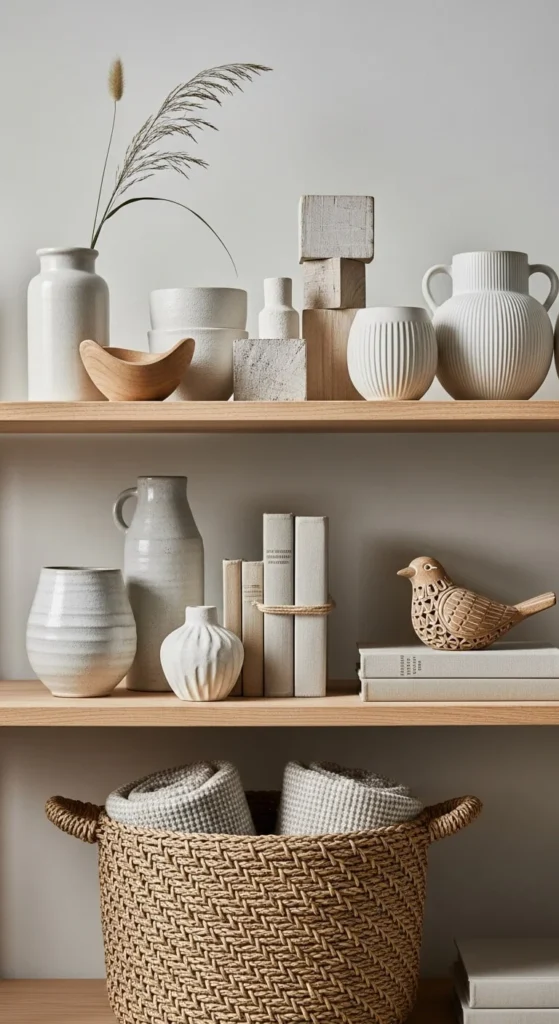
Texture adds depth without increasing clutter.
Leave Empty Space on Purpose
This is the hardest step—and the most important.
Open shelves need breathing room.
Aim for:
- At least 30–40% empty space
- Clear gaps between groups
- Some shelves less full than others
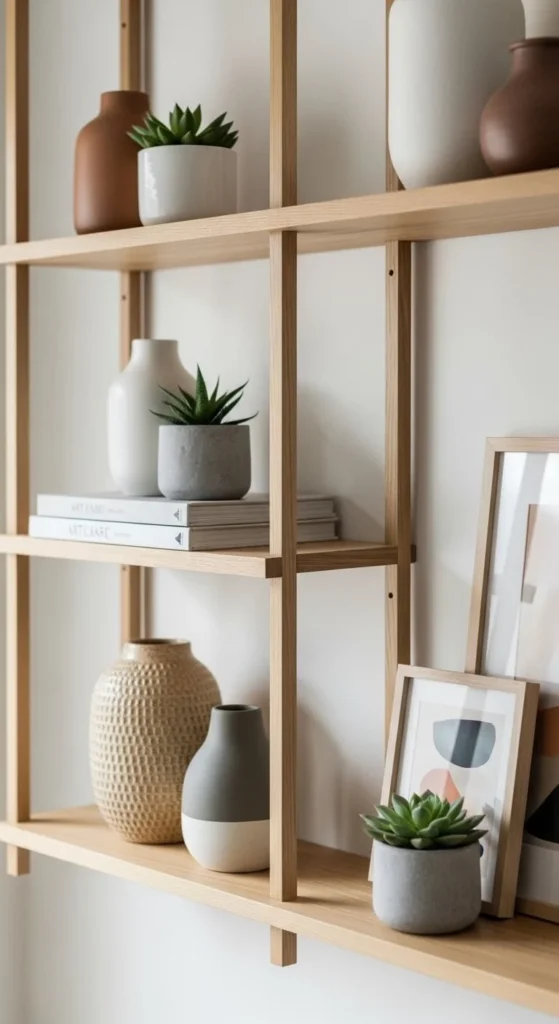
Empty space is not wasted space. It’s what makes everything else look curated.
Use Plants Carefully and Sparingly
Plants add life—but too many overwhelm shelves.
Best approach:
- One plant per shelving unit
- Or one trailing plant across multiple shelves
Place plants:
- Near books
- At the end of a shelf
- Where shelves feel visually heavy
Green is an accent, not the main event.
Repeat Shapes to Create Order
Visual order comes from repetition.
Repeat:
- Round objects across shelves
- Similar vase shapes
- Matching materials
When shapes repeat, shelves feel structured—even with variety.
Avoid Using Open Shelves for Everyday Clutter
Not everything belongs on open shelves.
Avoid:
- Loose cables
- Paper stacks
- Random containers
- Miscellaneous items without purpose
If you don’t want to dust it or look at it daily, it shouldn’t be there.
Step Back and Edit One Last Time
Once styled, step back and remove one more item.
Then ask:
- Does this feel lighter?
- Is my eye moving smoothly?
- Does anything feel crowded?
If yes—you’re done.
Designers edit more than they decorate.
Maintain With a Simple Reset Habit
Clutter creeps back slowly.
Once a month:
- Remove one item
- Re-space groups
- Wipe shelves clean
This keeps shelves fresh without restyling everything.
The Takeaway
Decorating open shelves without clutter isn’t about having less—it’s about choosing better.
Remember:
- Start with anchors
- Group intentionally
- Limit colors
- Add texture
- Leave space to breathe
If shelves feel calm, they’re working.
Save this guide for later the next time your open shelves start feeling crowded or chaotic.
Emily Parker is a home décor enthusiast and design blogger who believes every space deserves a touch of warmth and personality. With a love for cozy neutrals, modern textures, and DIY styling, she shares simple, beautiful ways to make your home feel like you. When she’s not rearranging throw pillows, you’ll find her hunting vintage finds or sipping coffee while planning her next room refresh.
Leave a Reply