

Adding bold color to your home can feel exciting — and terrifying. One wrong shade, and suddenly your space looks loud, childish, or totally out of sync. But here’s the good news: you don’t need to paint walls, buy statement sofas, or lock yourself into a color forever to enjoy a vibrant home. You can use temporary color pops that bring energy, personality, and freshness — without any long-term commitment.
Think of color like accessories for your room. You can swap them in and out as your mood, season, or style changes. The result? A home that feels alive, layered, and fun — but still calm and flexible.
Imagine walking into a neutral living room that suddenly feels warm and lively because of bright cushions, art, and small accents that draw the eye in just the right way.
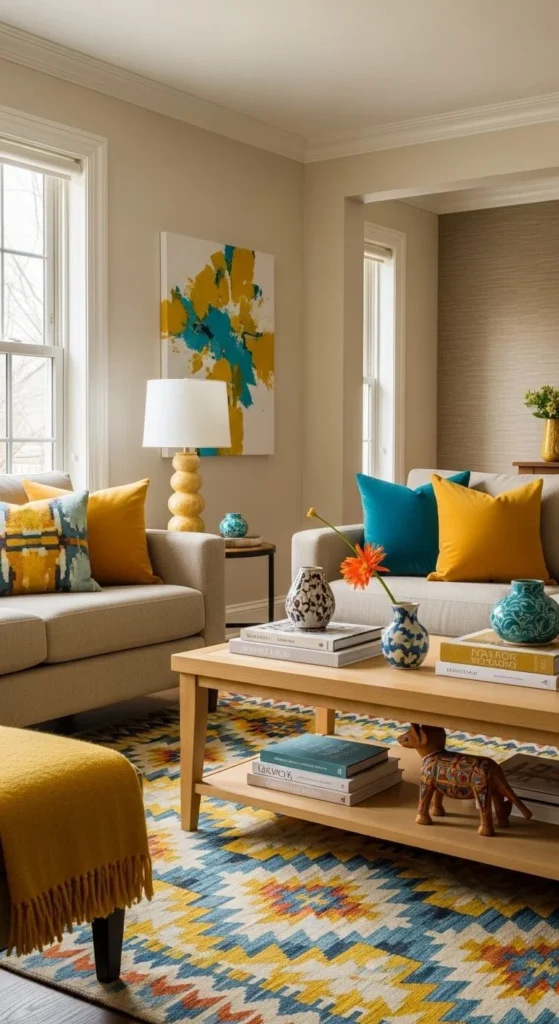
If you love color but fear commitment, this guide will show you exactly how to use it smartly, stylishly, and stress-free.
Start Small: Let Accessories Do the Talking
The safest way to add color is through small, movable items rather than big investments.
Begin with easy pieces like:
- Throw pillows
- Blankets
- Vases
- Candles
- Decorative trays
- Picture frames
Pick one or two accent colors — for example, mustard + teal or coral + sage — and repeat them lightly around the room.
Why this works:
- If you get bored, you can swap them out in minutes.
- If you love them, you can slowly build on the palette.
- If you hate them… no guilt, no repainting, no return drama.
Think of this as “color testing” for your home.
Use Textiles for Soft, Flexible Color
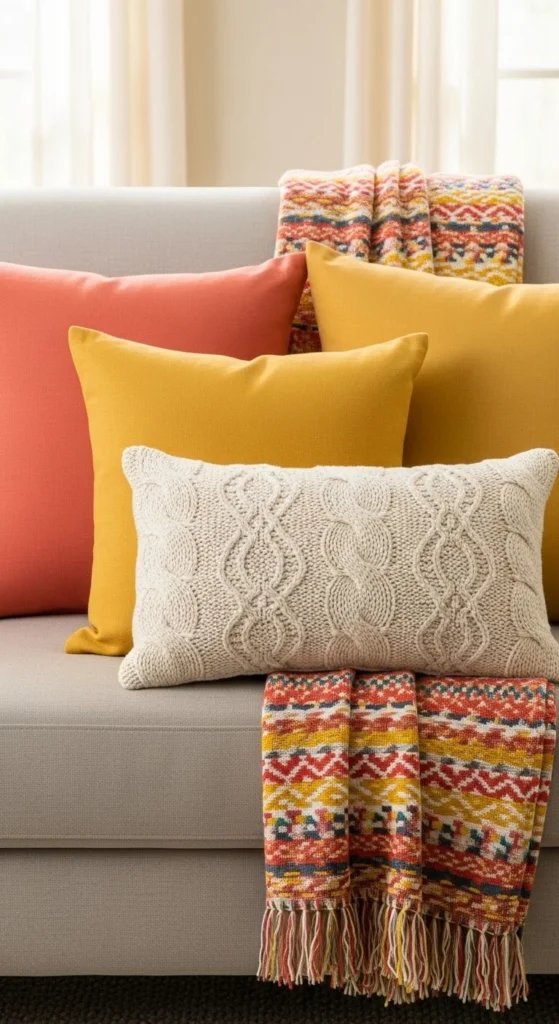
Fabrics are the most forgiving way to introduce color because they feel warm, cozy, and changeable.
Try these ideas:
- A bright throw draped over your sofa
- Patterned cushions on a neutral bed
- A colorful table runner in the dining room
- Bold curtains instead of plain ones
You don’t need everything to match perfectly. What matters is balance — if one piece is bold, keep the others calmer.
For example:
- Bright pillows + simple sofa
- Colorful curtains + neutral furniture
This keeps the room lively without feeling chaotic.
Add Color With Art (No Paint Required)
Walls are a fantastic place to play with color — without touching a paintbrush.
Use:
- Large colorful artwork
- Framed prints
- Gallery walls
- Removable wall art or decals
A single bold piece of art can completely transform a room’s mood. If you tire of it, just switch it out. No patching holes, no repainting, no regret.
Tip:
Choose art that pulls colors you already have in pillows, rugs, or decor so everything feels connected.
Bring in Color Through Rugs
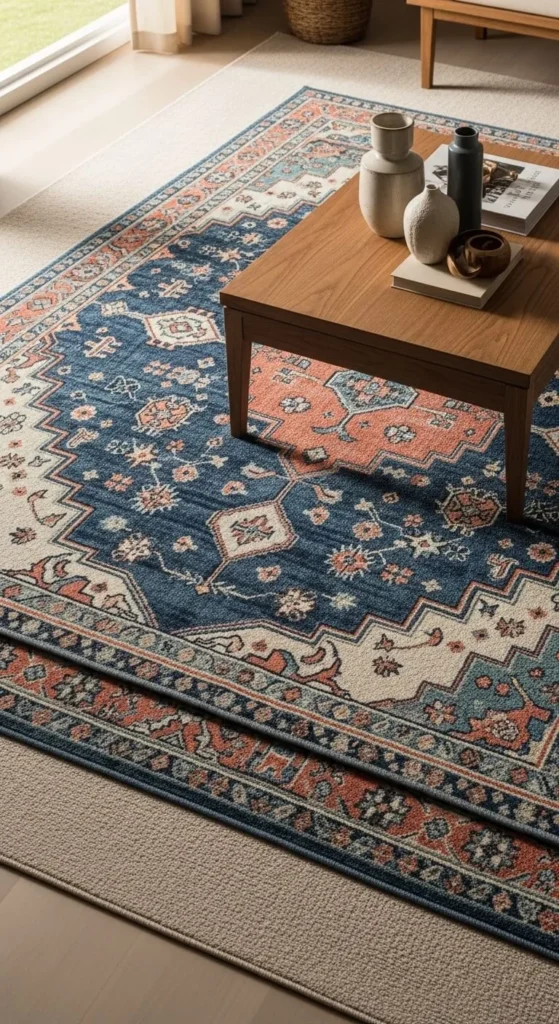
If your floors are plain or boring, a colorful rug is a powerful (yet reversible) upgrade.
Try:
- A bold patterned rug in the living room
- A bright runner in the hallway
- A small statement rug beside your bed
Rugs ground the space, define zones, and inject personality instantly — all without permanent changes.
If you’re nervous, layer a smaller colorful rug over a large neutral one. You’ll still get the pop, but it feels softer and more controlled.
Use Plants as Natural Color Pops
Green counts as color — and it’s the most effortless one to add.
Try mixing:
- Deep green leaves
- Colorful plant pots
- Flowering plants like orchids or peace lilies
Place plants:
- On side tables
- In empty corners
- On shelves
- By windows
If you don’t want real plants, high-quality faux greenery still works beautifully. Either way, plants add life, freshness, and balance.
Style With Colorful Books and Objects
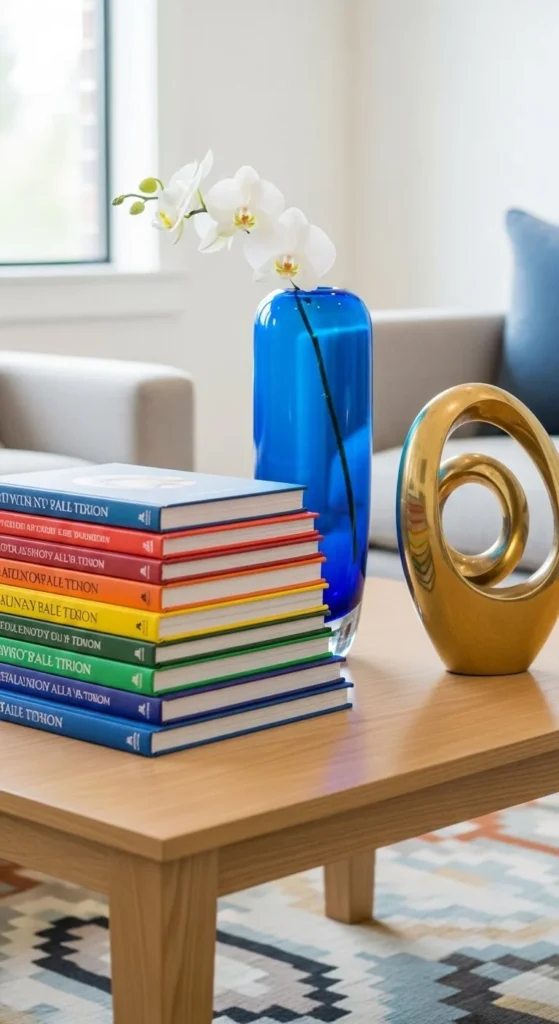
Your coffee table, shelves, and console are perfect stages for color play.
Add:
- Bright coffee table books
- Colorful ceramic bowls
- Painted picture frames
- Funky sculptures
- Tinted glass vases
Group items in odd numbers — three looks better than two — and vary heights for visual interest.
This is where you can have fun without risk. If you get bored, simply rearrange or swap pieces.
Try Color in Small Rooms First
If you’re hesitant, start in spaces where mistakes feel less dramatic:
- Bathroom
- Entryway
- Home office
- Powder room
A bold shower curtain, bright towels, or colorful desk accessories can transform these rooms without overwhelming your main living areas.
Once you feel confident, you can slowly bring color into your bedroom or living room.
Follow the 60–30–10 Rule
This classic design rule helps you use color without going overboard.
- 60% = your main neutral (walls, sofa, big furniture)
- 30% = secondary color (rugs, curtains, larger accents)
- 10% = pop color (pillows, art, small decor)
This keeps things balanced and stylish instead of chaotic.
Example:
- Beige sofa (60%)
- Blue rug (30%)
- Mustard pillows (10%)
Simple. Safe. Effective.
Swap Colors With the Seasons
One of the best things about color pops is how easy they are to change.
Try this seasonal rhythm:
- Spring: soft pastels, florals
- Summer: bright yellows, corals, turquoises
- Autumn: terracotta, rust, deep greens
- Winter: jewel tones like emerald or burgundy
You don’t need new furniture — just swap cushions, throws, and small decor. Your home will feel refreshed four times a year.
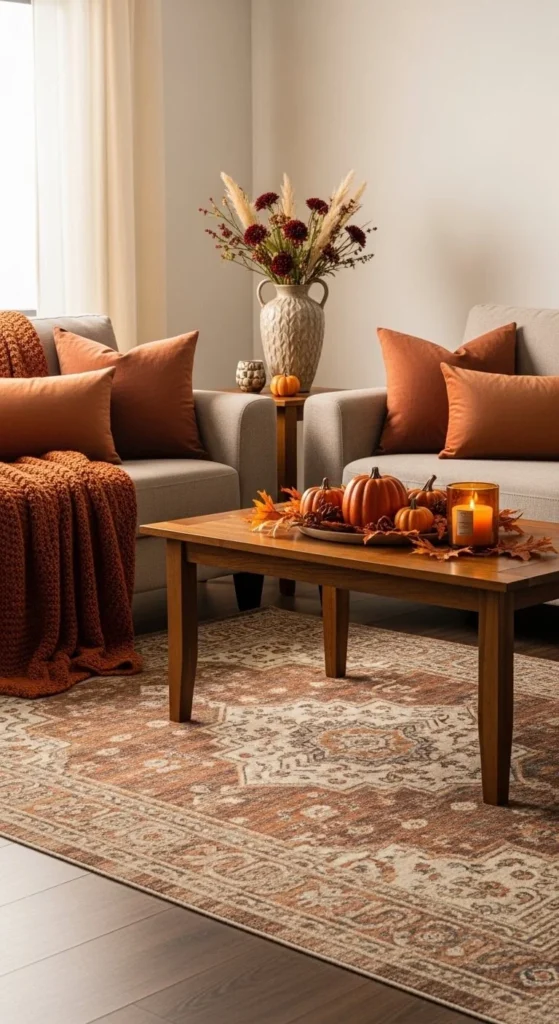
Avoid These Common Color Mistakes
Don’t:
- Use too many bold colors at once
- Forget about your existing furniture tones
- Add color without texture
- Make every piece loud
Do:
- Start small
- Repeat colors in at least two places
- Mix patterns carefully
- Leave some neutral space for balance
Make It Personal
Color should reflect you, not trends. Maybe you love deep blues, warm oranges, or playful pinks. Choose what makes you smile, not what Instagram says is “in.”
Try adding one meaningful color through:
- Travel souvenirs
- Handmade decor
- Family photos in colorful frames
When color has personal meaning, it feels less risky and more joyful.
Final Takeaway
Decorating with color doesn’t require commitment — just curiosity and play. By using accessories, textiles, art, rugs, and plants, you can bring bold energy into your home while staying completely flexible.
If you love a shade, keep it. If you don’t, swap it. No stress, no regret, no repainting.
Love these ideas? Save this guide for later and use it the next time you want to refresh your home with colorful personality — without permanent changes.
Emily Parker is a home décor enthusiast and design blogger who believes every space deserves a touch of warmth and personality. With a love for cozy neutrals, modern textures, and DIY styling, she shares simple, beautiful ways to make your home feel like you. When she’s not rearranging throw pillows, you’ll find her hunting vintage finds or sipping coffee while planning her next room refresh.
Leave a Reply