

Lighting is the fastest way to change how a room feels. You can keep the same furniture, the same layout, even the same decor—and lighting alone can make a space feel calm, cozy, dramatic, or energizing. Great interiors don’t rely on one bright ceiling light. They use layers of light to shape mood.
Once you understand this, every room becomes more flexible.
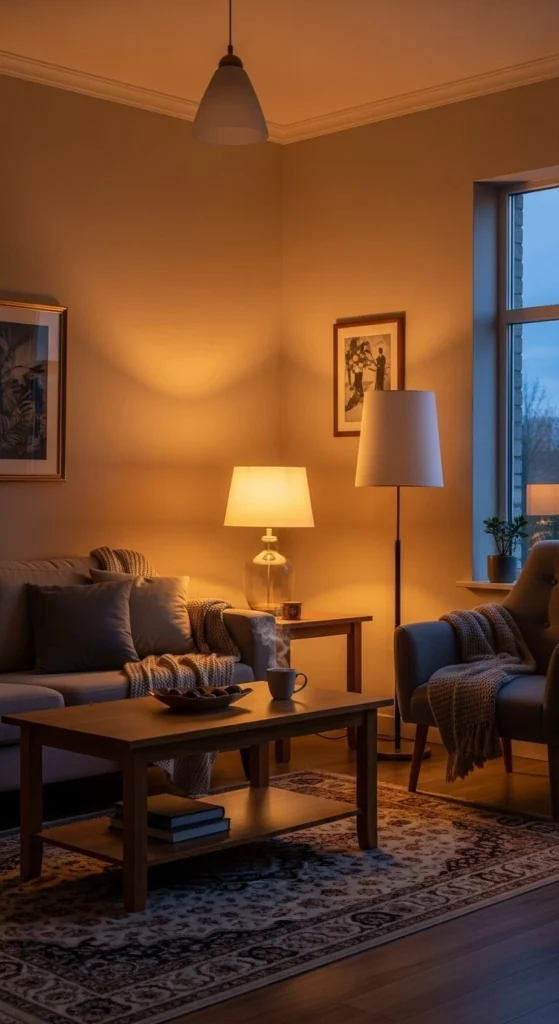
Here’s how to decorate with lighting so you can control the mood of your home—without renovations or expensive fixtures.
Stop Relying on Overhead Lighting Alone
If your room feels flat or harsh, overhead lighting is usually the reason.
Ceiling lights:
- Are practical
- But often too bright
- And rarely flattering on their own
Instead of turning them on by default, think of overhead lights as supporting players, not the main event.
Mood shift rule:
The fewer overhead lights you use at night, the warmer a room will feel.
Build the Room With Three Layers of Light
Designers almost always use layered lighting.
Aim for:
- Ambient lighting: overall glow (lamps, wall lights)
- Task lighting: focused light (reading lamps, desk lamps)
- Accent lighting: mood and depth (candles, LED strips)
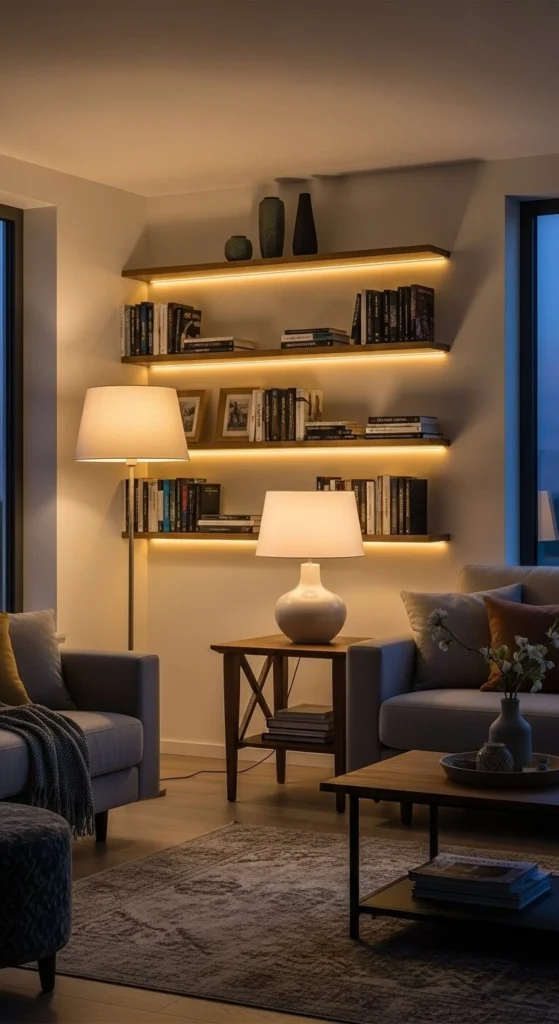
When all three layers work together, the room feels intentional and flexible.
Choose Warm Bulbs to Instantly Change the Atmosphere
Bulb temperature matters more than the lamp itself.
For mood lighting:
- Choose warm white bulbs
- Avoid cool or blue-toned light
- Keep bulb temperature consistent across the room
Warm light:
- Softens furniture
- Enhances textures
- Makes rooms feel calmer
If a room feels cold, the bulb is often the problem—not the decor.
Use Table Lamps to Create Calm Zones
Table lamps are mood-makers.
Place them:
- On side tables
- On consoles
- On shelves or dressers
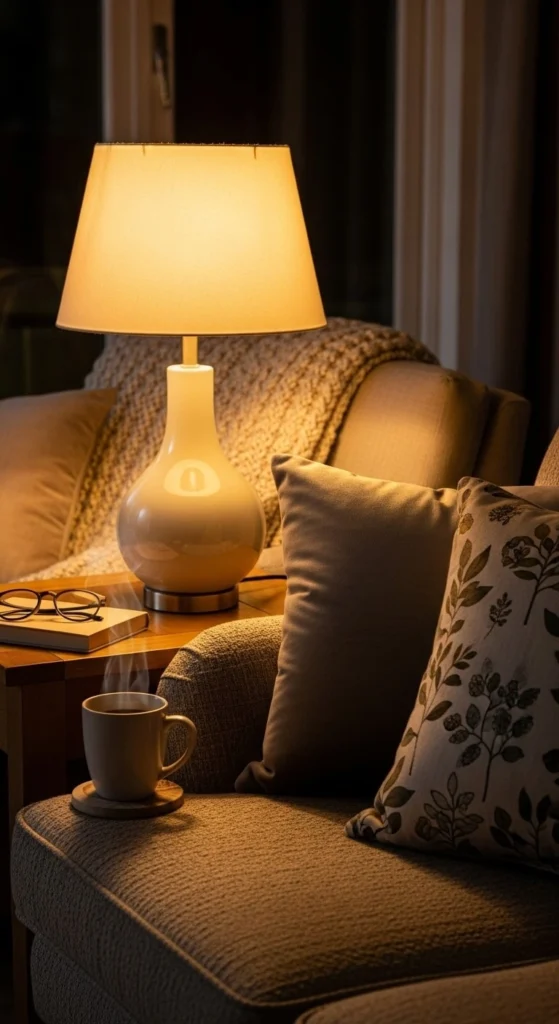
Each lamp creates a small “zone” of comfort. Multiple small light sources feel far cozier than one bright one.
Use Floor Lamps to Add Height and Drama
Floor lamps help guide the eye upward and add depth.
They’re perfect for:
- Empty corners
- Beside sofas or chairs
- Adding balance to low furniture
Choose:
- Simple shapes
- Fabric or frosted shades
- Warm-toned finishes
Floor lamps create atmosphere without taking up visual space.
Add Accent Lighting for Depth and Interest
Accent lighting is where mood really comes alive.
Easy accent options:
- LED strip lights behind shelves
- Small lamps on bookcases
- Picture lights above art
- Candles for flicker and warmth
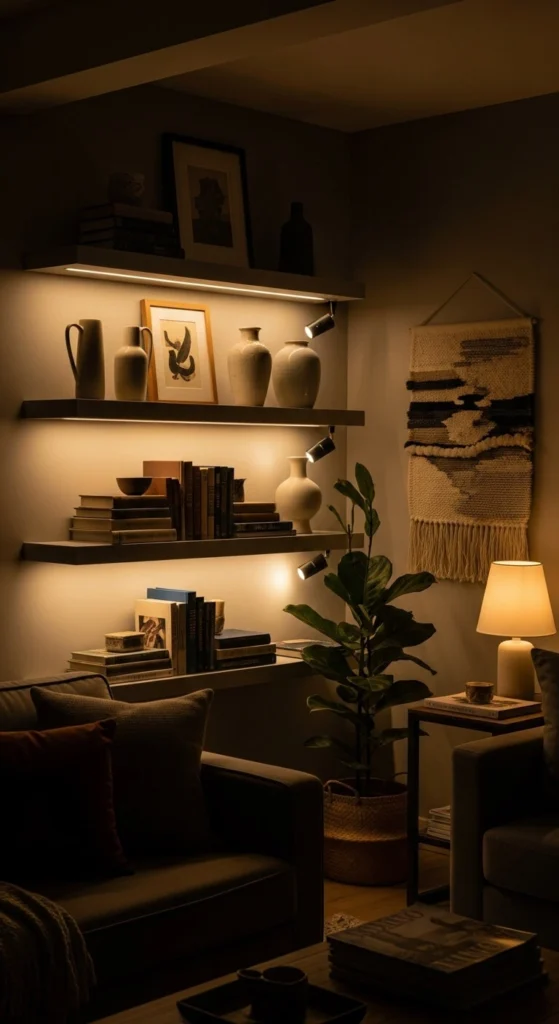
Accent light adds layers and shadow—which makes rooms feel richer and more intimate.
Use Lighting to Change the Mood by Time of Day
Your lighting should adapt as the day changes.
Try this rhythm:
- Morning: natural light + minimal lamps
- Afternoon: soft ambient lighting
- Evening: lamps only, overhead lights off
- Night: accent lighting and candles
This shift helps your home feel calm instead of overstimulating.
Control Mood With Lampshades, Not Just Bulbs
The shade affects how light spreads.
For a softer mood:
- Use fabric or linen shades
- Avoid clear or exposed bulbs
- Choose light-colored shades for a gentle glow
Dark shades create moodier light, while lighter shades spread warmth more evenly.
Place Lights to Highlight Texture
Lighting becomes powerful when it interacts with texture.
Use light to highlight:
- Curtains
- Rugs
- Cushions
- Wall texture or art
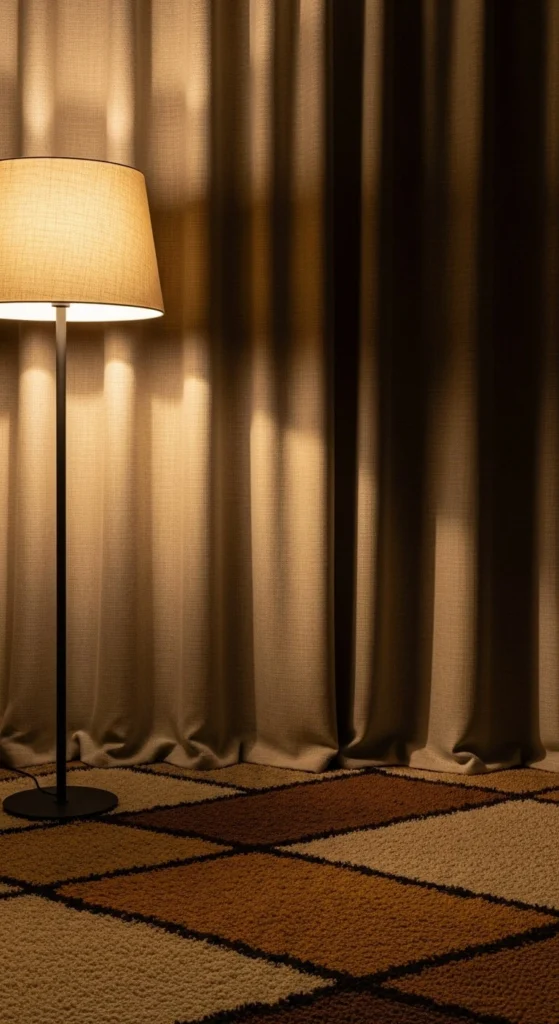
Shadows are not bad—they add depth and mood.
Use Candles as Emotional Lighting
Candles aren’t just decor. They’re emotional lighting.
Use them:
- In groups of two or three
- On coffee tables, trays, or shelves
- As part of evening routines
Even unlit candles add warmth. Lit candles instantly slow a room down.
Match Lighting Mood to the Room’s Purpose
Each room needs a different lighting mood.
- Living room: warm, layered, flexible
- Bedroom: soft, low, calming
- Dining area: warm and focused
- Home office: brighter but indirect
One lighting approach doesn’t work everywhere.
Use Dimmers or Smart Plugs if Possible
You don’t need a full smart home.
Simple upgrades:
- Plug lamps into smart plugs
- Use dimmer switches where available
- Group lights on one switch or app
Being able to adjust brightness changes mood instantly.
Do the Night Test
Lighting looks very different at night.
Once your lights are set up:
- Turn off overhead lights
- Turn on lamps and accents
- Sit quietly in the room
Ask:
- Does this feel calm?
- Does the room feel inviting?
- Would I want to stay here?
If yes, your lighting is doing its job.
Edit Before Adding More Lights
If a room feels busy:
- Turn off one light
- Remove one lamp
- Reduce brightness slightly
More light isn’t always better. Better placed light is.
The Takeaway
Decorating with lighting is about control, layers, and warmth.
Remember:
- Avoid relying on overhead lights
- Use warm bulbs
- Layer lamps, tasks, and accents
- Let shadows add depth
- Adjust lighting by time of day
Lighting doesn’t just illuminate a room.
It shapes how you feel in it.
Save this guide for later when a room feels “off” and you can’t figure out why—chances are, it’s the lighting. 💡
Emily Parker is a home décor enthusiast and design blogger who believes every space deserves a touch of warmth and personality. With a love for cozy neutrals, modern textures, and DIY styling, she shares simple, beautiful ways to make your home feel like you. When she’s not rearranging throw pillows, you’ll find her hunting vintage finds or sipping coffee while planning her next room refresh.
Leave a Reply