

If a room feels small, dark, or a little boxed in, mirrors can completely change the experience. Designers use them all the time—not as decoration, but as visual space-makers. When placed the right way, mirrors bounce light, stretch sightlines, and trick the eye into seeing more room than actually exists.
The key is knowing where and how to use them.
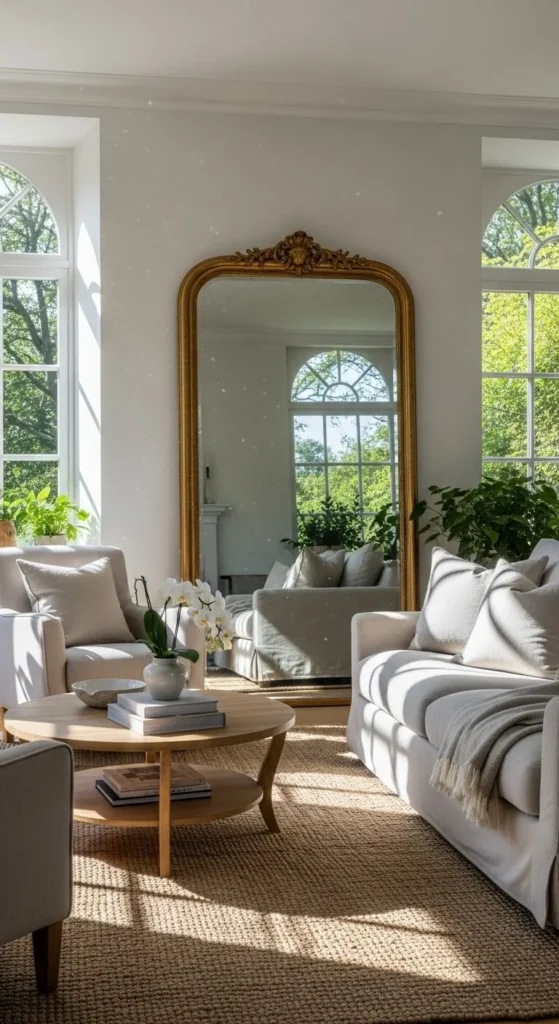
Here’s a practical, step-by-step guide to decorating with mirrors so rooms instantly look bigger and more open.
Start by Reflecting Light, Not Just Walls
The biggest mistake people make is hanging a mirror wherever there’s empty space. Mirrors work best when they reflect something bright.
Look for:
- Windows
- Light-colored walls
- Lamps or natural daylight
- Open areas instead of cluttered corners
When a mirror reflects light, it doubles brightness and visually expands the room.
Quick check:
Stand where you want the mirror. If you like what you see reflected, you’ve picked the right spot.
Go Bigger Than You Think
Small mirrors add decoration. Large mirrors change proportions.
To make a room look bigger:
- Choose oversized mirrors
- Use tall mirrors to increase height
- Use wide mirrors to stretch wall length
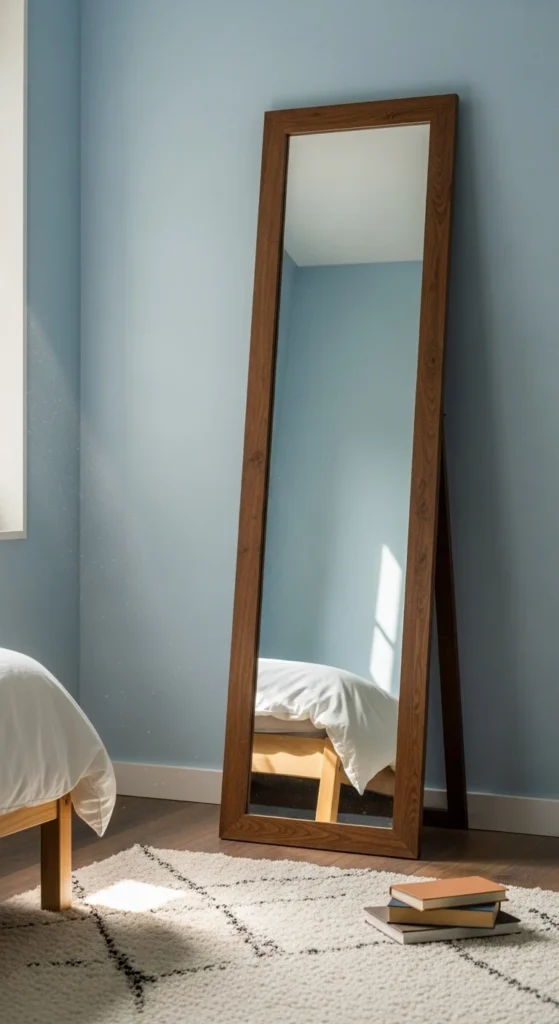
A single large mirror does more than several small ones scattered around.
Lean Mirrors for a Casual, Spacious Look
You don’t always need to hang mirrors to get the effect.
Leaning mirrors:
- Feel relaxed and modern
- Avoid drilling holes
- Add height instantly
They work especially well in:
- Bedrooms
- Living rooms
- Entryways
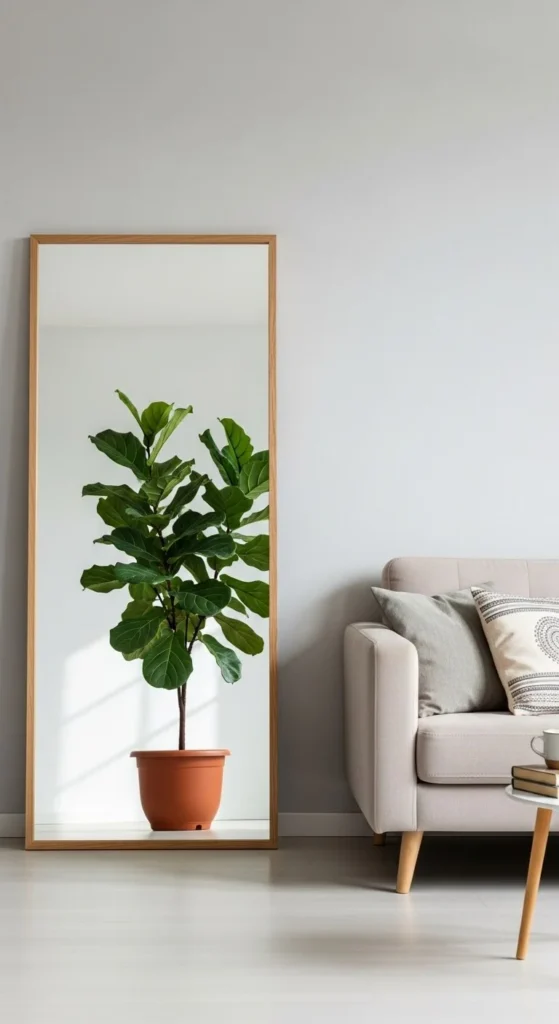
Leaning mirrors also create depth by layering space in front of them.
Place Mirrors Across From Windows
This is one of the most effective tricks—and one designers rely on heavily.
When a mirror sits opposite a window:
- Light bounces deeper into the room
- The view feels doubled
- The room appears wider and brighter
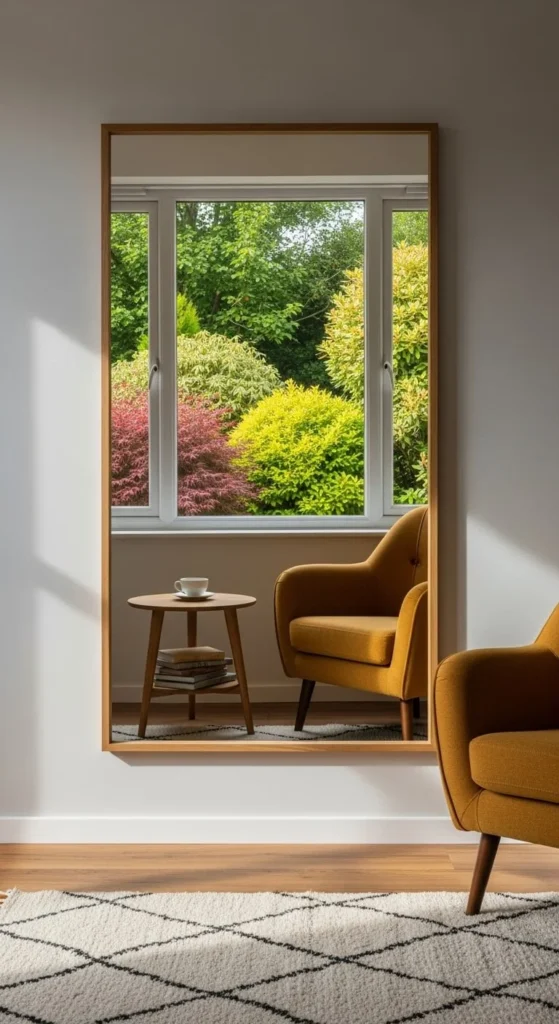
This works beautifully in:
- Small living rooms
- Dining spaces
- Narrow bedrooms
Use Mirrors to Open Narrow or Awkward Spaces
Mirrors are especially powerful in tight areas that feel boxed in.
Perfect places include:
- Hallways
- Entryways
- Small dining nooks
- Compact home offices
A long mirror along a narrow wall stretches the space visually and makes movement feel easier.
Tip:
In hallways, horizontal mirrors widen the space. Vertical mirrors add height.
Anchor Mirrors With Furniture
Floating mirrors without context can feel awkward.
Anchor them with:
- Console tables
- Dressers
- Benches
- Sideboards
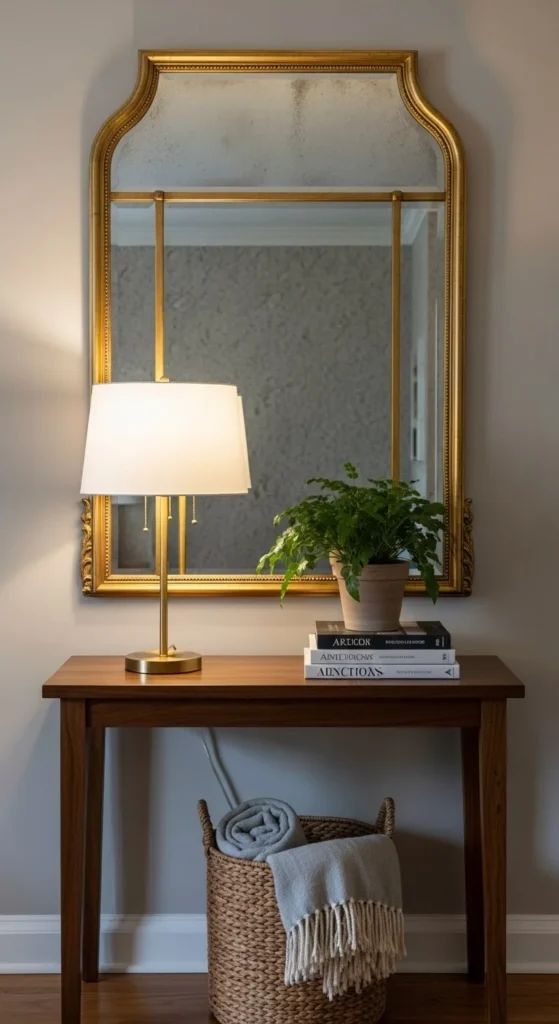
This grounds the mirror and makes it feel intentional rather than random.
Choose Frames That Match the Room’s Scale
The frame matters more than you think.
For small rooms:
- Thin frames
- Light-colored frames
- Frameless mirrors
For larger rooms:
- Chunkier frames
- Wood or metal accents
- Architectural shapes
Avoid overly decorative frames in tight spaces—they add visual weight.
Use Mirrors to Extend Sightlines
Rooms feel bigger when your eye can travel farther.
Place mirrors where they:
- Reflect adjoining rooms
- Show depth instead of flat walls
- Extend visual lines through doorways
This creates a sense of continuity instead of stopping the eye.
Combine Mirrors With Lighting for Maximum Impact
Mirrors and lighting work best together.
Position mirrors near:
- Table lamps
- Floor lamps
- Wall sconces
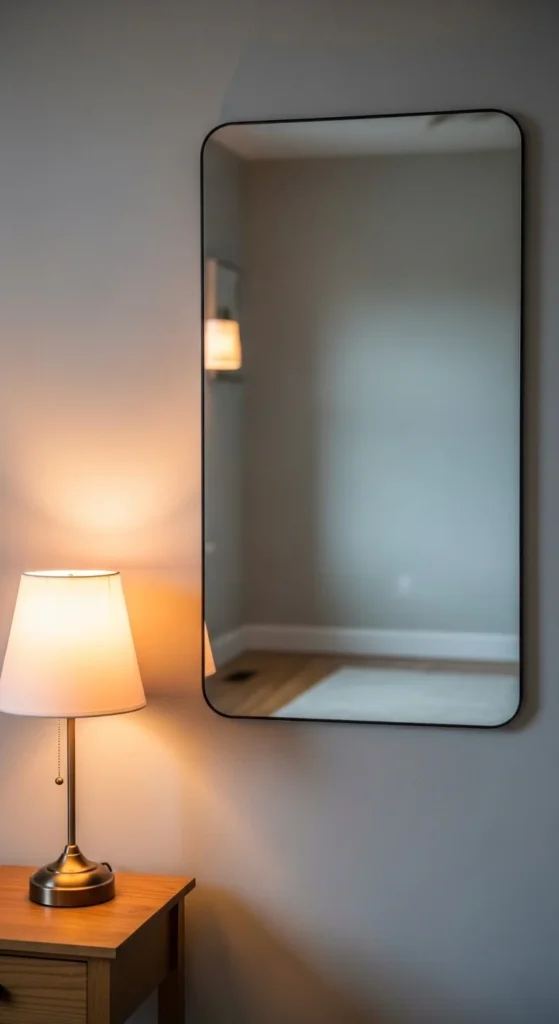
This multiplies light sources without adding clutter.
Avoid Reflecting Clutter or Dark Corners
Mirrors amplify whatever they reflect.
Avoid placing mirrors where they reflect:
- Messy shelves
- Storage piles
- Dark, unused corners
If a space looks bad without a mirror, it won’t look better with one.
Use One Statement Mirror Instead of Many Small Ones
Multiple small mirrors can feel busy and break up the wall.
Instead:
- Use one strong mirror per room
- Let it do the heavy lifting
- Keep surrounding decor minimal
This keeps the room calm and visually open.
Check Height Before Final Placement
Mirror height affects how spacious a room feels.
General rule:
- Eye-level for everyday mirrors
- Slightly higher placement for decorative mirrors
- Floor mirrors tilted slightly back for depth
Before fixing anything permanently, test placement by leaning the mirror first.
The Takeaway
Decorating with mirrors isn’t about adding shine—it’s about creating space, light, and flow.
To make rooms look bigger:
- Reflect light and windows
- Choose larger mirrors
- Lean or anchor them thoughtfully
- Avoid cluttered reflections
Used the right way, mirrors don’t just decorate a room—they transform it.
Save this guide for later the next time a space feels smaller than you’d like.
Emily Parker is a home décor enthusiast and design blogger who believes every space deserves a touch of warmth and personality. With a love for cozy neutrals, modern textures, and DIY styling, she shares simple, beautiful ways to make your home feel like you. When she’s not rearranging throw pillows, you’ll find her hunting vintage finds or sipping coffee while planning her next room refresh.
Leave a Reply