

You love the look of plants. You buy them with hope. And then… they slowly give up. If this sounds familiar, you’re not alone. The good news is you can still decorate with plants and get that fresh, lived-in look—without becoming a plant expert.
Decorating with plants isn’t about keeping everything alive forever. It’s about placement, choice, and strategy. Even serial plant killers can win at this.
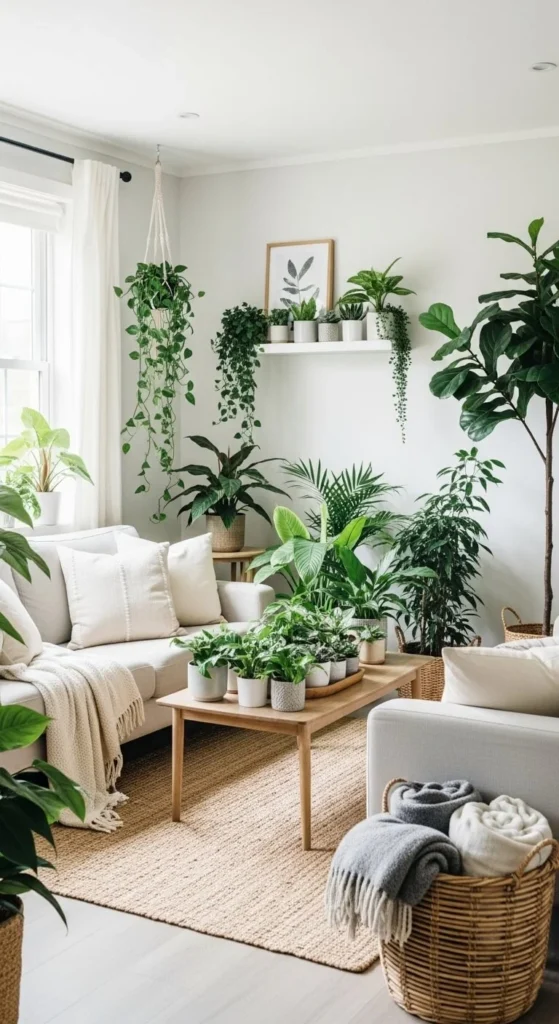
Here’s how to decorate with plants in a way that looks great, feels easy, and doesn’t stress you out.
Start With Plants That Are Hard to Mess Up
Some plants are just built different. They survive neglect, missed waterings, and imperfect light.
Begin with low-maintenance options like:
- Snake plant
- ZZ plant
- Pothos
- Rubber plant
- Peace lily
These plants don’t need constant attention and still look good when conditions aren’t perfect.
Mindset shift:
You don’t need thriving plants. You need surviving ones.
Use Faux Plants Without Guilt
Let’s be honest. Faux plants have improved a lot—and designers use them too.
Faux plants work best when:
- Light is poor
- You forget to water
- The spot is hard to reach
Great places for faux plants:
- High shelves
- Bathrooms without windows
- Dark corners
- Entryways
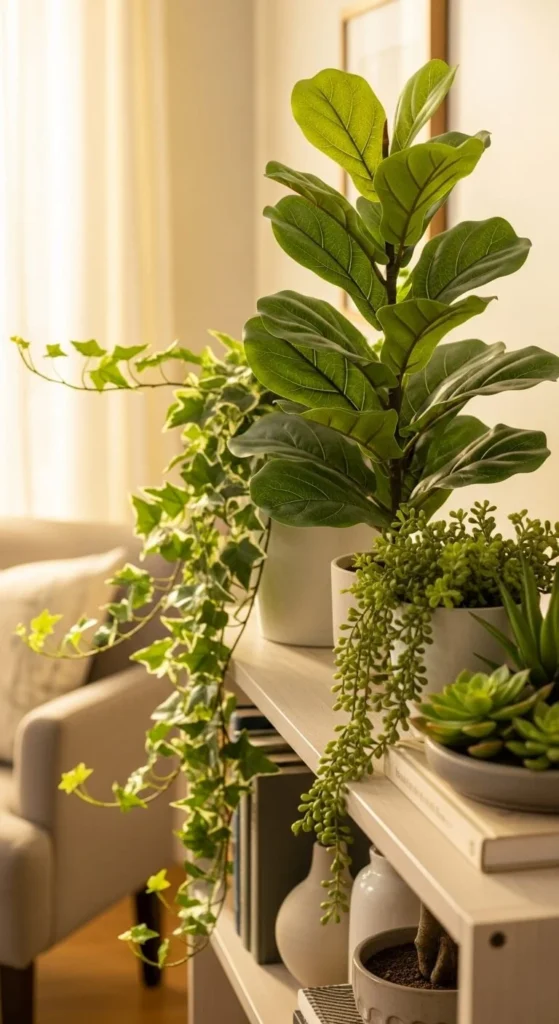
Pro tip:
Mix real and faux plants together. No one will know which is which.
Focus on Planters More Than the Plant
A good planter can carry a struggling plant.
Choose planters that:
- Match your decor style
- Are neutral or textured
- Feel intentional and solid
Materials that always work:
- Ceramic
- Stone
- Woven baskets
- Matte finishes
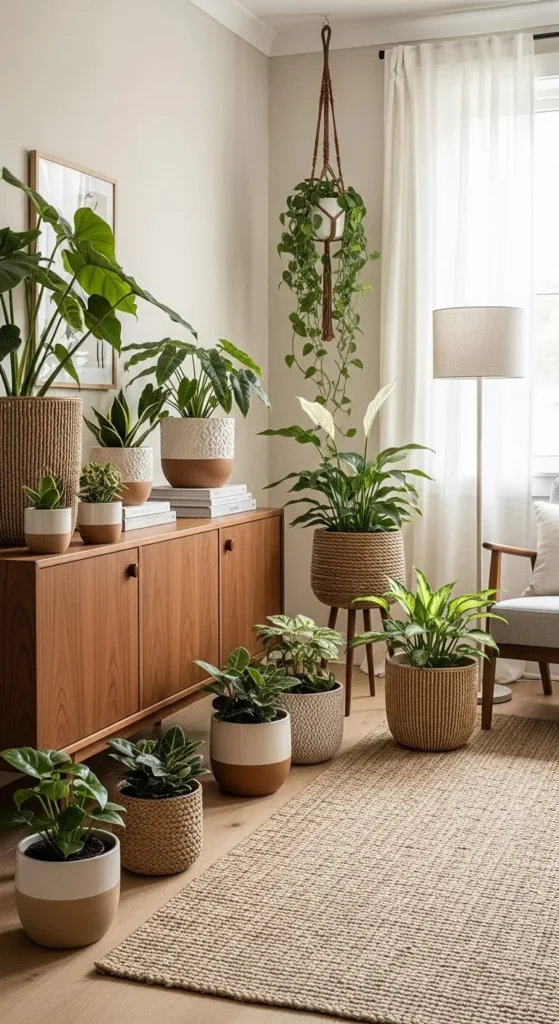
If a plant isn’t thriving, the planter still adds value visually.
Place Plants Where They Help the Room Most
Plants aren’t random decor. They work best when placed strategically.
Use plants to:
- Fill empty corners
- Soften sharp furniture edges
- Add height where rooms feel flat
- Break up hard surfaces
Good placements:
- Beside sofas
- Near windows
- Next to sideboards
- In unused corners
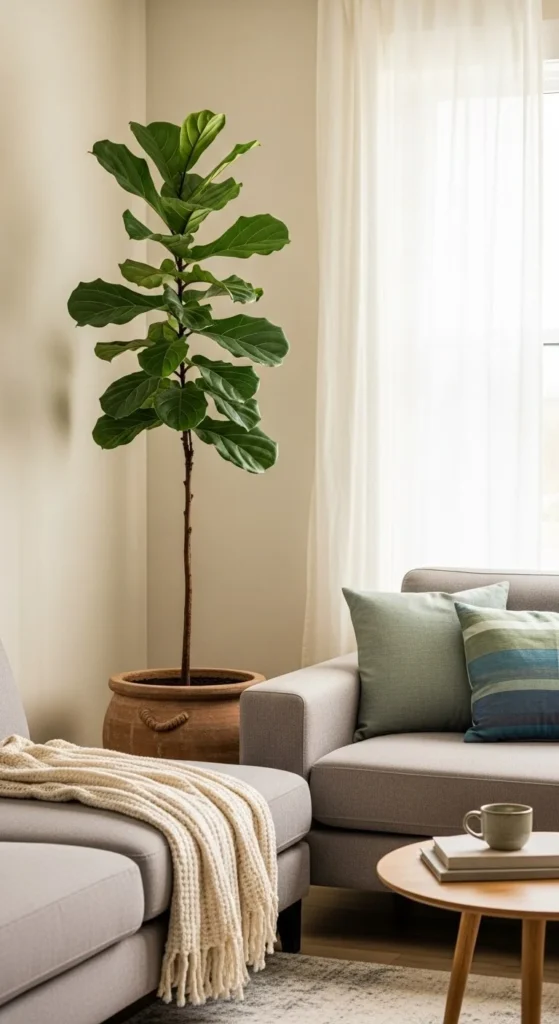
Avoid scattering small plants everywhere. Fewer, well-placed plants look more intentional.
Use Plant Size to Create Balance
Size matters more than quantity.
Try this mix:
- One tall plant (floor plant)
- One medium plant (side table or stand)
- One small plant (shelf or surface)
This creates visual balance without clutter.
Avoid:
Five tiny plants fighting for attention on one surface.
Choose the Right Light Once—Then Don’t Move the Plant
Plants die faster when they’re constantly relocated.
Once you place a real plant:
- Leave it there
- Let it adjust
- Don’t chase “better light” every week
If a spot doesn’t work, switch to a faux plant there instead of forcing it.
Water Less Than You Think
Overwatering kills more plants than forgetting.
Simple rule:
- Stick your finger into the soil
- If it’s still moist, don’t water
- When in doubt, wait
Set a loose reminder if needed—but don’t overmanage it.
Low effort wins here.
Group Plants for Impact (Not Maintenance)
Plants look better in groups—but caring for many individually is tiring.
Group plants by:
- Similar light needs
- Similar watering needs
- Similar sizes
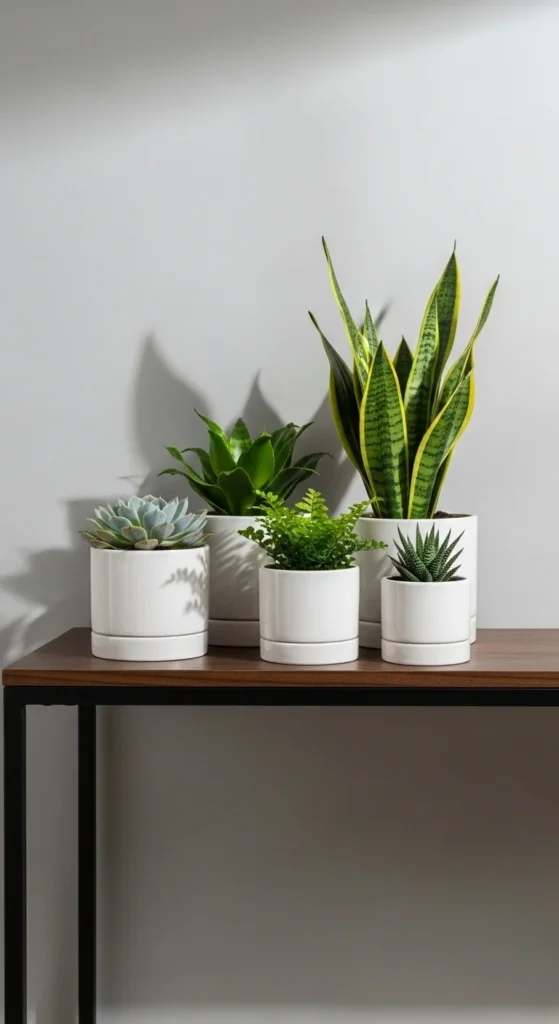
This makes watering easier and styling stronger.
Use Plants to Add Life to Neutral Rooms
If your home is mostly neutral, plants become the accent.
Green works with:
- Beige
- White
- Grey
- Wood tones
Plants add color without overwhelming the space—and they’re easier than committing to bold decor.
Don’t Try to Fill Every Room
You don’t need plants everywhere.
Start with:
- Living room
- Entryway
- Bedroom (one plant is enough)
Bathrooms and kitchens are optional. If they stress you out, skip them.
A few successful plants beat many struggling ones.
Rotate or Replace Without Stress
Here’s the part no one says out loud: it’s okay to replace plants.
If one dies:
- Compost it or toss it
- Replace it calmly
- Or swap it for a faux version
Plants aren’t permanent decor. Treat them like fresh flowers—not heirlooms.
Make Plants Feel Like Decor, Not Responsibility
The goal is atmosphere, not obligation.
Plants should:
- Make the room feel alive
- Add softness and warmth
- Support your style
If a plant causes guilt or stress, it’s doing the opposite of its job.
Final Check: Does the Room Feel Better With Them?
Step back and look at the space.
Ask:
- Does this feel fresher?
- Does the room feel softer?
- Does it feel more lived-in?
If yes, the plants are working—even if they’re not perfect.
The Takeaway
Decorating with plants isn’t about being good with plants. It’s about smart choices and low pressure.
Remember:
- Choose hardy plants
- Use faux where needed
- Focus on planters and placement
- Group intentionally
- Replace without guilt
Plants are here to support your home—not stress you out.
Save this guide for later the next time you want greenery without the pressure of keeping everything alive. 🌿

Emily Parker is a home décor enthusiast and design blogger who believes every space deserves a touch of warmth and personality. With a love for cozy neutrals, modern textures, and DIY styling, she shares simple, beautiful ways to make your home feel like you. When she’s not rearranging throw pillows, you’ll find her hunting vintage finds or sipping coffee while planning her next room refresh.
Leave a Reply