

If a room feels flat, cold, or unfinished, it’s usually missing one thing: texture. You can have the perfect color palette and beautiful furniture, but without texture, a space won’t feel cozy. Texture is what makes a room feel warm, layered, and inviting—the kind of place you actually want to sit down and stay awhile.
The good news? Texture is one of the easiest design tools to use, and it works in every style of home.
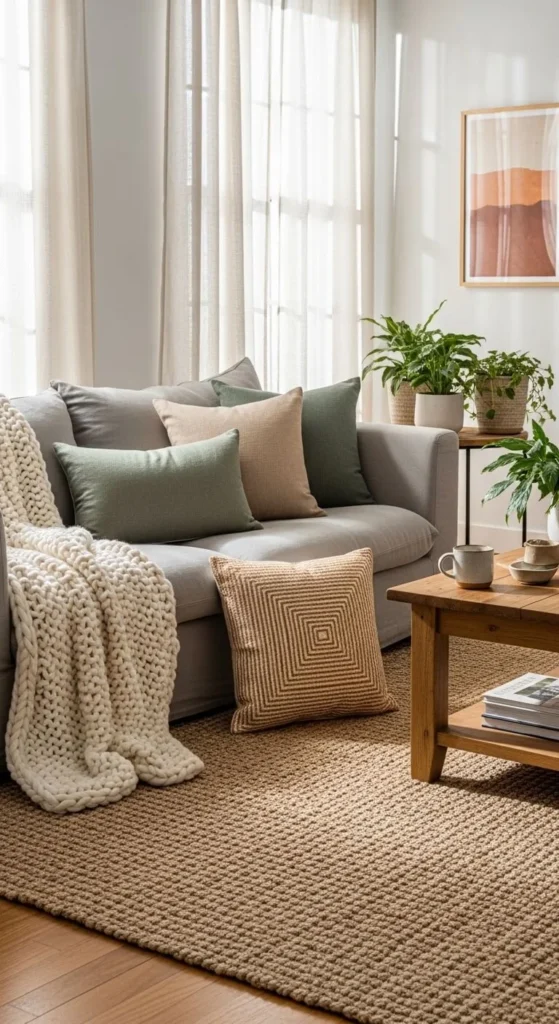
Here’s how to decorate with textures in a simple, intentional way that instantly makes your home feel more comfortable and lived-in.
Understand Why Texture Matters More Than Color
Color sets the mood, but texture sets the feeling.
Texture adds:
- Depth
- Warmth
- Visual interest
- Comfort
Even an all-neutral room can feel rich and cozy when textures are layered correctly. Without texture, neutral spaces often feel boring or cold.
Think of texture as the difference between looking at a room and wanting to be in it.
Start With Soft Textures You Can Feel
The easiest way to add texture is through items you physically interact with.
Focus first on:
- Cushions
- Throws
- Rugs
- Curtains
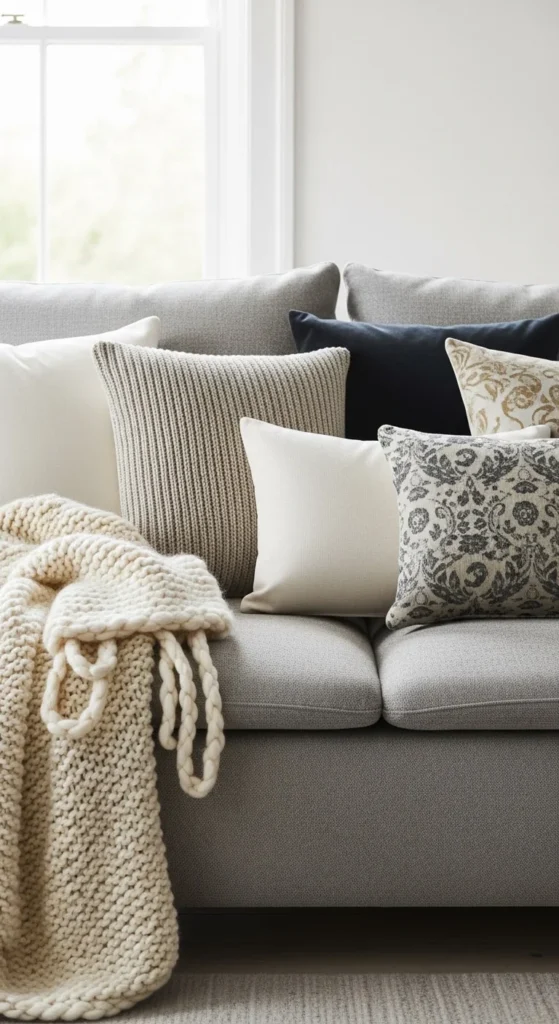
Mix soft textures like:
- Linen
- Knit
- Cotton
- Faux fur
- Wool blends
Avoid matching everything exactly. Slight variation is what creates coziness.
Layer Textures Instead of Matching Them
Cozy rooms never rely on just one texture.
Instead of matching:
- Mix smooth with rough
- Pair light with heavy
- Combine matte with slightly shiny
For example:
- Linen cushions + velvet pillows
- Flat-weave rug + plush throw
- Smooth sofa + chunky knit blanket
Layering textures adds dimension without visual clutter.
Use Rugs to Ground the Space
A rug is one of the biggest texture statements in a room.
To create coziness:
- Choose rugs with visible weave
- Look for low-pile or slightly plush textures
- Avoid ultra-thin rugs that disappear visually
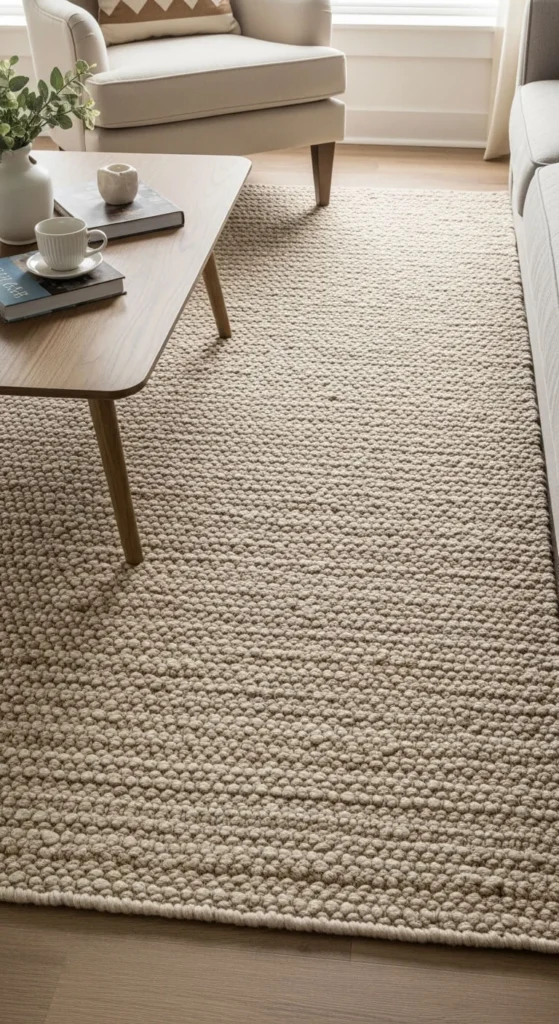
Rugs soften hard floors and instantly make rooms feel warmer and more comfortable.
Bring in Natural Materials for Warmth
Nature-inspired textures make a space feel calm and grounded.
Incorporate materials like:
- Wood
- Rattan
- Wicker
- Stone
- Ceramic
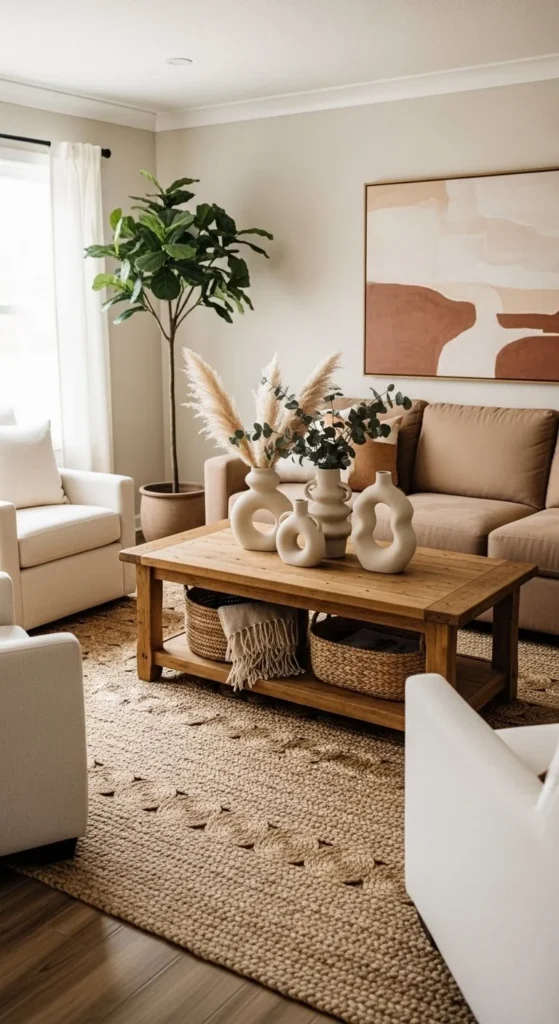
Natural textures pair beautifully with soft fabrics and help balance modern or minimal interiors.
Add Texture Through Furniture Choices
Furniture itself can add texture—not just the decor on it.
Look for:
- Upholstered headboards
- Bouclé or fabric chairs
- Wooden tables with visible grain
- Woven or cane details
Textured furniture adds interest without needing extra accessories.
Use Curtains to Soften the Room
Curtains are often overlooked, but they add major texture.
For a cozy effect:
- Choose linen, cotton, or soft blends
- Hang them high and wide
- Let them lightly touch the floor
Curtains soften light, reduce echo, and frame the room beautifully.
Style With Baskets and Woven Pieces
Woven textures are cozy classics for a reason.
Use baskets to:
- Store blankets
- Hold magazines
- Organize everyday items
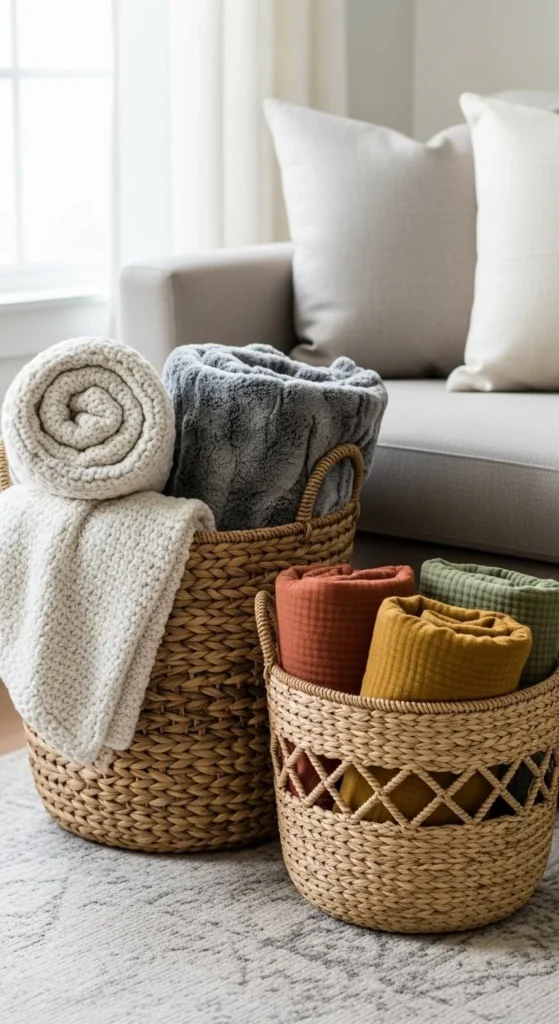
They add texture and function, which makes them perfect for everyday living.
Mix Hard and Soft Textures for Balance
Too many soft textures can feel heavy. Too many hard surfaces feel cold.
Aim for balance:
- Soft fabrics + wood
- Smooth surfaces + woven accents
- Plush items + clean lines
This contrast keeps the room cozy without feeling cluttered or overly styled.
Add Subtle Texture Through Decor Objects
Decor doesn’t need to be bold to add texture.
Look for:
- Ceramic vases with matte finishes
- Stone or concrete accessories
- Textured trays
- Neutral pottery
Small textured accents quietly elevate the space.
Use Lighting to Highlight Texture
Texture comes alive with the right lighting.
Soft lighting:
- Creates shadows
- Highlights fabric and surfaces
- Adds depth to textured items
Use:
- Table lamps
- Floor lamps
- Warm bulbs only
Avoid harsh overhead lighting if you want a cozy feel.
Keep the Color Palette Simple
Texture shines best when colors are calm.
Stick to:
- Neutrals
- Soft earth tones
- Muted shades
Too many colors can distract from texture and make the space feel busy instead of cozy.
Edit So the Room Can Breathe
Texture works best when it’s intentional—not overwhelming.
After styling:
- Remove one item from each surface
- Step back and observe
- Make sure there’s negative space
Empty space allows textures to stand out instead of competing.
Do the Comfort Test
Sit in the room.
Ask yourself:
- Does this feel inviting?
- Would I want to relax here?
- Does the room feel warm or flat?
If it feels cozy and calm, your textures are working.
The Takeaway
Decorating with textures is the fastest way to create a cozy home—without changing furniture or color schemes.
Remember:
- Layer soft and natural textures
- Mix materials instead of matching
- Use rugs, throws, and curtains
- Balance hard and soft surfaces
- Let lighting enhance texture
Texture doesn’t shout.
It quietly makes a room feel like home.
Save this guide for later the next time your space feels flat and you’re not sure why—chances are, it just needs better texture layering.
Emily Parker is a home décor enthusiast and design blogger who believes every space deserves a touch of warmth and personality. With a love for cozy neutrals, modern textures, and DIY styling, she shares simple, beautiful ways to make your home feel like you. When she’s not rearranging throw pillows, you’ll find her hunting vintage finds or sipping coffee while planning her next room refresh.
Leave a Reply